Sunday, 19 September 2021
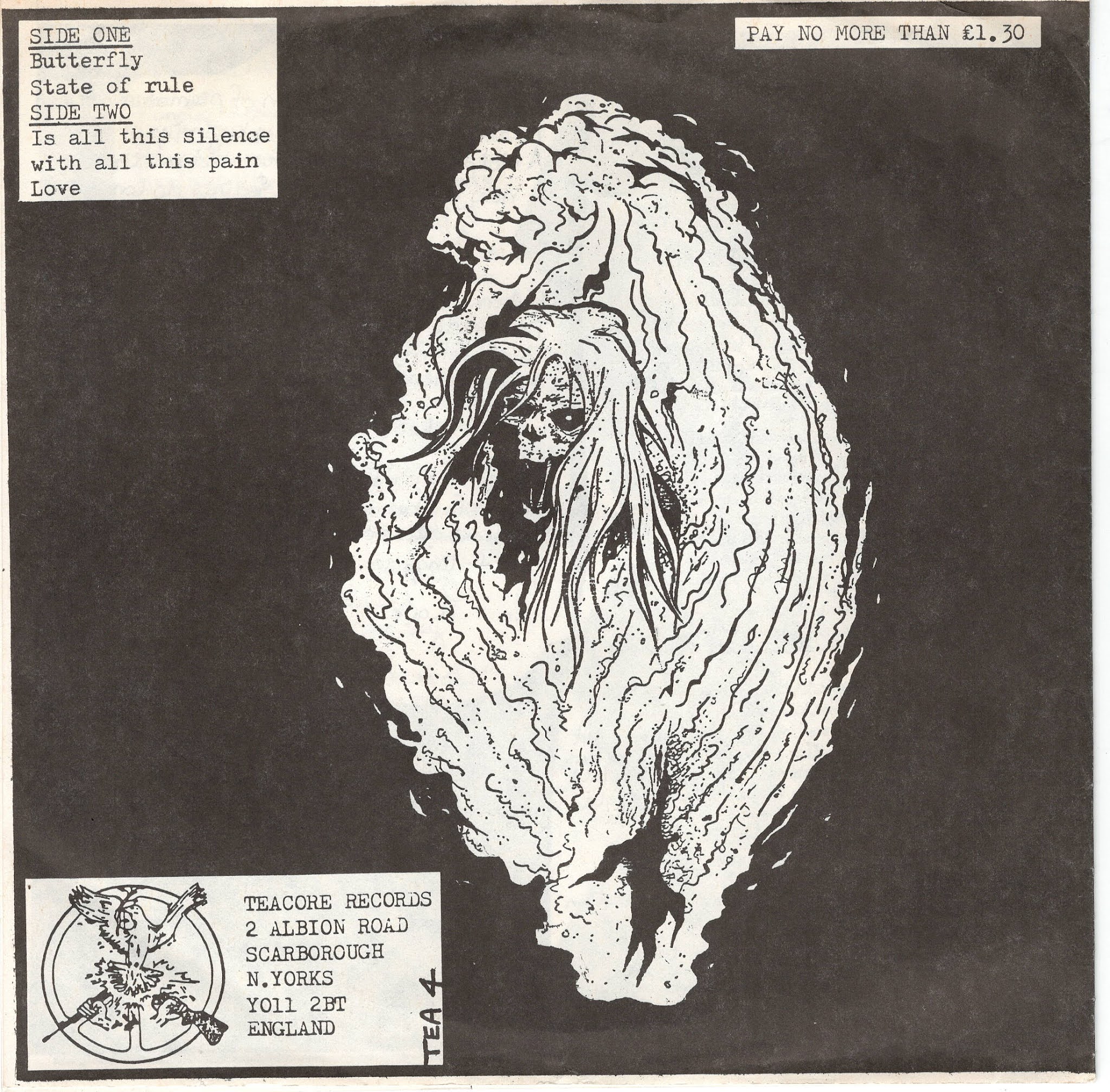
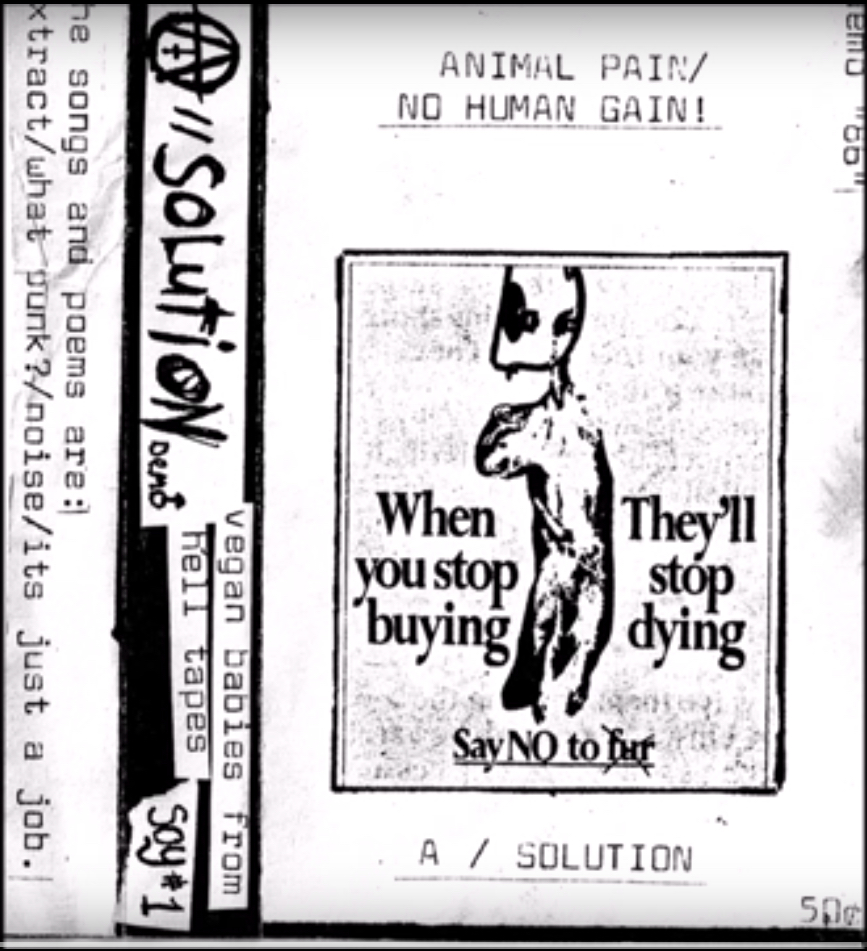
The Empire Crusts Back (part 3): Confrontation "1989" Ep, 1992
Saturday, 11 September 2021
The Empire Crusts Back - the OC Crust Years (part 2): A//Solution "Butterfly" Ep, 1989
Friday, 27 August 2021
The Empire Crusts Back - the OC Crust years (part 1): Apocalypse "Earth" Ep, 1989
Alright then, there's crust to be done. After a relatively long break this summer due to my annual meditation retreat in Stoke-on-Trent, I decided to tackle a topic that had been seductively floating around on the edges of my consciousness for a while. An immense task that no one dared to accomplish, that would secure Terminal Sound Nuisance a comfy spot in the Crust Hall of Fame. I could already picture myself being applauded by my peers as I walked to the stage in order to deliver my poignant speech (I guess I will have to thank my parents though my dad has always vehemently disapproved of Extreme Noise Terror for some reason) and lift the award for my lifetime achivements, a small but refined golden statue of a crust punk passed out in a pool of special brew. I would relish this moment of glory. But before this dream comes true, I have to push myself to the limit, yet again, and wrestle with a scene that has been particularly close to my heart for a while now: the venerable OC crust scene.
The notion and concept of "OC crust" will be explored and discussed throughout this short series so that my desire to crush you with a three pages long essay straight away will have to be contained. However, some basic knowledge about the term "OC crust" and what it has come to mean and imply do seem necessary. Strictly speaking, it refers to the first wave of crust that emerged in South California, notably in the specific area of Orange County in the late 80's, making it one of the original crust waves in the States and beyond. It goes without saying that those early bands were deeply influenced by the early UK "Peaceville" crust bands and also by fast hardcore punk, anarchopunk (at least lyrically and ethically) and extreme metal, the three roots from which the original British stenchcore tree also grew. It should be pointed out that, while I am sure those OC crust bands were into the classic British anarcho and hardcore bands - like Discharge, Antisect and so on - they must have been stimulated by the local bands who had been or were then flying flags similarly adorned with doves, peace symbols and the archetypal antiwar lexical field: the so-called peacepunk wave. Local SoCal mid-80's noise-makers like Against, Body Count or Diatribe must have been inspirations while their peacepunk contemporaries Another Destructive System, Holocaust and Media Children evolved in the same galaxy but with different artistic intents on the scale of aural bollocking. Now let's proceed.
As my honourable sensei used to say to me whenever I felt blue back in the day: "Don't worry and focus on your life goals. If you pay enough attention, you will notice that the singing of the birds sounds just like Cock Sparrer's chorus on "Take'em all". Believe yourself and just wait patiently for the apocalypse". Of course, I was just a wee lad back then and I was not quite sure what to make of my master's cryptic pieces of wisdom and, in frustration, I would punch walls and spit on the floor like I thought a proper hard member of the barmy army would and draw cocks on my dad's car with spray paint. Good times. Little did I know that sensei was actually referring to the band Apocalypse and not the biblical punishment and purification - a myth that happens to have been one of the main, if not the only one, influence on crust lyrics to this day. I remember the pride in the eyes of my punk sensei when I used to tell him that, when I grew up, I wanted to front a crust band called Apocalypse. Even then I could notice a soft cloud of sadness on his face as he encouraged to pursue my dreams and get the crust pants-making technique right. Realizing that there was already a crust band with the Apocalypse moniker broke my heart and shattered my self-confidence. Had my master not overdosed on dodgy shoegaze music some years prior, I would have shouted "Why why, whywhywhyyyy" to him. I think he was just trying to protect me.
I first came across Apocalypse sometime in the mid-00's through their 1998 discography cd Coldbringer. I remember picking it from the now defunct Crimes Against Humanity Records distro after reading the eloquent notice describing Apocalypse as an old-school metallic crust band from the late 80's resembling Antisect (there had to be a mention to Antisect for me to hyperventilate that much). Now such an introduction to an unknown band pushed all the right buttons and I immediately and authoritatively ordered the cd. I was already quite well versed in the arcane world of 80's UK crust by then, but I was all but completely unaware of the early crust scene of Southern California (I was unclear about where Mindrot stood exactly in this seemingly impenetrable equation as I had read somewhere that they used to do crust). While I knew that Misery, Disrupt, Nausea or Destroy belonged to the early U$ crust canon and greatly enjoyed the seminal SoCal political hardcore punk bands Final Conflict and Iconoclast, I did not really envision a proper crust scene in California, which, of course, sounds preposterous because that part of the world has had top representatives of every punk subgenres since the 70's (well, us French still rule over the sloppy-minimalistic-punk-with-a-drum-machine genre but no one really covets that spot to be fair). So upon reading about a SoCal stenchcore team, my mind immediately went wild and I quickly took to interrogate old-timers about a potential early crust scene over there, for, as the old punk saying goes "even if there is just the one bottle of brew, there are always more than one crust punk fighting for it", meaning that, because of crust's peculiar reproductive molecular structure, there was bound to be more bands in that style.
The reason why CAH Records had freshly received copies of Coldbringer is somewhat mysterious as it was released almost ten years prior, so by 2006 or 2007 (I think I got it around that time), it was no longer something new. Perhaps the record label behind it, Half-Life Records from Hacienda Heights, found some additional copies of the cd in the attic and offered them to CAH as it used to carry a lot of grindcore bands on the distro and Half-Life was precisely a grindcore label so it could make sense (the connection between Apocalypse and Half-Life was certainly more personal than musical, I guess they were mates and the latter offered to release a discography for them). Whatever the reason was, it looked like a sign from the gods of crust and although I am not the superstitious type and tend to disregard such beliefs, that the cd found itself in my path was not a coincidence. I had been chosen. It was a prophecy. And I also had some money in my pocket for the prophecy to happen but let's not dwell on such trivial, mundane details.
There is little point in telling you how excited I was (and still am) about Apocalypse. They played exactly the style of crust that I loved and, like every old-school records included, there was a short but substantial thank list mentioning other bands I had never heard about, it was like a starting point for an archeological expedition as I was ready to embark into a quest for OC crust. The internet has made it possible, in a extremely short amount of time, to acquire some knowledge - albeit often superficial but it is beside the point - about any punk subgenres, even the most obscure. However, so-called OC crust (that has come to designate bands that were actually from Orange County but also from neighbouring localities), which was really an outgrowth of the strong SoCal peacepunk scene (as the thank list highlights with the presence of Another Destructive System or Media Children for example) rather than a scene of its own, remains something of an hidden treasure. I have already extensively written about the 80's Californian peacepunk scene and touched upon OC crust on two occasions when glorifying Mindrot and Glycine Max but this time I am going to do things properly and write passionately about four top records from that era.
So what about Apocalypse then? They were from Walnut (yes, like a walnut), formed in 1986 and disbanded in 1990. They got to release a fantastic demo tape and three Ep's (the present record Earth as well as splits with the mighty Mindrot and Transgression) and did the Earth Grind Tour around the country with Confrontation (a split Ep between both bands was announced for the tour but it did not materialize). And did I mention they picked the crustiest name for a band? So obvious and self-evident if not corny that it is brilliant (and I am not saying this just because I still envy them). The Earth Ep was recorded in 1988 and 1989 with a lineup that exemplifies the rather incestuous ties that existed among crust bands there: drummer Mark also hit things for Glycine Max then, bass player Al also drummed for Mindrot, while guitar player Rich and singer Ralph were literally brothers. One may justly infer that the OC crust phenomena might have been rather small, a specific and ultimately genre-defining moment that was part of a wider political hardcore punk metal scene in the 80's.
Earth technically contains four songs but the first two "Mother..." and "Earth!" are actually tied to one another so that the former feels like a long dark metallic crust instrumental introduction rather than a separate track which gives it more of a narrative dimension to both. These two numbers make up the first side of the Ep and work perfectly together to create a brilliant and memorable crust epic with variations, from eerie moments to chugging and apocalyptic ones, there is a story being told here. Early Axegrinder, Deviated Instinct and Hellbastard come to mind (it is no coincidence that you can spot posters of the latter two pinned on the wall of the band's practice space, I'm assuming, that was used as a picture for the backcover), as this mid-paced track is groovy, raw and heavy, the perfect way to start the Ep especially since it provides depth and a distinct, sombre sense of doom, settling an atmosphere of grief and pain that would turn into anger in the following song "Earth!". Basically what a crust atmosphere is supposed to sound like and convey. Apocalypse's next song starts off with the canonical heavy-and-slow stenchcore beat before morphing into some mean metallic hardcore, not so far from the crossover style of the time albeit in a much darker version. I am hardly an expert in Californian crossover hardcore but you get the gist. The great Final Conflict - undoubtedly a major influence on Apocalypse, Ron Martinez even produced the band's '88 demo - and Diatribe also come into the equation, especially in the vocals, which I think work well here, and I would add a spoonful of Concrete Sox as well. Top notch and pretty flawless first serving of proper crust. The other side kicks off with the Hellbastard-meet-Electro-Hippies-under-the-Californian-sun "Heart of man", a song that has a magnificent old-school vibe and ends with a typical US hardcore riff that probably had the whole audience run around in the pit (if they were still able to walk properly, the crawling version being far less impressive). The final song "Wimp-core" is a nine second blast of grinding hardcore, pretty puerile and anecdotal, but it acts here as a loving nod to the likes of Napalm Death, Sore Throat and Electro Hippies who had all previously engaged dealt in such primitive amusical bouts. I am into referentiality so that works for me. The production on the Ep is exemplary for this brand of old-school raw and heavy mean metallic hardcore as it gives a genuine punk edge to the songs and it makes sense that the engineer David Kory also worked with Infest, Final Conflict or even Hirax, exemplifying the ties that existed between the hardcore punk and the extreme metal worlds at the time.
The cover is quite cryptic and a little too simplistic perhaps, although I suppose the conceptual idea was to offer an evocation of Earth and its beauty - a recurring theme in Apocalypse's lyrics - by offering a contemplative peaceful picture of flamingos - they are flamingos, aren't they? - and avoid skulls, nuclear explosions or decaying zombie punks. The poetry does not last long, on the backcover, as previously mentioned, there is a picture taken in the band's rehearsal space (I can only presume) showing faux model but real punk Matt Fisher probably in the nude - though the socks are still on for extra glamour - hiding his parts with a massive sign that says "Smash the skulls of vivisectors - It's your turn next". I can't disagree with this sentiment. The inside includes the lyrics as well as a thank list that adequately illustrates the mood of the time and the DIY network from which the band emerged (the list on the Coldbringer cd is even more eloquent on that level). There is also a text about swastikas (now that is much more uncommon) and how they originally symbolized balance and the Earth power instead of Poland-invading murderers. Still a little daring to sport one and some malign bands and people have been playing with this historical ambiguities for nasty purposes.
Earth was released in 1989 on Crust Records, the label run by Ben from Dropdead - with the simplest and most desired name in the game - responsible for some classic Disrupt, Dropdead or Totalitär records. Apocalypse would then release two more Ep's, a split with crossover hardcore band Transgression from Indiana and another split, this time with crust neighbours Mindrot before splitting up in 1991. They reformed in the late 2010's and recorded a very convincing split Ep with Extinction of Mankind.
The whole series is humbly dedicated to Matt Fisher, former member of Confrontation and Mindrot, who sadly passed away in October, 2020.
Thursday, 8 July 2021
Ace Compilations for Less Than a Fiver on Bloody Discogs (part 5): "Why Must We Die for Your Palate?" compilation Ep, 1999
This is the last cheap compilation Ep of the series and I do hope you all took notes. Whether you are looking for a last minute present for that annoyingly ungrateful nephew of yours, trying to reconstruct some sort of decent collection after you had to sell all your records for food and booze after the Covid pandemic or just intending to save some money for the upcoming baby but still have some punk credibility to show your 13 followers on social media, these five Ep's will work miracles. Tested and approved by the Guardians of Punk! Humanitarian mission! If you are a cheese-paring yet sharp busybody, you might be able to bargain your way into an even better deal and negotiate the five records for just £20, assuming you hassle the unwary merch person at a gig enough. Who knows, if you prove to be enough of a stingy bellend, he or she might let you leave with the whole record bin for free just to get rid of you. As young and inspiring successful business owners often say, there are no small victories and if it takes wearing down the poor fool stuck behind the table and thus unable to flee, then so be it. At least, it will be this less records to load back in the van for the band and they had been gathering dust in the distro since Clinton's second term anyway.
The last decade saw, from my eagle-like perspective anyway, a sharp decrease in compilations in general and physical compilation Ep's in particular. Many bands are not so keen on being part of a comp or a split record since it has become technically much easier, not to mention more rewarding, to have your own proper record. I personally greatly enjoy such compilations as they display acts of collaboration between bands and labels, of curation and of both intentional and unintentional representation of a certain time, place, friendship or common purpose. They are fascinating pieces of punk history and, for all the inevita
ble fillers, shit recordings and plain incongruous and yet still strangely relevant songs, they remain significant artifacts of our collective history and wonderful storytellers.
The last compilation will be Why Must We Die for Your Palate? released in 1999 on Dire/Action records. As you probably understand - unless you only stumbled on Terminal Sound Nuisance by chance, attracted by the smell of cheap, easily obtainable (sub)cultural products - and as the cover stressed openly, the purpose of this Ep was to expose the truth about animal exploitation and promote animal rights and welfare and encourage people to boycott the industry and go vegan. By 1999, this was certainly not something new. British anarchopunk bands had been fighting for animal liberation and meat-free lifestyle, supporting hunt sabbing and demonstrating and taking part in actions against animal experimentation since the early 80's with bands like Conflict, Exit-Stance, Active Minds or Riot/Clone being particularly vehement on the subject. The pro-animal stand quickly spread throughout the world and, under the influence of anarchopunk, the political hardcore scene in the U$A quickly developed a similar stance and commitment on those issues with numerous bands flying the animal rights banner, notably in the Californian peacepunk scene with bands like Resist and Exist, Atrocity or Iconoclast while in New York Nausea and Jesus Chrust were also spreading the gospel and let's not forget the highly influential Antischism. It feels a little redundant to point it out but vegan, animal rights-oriented punk bands have existed from the 90's on pretty much in every places where there is a punk who owns a Conflict patch (that's always the clue).
Following the idealism of anarchopunk in the 80's especially about this topic, some bands took a contradictory stance and claimed that animal rights and songs about them were just a fashion to follow, a box to check, a part of preconstructed template in order to be seen as a righteous anarcho band instead of "free thinkers". Although such criticism often derived from rather reactionary perspectives - the same argument was often made about feminism or pacifism - it is difficult to pretend that having a song about animals did not feel like a compulsory button to push, not unlike some sort of Commandment to abide by or a Herculean labour to perform, only with Moses and Hercules wearing charged hair or the infamous dreadlock mullet, a haircut that was as common for punks as it was for 90's wrestlers. For all the tiresome, redundant clichés that many songs about animal rights carried, I feel that the subject mattered and still does, a lot, and I will take naive idealism and outrage over jaded stale cynicism any day. At least they cared or tried to. Oddly and sadly, although animal rights have entered the mainstream and become a legitimate burning issue in many countries, the subject does not seem to be as popular today as it used to be which, on the surface, would seem to confirm to some extent that the 80's and 90's vegan/vegetarian punk propaganda obeyed to a passing trend and fashion rather than analysis, reason and a love for animals. Still this discrepancy is difficult to explain since punks have been at the forefront of the struggle for a long time and ecological collapse is quite literally and not just dischargily just around the corner. Maybe it is just the usual reaction to the mainstream and that, now that Insta twats have glamourized and depoliticized veganism, it feels useless and not as edgy to rehash the old message of To a Nation of Animal Lovers, though it still stands as a valid and urgent one. It would not be punks' first contradictions.
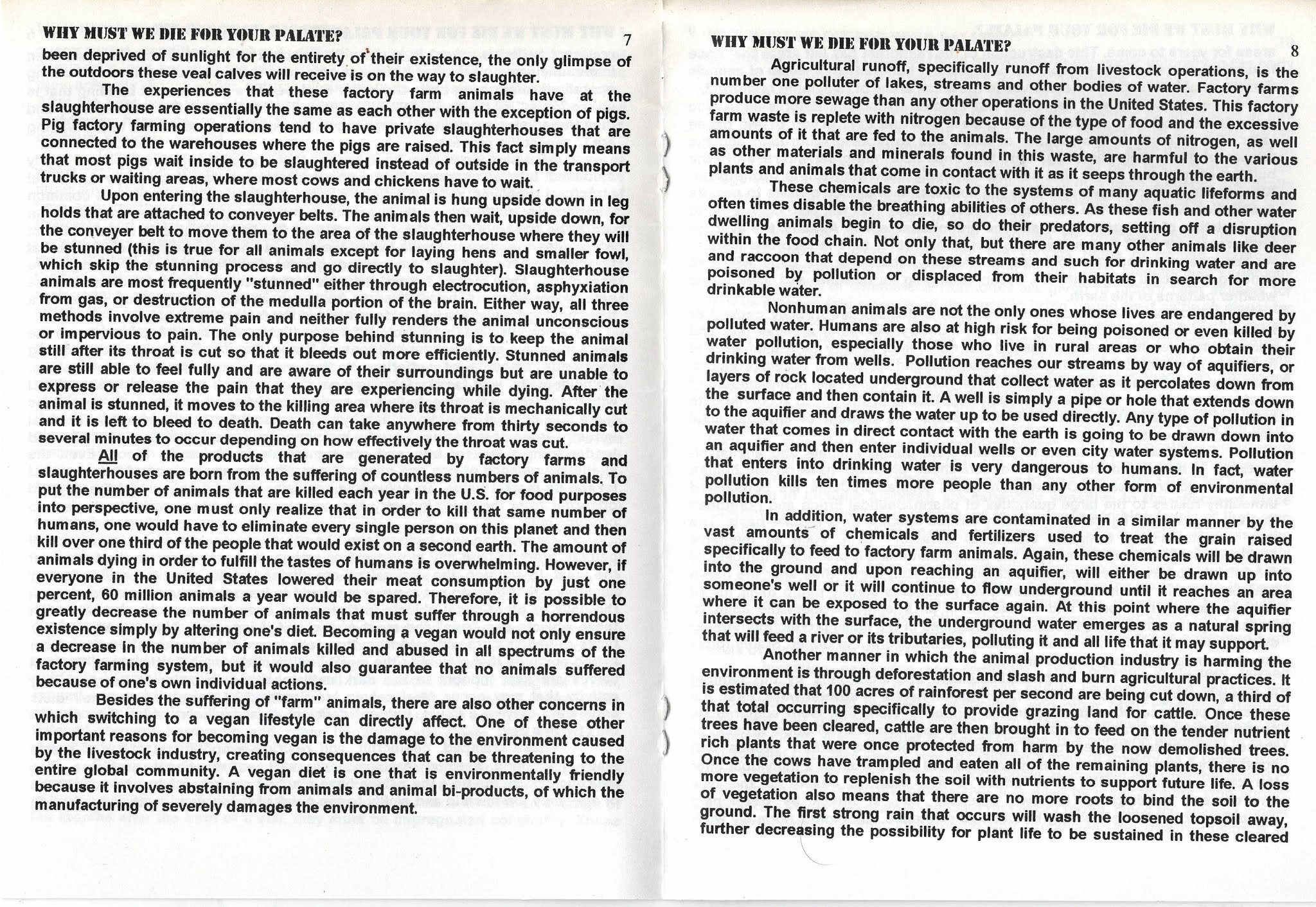
As a credible vegan punk - I own a dozen of Antisect shirts - I have always loved animal rights songs, even the sloppy cheesy ones, because I identify with the message and, love it or not, they have belonged to punk history and tradition for 40 years. I have to confess that I don't even like animals. The neighbour's cat is an alright fellow and watching him being a useless bastard is inspiring indeed, however I have no trust whatsoever in sheep, cows and goats, while horses and ponies are dangerous feral beasts and geese are evil entities. Why Must we Die for Your Palate? belonged to the category of serious, documented and educational animal rights record. It was meant to make you think, convince you and eventually recruit you into the preachy tofu-eating army. Join the fight comrade! There is a comprehensive booklet highlighting the validity and benefits of plant based diets and the necessity of ending animal abuse and industrial farming for the sake of ethics and the environment. If you are already familiar with the issues, it will not be anything new but the firm sense of political purpose and dedication conveying by the Ep is meaningful and typical - in a good way - of the anarcho and crusty 90's scene that disliked soap, even vegan ones, as much as they loved a vegan stew and dumpster diving, which became an important discipline of the Crust Olympics around that time.
The compilation Ep includes four American bands: Detestation, End Result, Depressor and Idi Amin. I realize I have directly written about Detestation only once, when I reviewed the Punk Riot compilation Lp (that was in 2012... fuck me), a gap that might strike the punk on the street as a bit odd. Detestation were a pillar of the U$ d-beat/anarcho/crust 90's scene, a parallel dimension that I have touched upon on more than one occasion. Though the band did not play for that long - between 1995 and 1998 - they left a lasting impression on the punk world, maybe not unlike another crucial female-fronted hardcore band, Health Hazard. Detestation is one of these bands that everybody has heard and judging from the high concentration of Detestation appurtenances at festivals, they have remained something of a classic throughout the years. Reasons for this enduring popularity was that the members had already played in quite a few bands before so that they knew what they were doing creatively and had all the right networks, that the band was very prolific indeed but more critically Saira's vocals were one of the most recognizable of the 90's - and arguably beyond - so that they gained an iconic glow that is here to stay. I already wrote about the PDX DIY hardcore punk scene of the 90's and how it grew to be an early example of a nerdier trend of referential punk and it was no coincidence that the name "Detestation" came from GISM's first album and "Masskontroll" from a No Security song for instance. The song "Not fucking funny" was recorded in 1996 and dealt with hypocrisy, pretense and dodgy behaviours in the punk scene. Ty and Adam from Starved and Delirious - and Resist for Ty - appeared on that recording although the lineup at the time of release, or rather at the time they contributed their bit of artwork, had Bryan from S&D and Dominic, beside Kelly from Resist and Defiance and of course Saira. As for the music, well you've heard it all before, yeah? Fast and thrashing scandicore with political lyrics and mean, compelling, insane-sounding and pissed high-pitched female vocals that sound like you're being yelled at after being caught smoking at the window for the first time by your mom. But that might memory talking. Imagine a fight on speed between Crude SS, Pink Turds In Space, Riistetyt and Potential Threat. Class and classic.
Next up are the much less famous End Result from Lexington. I guess the name comes from the Crass song but I cannot be sure. This lot were by no means the first to come up with the End Result moniker, as there were, at least, three other bands who had the same linguistical idea: an early 80's punk-rock band made up of English 12 year-old, a Chicago based 80's now-wave band and an excellent mid-80's old-school anarchopunk from Australia. But then, Discogs was not around in the 90's so no harm done really. I don't know much about this End Result to be honest. The song "Control", about the objectification of women's bodies and the sexual politics of meat, is your typical 90's blasting fastcore number with a raw sound (it was recorded in a garage) and two vocalists. Not bad and I like the lyrics but not really my cuppa.
On the other side, hostilities resume with Idi Amin, another band I am not really familiar with. That's what I have always enjoyed with such compilations, you always got to discover bands you had never heard about - sometimes for good reasons, let's get real - thus increasing your punk knowledge. I doubt conversations about Idi Amin abound in 2021 but it might come handy one day. Contrary to the obscure End Result, this Roanoke bunch released four Ep's between 1996 and 2001, one of which was with Unholy Grave which helps one locate where Idi Amin stood on the spectrum of punk. With that mind, "Confutation..." (that's a word I did not know so thanks for that Idi Amin) unsuprisingly sounds like a blast fast U$ hardcore thrash with two singers and a powerviolence influence. Again the sound is raw and rough and the band was not the kind to arse around as the song lasts 54 seconds. The lyrics deal with animal experimentaton and there is a nasty picture of a tortured rabbit on their sheet, a common, if not traditional, visual meant to shock that bands have often used when addressing the topic.
Finally, you are presented with a song from the mighty and totally unique Depressor, which I have already raved about here at a time when I was still a bit shy and not the egregious braggart I have become. Oh well. Depressor was a San Fransisco musical project started by Chris in 1992, a strange beast that mutated throughout the years, evolving from indus crust to occult hardcore, with inhuman anguish as the binding threat. A bit of an unclassable and cruelly underrated band really. "Filth" was recorded in 1995, a period when Depressor was at the apex of its heavy and hammering industrial old-school metal crust power, and originally appeared on the Burn the Illusion demo tape, recorded on four tracks which accounts for the raw primitive cavecore sound and the smouldering mechanical inhuman urgency of the music. One of the band's crucial early numbers. Imagine Sonic Violence, Godflesh, Saw Throat and Axegrinder working and plotting the revolution on the same alienating assembly line. "Filth" deals with male ego and insecurity and how it relates to animal abuse and the rape culture. A lovely song that would enjoy a boisterously enthusiastic response at your cousin Lee's wedding reception. If you love being crushed by oppressive indus crust, the label Fuck Yoga from Macedonia recently released two Lp's, 1995 and Filth/Grace, that contain Depressor's early material. Essential and compulsory listens for the crust students yearning for crushing enlightenment.
Why Must We Die for Your Palate? was released on Dire/Action, a label based in Lexington, so I am guessing that it had some connection with End Result, that also put out the Charger Ep, a band involving Chris from Depressor, as well as a second animal rights compilation Ep, Why Must We Die for Your Science that had a strong lineup made up of Resist and Exist, React, Act of Heresy and A//Political. As one can expect, revolting - but somehow banal even if stemming from a well-meaning intention to induce a reaction - pictures of animal abuse adorn the foldout. This Ep looks like a typical DIY record from this era, simple and realized with little means but a big heart.
So why must they die for your palate then?
Monday, 28 June 2021
Ace Compilations for Less than a Fiver on Bloody Discogs (part 4): "Bare Faced Hypocrisy Sells Records" compilation Ep,
Punk can be a Daedelian microcosm. Its fauna and flora is immensely complex when looked at through untrained eye and even world renowned ethnologists humbly state that ancient punk societies are still very much shrouded in mystery. The most optimistic scholars think that normies may, one day in the future, come to grasp some of the inner workings of these fascinating civilizations, rich with dozens of vaguely drawn generic genres, extravagant dubious subgenres and absolutely anecdotal subsubgenres that have made punk a crucial part of Unesco's intangible cultural heritage list. Tragically punk was still below metal on that list which resulted in the particularly bloody Extreme Music Wars ending with metal's crushing victory thanks to the not insubstantial supply of swords, axes and nondescript spiky shits of the black metal community. Researchers have been working on many facets of punk societies around the world and notably their deity called Way of Life. Punks' reverence toward Way of Life has few equivalents on the planet even if scholars are still struggling to accurately understand the powers that Way of Life is supposed to confer to its believers in spite of the vast number of traditional punk songs dealing with the cult of Way of Life.
Punk's immemorial traditions emerged in the late 70's, as soon as the first wave either vanished or started to make money. One of the most crucial of such unwritten traditions lies in the passing of the Timeless Punk Values, a sort of compulsory rite of passage, a coming of age. It consists in a usually highly intoxicated punk Elder teaching, often through a lengthy rant about the True Meaning of Punk, a younger punk the ways of the tribe after he or she has been deemed worthy of inclusion in the cult. It has to be said that brevity in the pulpit is not what characterized Venerable Punk Elders, those who once got to see real punk in action like Discharge or Crass in '81 (substitute those bands with your own national punk myths), so that it is also an important test of stamina and resilience for the younger punk candidates. When the Sacred Knowledge about the True Meaning of Punk is finally passed the newly educated younger punk is requested to present a gift to the Punk Elder, generally a cheap bottle or a fiver for a pint. Fundamental Punk Values include - but are not restricted to - a hatred for authorities, the pigs and fascists; the ability to make the distinction between the Real Punks and their natural enemies, the Posers; a dislike for basic hygiene; poverty as a virtue and so on. The list is pretty much endless and evolves through time, making Tribe Membership a lifelong process. A profound disdain for punk sellouts and the bitterness of being stabbed in the back - especially among the Straight Edge Division - are some of the strongest values and must be taught with utmost serious. That takes us to today's bargain compilation Ep, Bare Faced Hypocrisy Sells Records, a record that was dedicated to the critique and to the ban of anarchopunk-heroes-who-sold-out Chumbawamba.
I have already dealt with Chumba in the past with their excellent split Ep with A State of Mind which is a genuine anarchopunk classic, so that I am not going to assail my dear readers with the story of my encounter with the band again. The story of their selling out was still hot on the lips of older punks when I realized that, before they contributed a song to a football video game in 1998, they used to be one of Britain's smartest, most articulate, radical and inventive anarchopunk bands. To be honest, it was the early 00's and that came as a bit of shock and the massive stretch was hard to believe, but not to swallow, as I was completely unaware of the band's past status. Their ruinous decision did not seem to be primarily prompted by greed (though it must have mattered) but by the belief that going mainstream would help spread their anarchist message to the masses. Of course, it was nothing new and it sounds somewhat naive. After all, the DIY medium can be said to be the message itself, which I utterly agree with, but in the context of a stagnant and even conservative punk scene, compromising with the enemy might have looked like a way out of the inertia. Still, to this day, Chumba have remained the only anarchopunk band, or perhaps it would be more accurate the only band that had emerged from the anarchopunk scene, to sign on a major label, EMI. Devil's advocates would point out that Chumba's commercial success had already started with their collaborations with One Little Indian and they were no longer playing punk music anyway. They had incorporated folk and pop elements to their music, in a great fashion it has to be said, which resonated with the general public and it was probably not that surprising that a major label would one day knock on the door. Realistically, no other punk bands at the time would have been offered the same opportunity as Chumba and the idea of acts like Coitus or Wat Tyler signing to Warner sounds about as plausible as England winning the World Cup, although it would have been highly comical in some bizarre way.
So in 1997, Chumba signed to EMI, 8 years after taking part to the Fuck EMI compilation Lp alongside Generic, Sore Throat or Thatcher on Acid. The fact that the band had always been quite critical of punk's apathy and rules and would spread radical anarcho-situationist politics made what was qualified as an unacceptable betrayal an even bitterer pill to swallow. The band has also repeatedly spat on money-grabbing multinational companies and pointed out their hypocrisy and responsibility in the harshest forms of capitalistic exploitation. They sang about taking back control of our lives and abolishing capitalism. That a band like The Exploited would sign to EMI would be bad enough but nowhere near as shocking, which accounted for the general uproar then. Chumbawamba had committed two unforgivable crimes that were explicitly depicted in the Gospel of Real Punk: they sold out and stabbed the backs of the scene that made them who they were. To add insult to injury, the band had stated on several occasion that they would never ever sign to a major record company, but on the other hand they had not yet been handed the cash. A lot of the money the band made was given to worthy political causes, campaigns and struggling social centers and at least they never gave up their agitprop approach and their lyrics remained smart and political although the music became a bit shite to be honest. It is in the context of this betrayal and the outrage it caused that Bare Faced Hypocrisy Sells Records was released. That a major label would even seriously consider signing an anarchopunk or DIY hardcore band nowadays sounds like a divagation of a stark raving mad punk and the closest situation we encountered was Epitaph offering GLOSS a deal a few years ago which the band eventually turned way. They split not long after. In our current era of shorter and shorter attention span and global equalizing culture, I am not even sure people would really be shocked by "one of us" selling out. I suppose the fake display of outrage would only get only approval for a couple of weeks so it might not be worthwhile to think too hard about it, right?
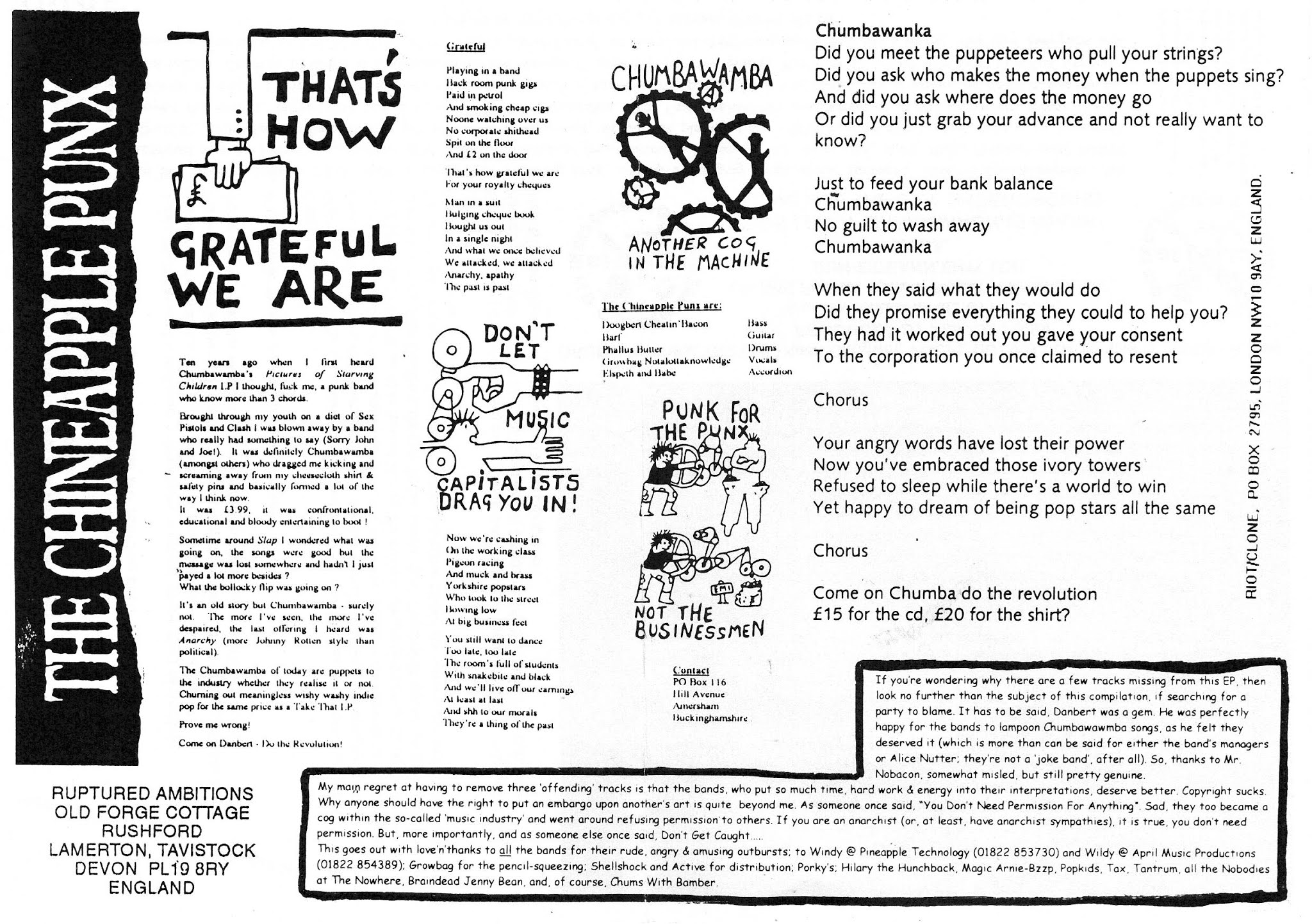
The Ep is a bit of a strange one. First the lineup indicated on the backcover is totally wrong as The Chineapple Punx, Love Chips & Peace or Wat Tyler do not appear on the Ep. Riot/Clone, Bus Station Loonies and Oi Polloi are actually included and a fourth band, Anxiety Society, completes it. The reason for this discrepancy has to do with copyright issues, since the three missing bands were not given the permission by Chumba to do the covers (which made sense with the EMI contract, although it made the situation even sadder) although Danbert Nobacon had apparently allowed it. The three missing songs could be obtained directly from the label if you sent a coupon to the address, which was only fair after all. As expected, the lyrics on the compilation deal with the hypocrisy and treachery inherent to the band's signing and use or parody lyrics from Chumba, stressing in the process that the band was taking part exactly in what they so radically criticized before. Satire is a punk tradition after all. Oi Polloi reworked the classic "Rotten to the core" song by Rudimentary Peni" using the Chumba situation) while Riot/Clone were even more direct with "Chumbawanka". There is an interesting column about Chumba's move on the backcover written by Chris from Bus Station Loonies and Ruptured Ambitions Records that sums up the feelings and the mood of the anarcho scene pretty nicely.
So what do we actually get on the Ep then? The first song is "Chumbawanka" by Riot/Clone, possibly one of the band's strongest numbers. The band was going strong in the mid/late 90's and, with Paco from Conflict behind the kit, it could be said that it was the band's finest hour which is not something that can be said about many reformed 80's anarchopunk band. On this song, R/C unleash a direct and mean punk-rock attack with great riffs and a raw sound and Dave Floyd's sounds extremely pissed, even for him. The man's vocals were always a major asset of R/C - not to mention an influence on Bathory - and as a younger punk myself, I was always very impressed with the spitting snotty anger infusing the band's words. The title of the song "Chumbawanka" is pretty self-explanatory and listening to it, one could have the impression that the members of Chumba all took a shit in Dave Floyd's shoes while he was sleeping and that he wrote the song in the morning upon the discovery. 90's UK anarchopunk at its very best. Mean furious shit. The 1997 Lp To Find a Little Bluebird comes highly recommended and I suspect the song was recorded during the same session.
Next you have "Always tell the punters" by Anxiety Society, a band I found little information about but that must have been connected to Ruptured Ambitions as three of the compilations they contributed a song to - the band never had a record of their own - were released on said label. The present song is something on an electro-pop pisstake of Chumbawamba which is rather pleasant and tuneful to the ear and a fitting parody. I probably count not take a whole of Anxiety Society but it works here. There are other songs on the Crass tribute You've Heard it all Before or the Fish Out of the Water tape if you are interested.
On side B, Oi Polloi offer the song "Shhh-it", a reference to Chumba's Shhh Lp. As previously mentioned, the lyrics to the song are a reworking of the words of Rudi Peni's "Rotten to the core": "Have you noticed that rockstars always seem to lie so much / Chumbawamba once said they cared - but they never really gave a fuck". At that time Chris from BSL/Ruptured Ambitions was drumming for Oi Polloi which made their inclusion logical. The infamous Scots have a long discography under their belt so that it sometimes feels a little difficult to sort out the very good stuff from the more average materials. This 1995 number belongs to the great ones, without a doubt. The band released some very solid records in the 90's, most notably the Guilty Ep in 1994 on Ruptured Ambitions (obviously) and "Shhh-it" definitely sounds like this period. Heavy and metallic dirty anarcho-hardcore with an old-school UKcrust influence, the usual singalong chrous and straight-forward lyrics. Classic stuff from an eternal band.
Finally, Bus Station Loonies deliver the song "Charlie Harper" and, well, a non-participation of the band to Bare Faced Hypocrisy Sells Records would have been rather odd indeed. BSL were always full of vim and they described themselves as a cross between Crass and Splodgenessabounds which, as strange as it may sound, makes sense when you give them a listen. I must confess that I don't like everything from their repertoire but they do have a solid sense of tunes and a contagious energy. The song is about staying true to the punk ideals and yet another blow to Chumba's falseness, as opposed to UK Subs' legendary frontman. Snotty energetic punk-rock with a humourous almost absurd touch, as the song ends with the sound of a man taking a massive shit during what sounds like a BSL gig. Pretty well done and a fine instance of punk's cider-loving silliness that still pales compared to the BSL's greatest achivement: their inclusion in the Guiness Book of Records after they played 25 gigs in 25 venues in 12 hours. In the end, that's what punk is also really about, innit?
The three songs that could not make it to the record are equally worthy if you yearn for more Chumbawamba-bashing and you can find them pretty easily on the web. As for Ruptured Ambitions, it released two excellent Ep's that you should really (re)visit after this compilation Ep, Policebastard's Gulf War Syndrome and Sensa Yuma's Everyday's your Last Day. As for Chumbawamba, they got poppier and poppier, left EMI in 2002 and eventually stopped completely in 2012. A documentary about this fascinating, controversial and in spite of everything still highly inspiring band entitled I Get Knocked Down will be released soon and I am extremely curious. 25 years after Chumba's betrayal and 10 years after they split, the affair feels rather distant and I have little doubt that the younger generations of punks know or even care to know about an important event in the history and mythology of anarchopunk. Would it even be relevant to get angry and criticize the wrong - according to me - choice made by a now inactive band in a completely different context? I'd rather enjoy and find motivation in Revolution, Anarchy, Picture of Starving Children and English Rebel Songs. I suppose time healed some wounds as Sean, who played in Wat Tyler and wrote an anti-Chumba song for the Ep, reissued the excellent first demo of Passion Killers - a band that had three future members of Chumba - on his label Demo Tapes. Darren and Mavis from Chumba and Passion Killers now play in Interrobang‽, an interesting postpunk band with anarchist tendencies that I find very convincing and the Lp on All the Madmen records contains some proper punk tunes with clever lyrics.
Rest assured that Terminal Sound Nuisance shall never sell out and that your backs will be safe with me. Punk belongs to the punx, you've heard it all before.