Monday, 23 March 2020

Last Week's Trend is Now Passé (part 7): "Shall we dance?" compilation Lp, 1987

Here we go again. The valorous Terminal Sound Nuisance team is still on lockdown but more than ever determined to spread the good word about punk etiquette to my confined brothers and sisters all over the world. Unfortunately, since I will not be able to engage in my second favourite activity - the boastful display of my exclusive and high-class collection of crust shirts - for a couple of weeks more, at least, I shall focus all my energy on the blog in order to educate my fellow punks about the respectability of decent punk tastes, for the common good. I mean, it is either that or wasting your few remaining brain cells watching some dross on Netflix, so I suppose Terminal Sound Nuisance is almost like sending humanitarian aid. Thank fuck I have been graced with the gift of prolixity.


Today's post will address a compilation Lp entitled Shall we Dance?, released on the classic label of Dan's Ian Armstrong, Meantime Records. Now, with a title like Shall we Dance? one legitimately expects to be properly entertained and see his or her anxieties about that bloody virus mollified and one will not be disappointed. Let's first tackle an aspect of this record that has divided the punk community since its release in 1987, tearing families apart, breaking lasting friendship, destroying marriages, sparking riots at distro tables: should this album be called a compilation Lp, a four-way split Lp or even a four-way-split compilation Lp? More than thirty years later, there is still strong disagreements on the issue and it seems no consensus in the punk academic circles will ever be reached. As a respected self-proclaimed scene veteran myself, with solid punk credentials, receding hairlines and all that, I personally consider Shall we Dance? as a compilation simply because it is curated as such. I know such a bold statement might stir controversy but I like to live dangerously.


Four bands are included on the Lp, Joyce McKinney Experience, Decadence Within, Nox Mortis and Incest Brothers, two of which - JME and NM - were part of that grandiose article about UK anarchopunk from 1988 to 1992 that we did with Erik Negative Insight and, were it not for a corrupt jury, would have got the Pulitzer Prize (so make sure you read it so that I don't need to repeat myself). Besides, my beloved JME also had their 1990 12'', Cuddle This, reviewed here so they are not exactly newcomers to the blog. My oft fabled astuteness leads me to suggest that the purpose, the driving idea behind of Shall we Dance? was to offer new, interesting bands a record opportunity. In that light, it makes sense that the Lp was JME, NM and IB's first vinyl output. DW's 1986 recording is the odd one out because, as the band points out on their insert, by the time Shall we Dance? hit the DIY punk distros, they not only had a new lineup but had also changed musical direction so that the DW songs did not reflect what the band was about in 1987 (another example of how staggeringly quick bands moved in the 80's). Still, in spite of this slight discrepancy, the compilation should be described as a relevant introduction to four young English punk bands at a crucial time. Indeed, the year was 1987, and the shimmering crust, thrash punk, UK hardcore, grindcore waves were all ready to erupt in a spectacular fashion and officially supplant the older punk generations. In that light, this humble Meantime Records album, basically compiling four early recordings (three being actual first recordings!) from four up-and-coming punk bands, also embodied the new blood of the scene at that specific moment, notwithstanding the fact that two out of these four bands would eventually sink into obscurity.


Let's start with JME, an old favourite of mine that I also got to encounter through a Boss Tuneage double-cd discography from 2006, that I initially did feel like buying but, just like with the Dan one, still got in the end (so thank you boss). As a result, I often tend to associate both bands and, after all, there are meaningful similarities between them: beside being contemporaries, they both started out with strong dual female vocals, they had a very upbeat vibe, catchy tunes, a songwriting versatility, without mentioning very odd band names and colourful artworks which, because of the religious crust cult I belong to, makes it impossible for me to ever wear a JME or Dan shirt. Bummer. However, I guess JME could be said to be even more pop-oriented than Dan, but that is a heated debate I am not getting into, although I should point out that, by the end of their career in the early 90's, it certainly was true as they had essentially become a Britpop band. The band was from Leamington Spa (hometown of Bad Beach, Bolt Thrower, Varukers and Depraved with whom they shared a member, drummer Gigs) and although my preference goes to the delightfully melodic Cuddle This, I presume it is not far-fetched to claim that their 1988 Lp, Joyce Offspring, is what they will always be remembered for and only the most obtuse punk could remain insensitive to the pervading catchiness of JME's tunes. The four JME songs on Shall we dance? were part of a demo recording done in early 1987 (a fifth song from this session, "Slaughter in the Faroe Islands", was not included on the Lp) and, although it was just the band's first endeavour into a studio, the songs epitomised, albeit in a rather punky and raw fashion, what the band was genuinely proficient at: writing potent but melodic punk songs. The dual female vocals really complement themselves meaningfully, jumping from pop harmonies to a more aggressive raspy style with ease, displaying a wide variety of emotions that the songwriting really highlights. And it is no basic punk-rock either, there are some proper basslines and original guitar hooks and clever tempo changes and it never sounds generic. If you really think about JME may have been the catchiest UK punk band of the mid/late 80's (with Blyth Power). These four memorable songs would be rerecorded with a better production for the aforementioned Joyce Offspring Lp, a true punk classic that managed to combine the energy of early hardcore, the snottiness of anarchopunk and the melodies of pop-punk. Essential band that sounds a bit like a pillow fight between Bad Brains and Lost Cherrees.


The second band on the first side is Decadence Within, yet another one with a rather questionable moniker, although not for the same reasons as JME (at least it didn't refer to a priest-raping teenage girl, but it reminds me too much of Decadent Few for me to validate it completely). As they freely admit it themselves in Ian Glasper's Trapped in a Scene, DW may have been one of the hardest-working and longest-running UK hardcore bands of their generation, their run spanning from 1984 to 1995, but they were also one of the least popular. Apparently they played their first gig in 1985 with Shrapnel and a mysterious band called Discarded Remnants of an Age No More which goes to show that DW was not such a bad name after all. Because of the band's longevity and prolificacy, it is only logical that they already appeared several times on Terminal Sound Nuisance for their participation on punk samplers like the tragic Oi! Sound of UK (where they are referred to as Decadance Within on the cover!), A Vile PeaceHiatus and Endless Struggle. I must admit that I never really got into DW that much and I first became acquainted with them through the Soulwound cd on Peaceville that also included This Lunacy. I vaguely remember buying this second-hand for really cheap on ebay at a time when, naive and impetuous, I was still very much exploring that corner of the UK scene with a heart full of idealism. And I did not like the cd at all as it sounded like an American crossover hardcore band and I was hoping for a metallic UK crust punk one. I did not eat for a whole week and the scars have never truly healed. As a result, I promptly discarded DW as a hopelessly US-styled hardcore act and did not play the cd again (I still have it though). And then, Overground Records started to release its grandiose anarchopunk tetralogy - the so-called Anti compilation series - that certainly encouraged me to dig deeper and expand my epistemological stance toward anarchopunk. I realized that DW were included on the second volume, Anti-State, which was a little baffling to me since DW were fundamentally tied to "that late 80's crossover sound" and I did not expect them to rub shoulders with The Mob, Disrupters or Subhumans on an anarcho-themed compilation. The DW was "A breath of fresh air" and it is a brilliant song, close to the old-school classic anarchopunk sound indeed and I had trouble linking that song with the Soulwound cd. But bands moved really fast at the time and could take radical turns in a matter of months.


All this to say that the DW you get on Shall we Dance? is the old-school anarchopunk one, not the jumpy hardcore one. As I mentioned earlier, this DW recording was not new and not specifically done for the compilation. In fact, it was the band's first demo, recorded in July, 1986, and as a warning they tell the listener on the insert that "we hope you enjoy these songs but bear in mind that they are OLD!!". About one year-old to be accurate. The warning is fair though since at the time of writing DW had a new lineup with a new guitar player well into thrashing hardcore and the female singer was gone, without mentioning that the band already had a record out, the very enjoyable Speed Hippy Ep released in late 1986. As the band reveal in the liner notes, the inclusion of older DW songs on the Meantime compilation is the result of the band wanting to do something with a good recording that was gathering dust and of Ian Armstrong's opinion that the old songs sound better than what DW were doing then! So how do they sound then? The songwriting is quite ambitious actually with song structures focusing on narration, daring mood changes, over-the-top soloing (the guitar player was a massive Hendrix fan apparently), crazy drum rolls and even some vocal effects. Not everything works and there are moments when the drummer should have gone for something a bit simpler and when guitar solos were not necessary, but while they remain firmly in the anarchopunk camp sonically, they were not generic. The sound is very clear for a demo recording and the dual male/female vocals work fine, with Am's potent and deep singing style contrasting with Kev's angry snotty shouting, and the guitar riffing is strong. Try to imagine a blend of Civilised Society?, Conflict, The Sears and The Instigators and you will not be far off. The Speed Hippy Ep builds on the same inspirational drive and thanks to a groovier production can be said to be a superior work that I personally really like, although the accomplished guitar player does tend to venture into classic rock territories a bit too much for his own good at times and the cover is very ugly. DW's lyrics then dealt a lot with animal rights and two out of the three songs on Shall we Dance? are about this topic. Classically trained, with an interesting twist, unfairly overlooked anarchopunk.


The first band on the B side are the magnificent Nox Mortis from Southampton. I have already raved about NM on two occasions, in the article about 88-92 anarchopunk and in my review of Spleurk, another Meantime compilation Lp which includes their most glorious anthem "In memoriam". Incidentally, "In memoriam" was originally supposed to appear on Shall we Dance?, as it was part of the same recording session as the other three songs, but could not fit on the actual vinyl because of length issues. As a result, they ended up leaving that song out but their lyrics sheet was ready so they just indicated that "The above song isn't on due to a lack of time... sorry". By no means was it an unusual mistake in the amateur realms of DIY punk and I also love punk for such imperfections. That NM never got reissued, or even acknowledged at a time when so many claim to be into 80's anarchopunk, remains an abstruse enigma in 2020 and I spare no effort in spreading the gospel. I can think of other such deserving bands equally worthy of attention, and ideally, reissues like The Assassins, Systematic Annex, Awake Mankind or Polemic but none of them quite as much as Nox Mortis. The three songs on the Lp were recorded in 1987 and highlight the band's remarkable talent for writing moody, intense, poignant, melancholy, beautiful and dark punk-rock songs. The concept behind NM was to adapt the so-called war poets, poems written on The Great War's frontline, into punk songs and they managed to work on poems by Ewart Alan Mackintosh, Wilfred Owen and John McCrae. NM's singer and bass player Simon died tragically in April, 1988, after a long illness and the Spleurk Lp was dedicated to him. The band's first recording, a rawer but still fantastic demo, also comes very highly recommended if you crave for soulful and passionate anarchopunk music reminiscent of The Mob, Omega Tribe, Naked or Kulturkampf. In memoriam.


The final band, Incest Brothers, on Shall we Dance? is infinitely more jocular than NM. In fact, they were what you can call a joke band, a punk subgenre that is not uncommon in Britain, a country reputed for its peculiar sense of humour. Surprisingly - and terrifyingly - enough, there was an 80's Swedish punk band with more of a late 70's vibe also called Incest Brothers which, if anything, proves that there might be such a thing as a "punk sense of humour" after all. I do not dislike joke bands but am a rather picky eater when it comes to them. With extremely silly and puerile songs about farting "Breakwind", undies "Dungarundies" or naturism "Naked city", I guess IB must have been a fun bunch to hang around and drink with if one is to believe their interview in Trapped in a Scene. This Leeds-based crew never took themselves seriously and their first gig took place at the Totally Crap Festival - that also saw pre-Intense Degree band System Sikness or Skumdribbblurzzz "perform" live - which they headlined. The Brothers recorded seven songs for Shall we Dance? two of which are just Sore Throatish bursts of hardcore noise. Sonically however, IB were not the wall of unlistenable chaotic noise one would normally associate with a band that had a member claiming that it was morally wrong for a punk band to practice. In fact, they were capable of writing some pretty energetic, catchy, if chaotic, US-flavoured hardcore punk tunes of their own, a bit like a goofier and sloppier Stupids, Youth Brigade or Doctor & the Crippens. A silly but not incompetent band that believed in the power of doing silly dances so that's always something.  


Shall we Dance?, as a record, looks brilliant. The four bands contributed a lyrics sheet as well as an additional piece of artwork that are all part of a big foldout cover and you can tell that each of them took their role seriously. All the pieces are not merely well executed, they also meaningfully convey what the bands stand for and how they see themselves aesthetically and lyrically. The relation between how the artworks look and how the bands sound is a close one, pregnant with signification. It therefore comes as no surprise that NM's pieces are evocative and mournful when IB's show inept drawings of silly punks. The cover of the record itself, drawn by Mick from Chemical Warfare zine looks ace a,d I enjoy the Crumb-influenced style. Four punks from four different schools (you've got the US hardcore kid with his skateboard and baseball cap, the dirty crusty missing teeth with wheat in his hair, the high as fuck spiky punk and the anarcho punk with her feminist badges) all united in the perspective of dancing together. Cool shit.      


Thursday, 19 March 2020

Last Week's Trend is Now Passé (part 6): Dan "Can you dig it?" Ep, 1986

What a time to be alive. The Insane used to sing that "the whole world is going insane" but can you really trust a band wearing their dubious mental health on their sleeve when it comes to matters of sanity? Maybe you first have to think of yourself as insane in order to regain some semblance of rationality and truly seize the insanity of the masses. Why have we, collectively as a society, suddenly become obsessed with the cleanliness of our arseholes? So much so that, to keep our own bottoms clean, we are happy to raid supermarkets in our quest for bog rolls and if it takes a bit of wrestling to get the last pack, then so be it. The impression that we are literally turning into selfish arseholes is a little nauseating and when I see so many of my fellow human beings shamelessly carrying a bog roll jenga on their trolleys, with that infuriatingly smug look of entitlement on their fat face, well let me tell you that, were I not such a wimp, I would probably consider the possibility to beg them to share and collectivise toilet papers because after all aren't we one big loving family? But of course, I do nothing of the sort and, so far, the only way I have found to quench the rapidly rising fury in my tiny chest, is to listen to Dan because is here to make you feel better about a world plagues by arseholes-obsessed arseholes. 


I would not want the previous paragraph to lead to think that I mingle with illiterate commoners on a regular basis but my personal shopper has been ill since the start of the outbreak - I did send flowers, just to make it clear - and as a result I now have to run my own errands until, I suppose, he dies and I have to hire yet another prole glad to toil for me for the minimum wage. But anyway, when hard times bang on your door and you find yourself locked inside the family castle like myself, you need to turn to good-natured, vibrant bands for spiritual comfort and Dan belong to that rare category. First, let's kick the elephant out of the room: yes, the band is called Dan and no, it is not just one banjo-playing geezer or something, and yes, the puns you can do with Dan are endless. I have been really into Dan since I acquired the Boss Tuneage double-cd Danthology upon its release in 2005. I had never heard them before that and I must admit that the perspective of a lengthy discography from a band that, not only chose to be called Dan, but also had a cat doing a peace symbol on the cover, was rather equivocal. The narrow-minded punk I was at the time should have scoffed haughtily, discarded Dan as "hippie pop shite" and proceeded to blast Hellshock at full volume. But Dan were referred to as a melodic female-fronted political punk band and since I unexpectedly liked the other Boss Tuneage discography I owned, Graveyard of Dreams by Terminus, I went for it. As for the band's moniker, bass player Ian justified it in the liner notes as follow: "Dan were named after "a male whore with a big whang" in the porn film, "Babyface." The Black Widow wrapped him from head to foot in clingfilm and then tried to cut his dick off, it was funnier than it sounds." I am still unsure whether the explanation actually makes the name worse or not. 


Dan were based in Darlington (County Durham) and existed between 1983 and 1988. They played 107 gigs and shared the stage with many of the best bands of the era like their "gigography" shows. From mid-80's anarchopunk bands like Anti-System, Hagar the Womb, Blyth Power or The Instigators, to pioneer hardcore acts like Electro Hippies or Generic, metallic crust founders Antisect, Hellbastard or Sacrilege, and even touring foreign hardcore acts like Wretched and Anti-Cimex. Not bad, right? Dan were both poppy enough to play with tuneful bands and fast enough to play with hardcore ones. However, despite a strong discography of three albums, one live Lp and one Ep (without mentioning one live tape and one BBP tape) and some serious gigging, Dan's legacy remains difficult to assess probably because of their versatility (they claimed to play "fraggle rock" whatever that means...). Most of the music has the potential to appeal to an anarcho crowd but the humorousness, cheeriness and the unconventional colourful artwork can repel those who worry about instagrammability or think that anarchopunk must look and sound like The Mob. Dan could win a pop-punk audience's heart but then, they could also play fast and hard and sound just too bloody punk and serious at times. And I suppose an old-school hardcore crew could enjoy some Dan but would eventually find them too poppy and well, it sadly often takes a bloke on vocals to be qualified as "hardcore legends". The band can be liked by everyone who is into punk (whatever the altar you kneel at), which should be positive and did allow them to play with all kinds of bands, from Eat Shit to Famous Imposters. However such a quality does not really fit in our strict modern music compartments and I have the feeling that it is why Dan, in parts, do not really get much credit today. But then, I suppose I should not be surprised in a world where the number of views on youtube has become the gauge of a band's relevance.


As the Meantime insert included with the Ep claims, by 1986, Dan had had 20 members (!) since their first gig with Conflict in 1983 but the lineup stabilised afterwards (a common case of the Oi Polloi Syndrome). Can you dig it? was recorded on two separate occasions in 1986, two songs (one one) were taken in York's Clifton Studios and the two others (side two) at the Terrace in Darlington. I suppose it is only honest to point out that this first Ep is not Dan's best venture into rock'n'roll stardom and that the first Lp, 1987's Where have all the children gone? is, while very much building on the same core material, a superior effort. But debuts are often quite revealing and eloquent of a band's intentions so I decided to pick Dan's only Ep. Apparently, Dan were supposed to do a split with Hagar the Womb (it would have been a very relevant pairing) on Children of Revolution Records but it did not happen and Ian decided to found Meantime Records in order to release Dan's material. The rest is punkstory and Meantime would become one of the major DIY punk labels in Britain at the time releasing records from Hellbastard, Sore Throat, HDQ or Leatherface. So what about Can you dig it? then? I have been prevaricating for ages so let's get to the point. At that time Dan still had two female vocalists, Julie and Georgie, which I am a huge sucker for as it always gives extra depth and dynamics to a tuneful punk-rock song. The production on the Ep is pretty raw and it really has that "first record" punky enthusiastic feel which makes one forget about the tiny mistakes, momentary lapses of concentration and sloppy singing. The first side has a clearer sound while the other is groovier but more unrefined. It is undeniably a flawed recording meant to be seen as a preparation for the Lp, but there is a freshness, an energy, a buoyancy that makes these four songs sound just honest and lovable. Beside, the four songs do not sound alike as the band use several paces, from the fast punky beat to the mid-tempo one, and moods which always made the band quite unpredictable. Not unlike Hagar the Womb or Rubella Ballet, Dan had that childlike exuberance and sparkly liveliness which, associated with their dynamic take on punk music and their pop melodies, made them quite endearing (and their cat logo was visionary). Sonically, comparisons to the two aforementioned anarchopunk greats as well as late Lost Cherrees or A-Heads are relevant, but there is also a manifest mid/late 80's melodic hardcore vibe to Dan's songwriting and other British bands like Hex, HDQ, Depraved and, obviously, Joyce McKinney Experience also come to mind.  


If Dan's music was quite cheery for the most part, although they were also able to pull out some moodier melancholy songs as well, the lyrics were definitely serious and were political from a personal point of view. The issues of low self-esteem, difficult self-expression, dysfunctional families and toxic relationships are tackled so that Dan's open merriness, while not misleading, must be seen in the light of words that give a bittersweet dimension to the whole. Clever band, to be sure. According to the foldout cover, Can you dig it? was not actually Dan's very first release since a tape including a live recording, entitled Human Beings the Size of Amoebas, had been put out previously on 69 Tapes, Sean Wat Tyler's label who also contributed sleeve notes to the discography. The artwork is humorous and silly with a lot of inside jokes, childish puns and cheesy drawings in pure cheeky punk tradition (somewhere between Hagar the Womb and Disorder). 

A top band that you should seriously pay more attention to. I <3 you Dan.


Tuesday, 17 March 2020

Last Week's Trend is Now Passé (part 5): Shrapnel / Symbol of Freedom "S/t" split Ep, 1986

In the year of grace 2006, renowned punk archaeologist Ian Glasper introduced the chapter devoted to Shrapnel with the following philosophical statement:

Many great bands have slipped silently beneath the radar of the average punk rock fan, never gaining the kudos they rightly deserve; in the wrong place at the wrong time, they just never got the breaks afforded far lesser bands and remain criminally overlooked by all but a few die-hards. If a book like this can change anything at all for the better, bands like SHRAPNEL will be finally acknowledged as the fine song-writers they truly were and hordes of new adoring fans will run up and down the streets screaming "Missile" at bewildered passers-by...!

Never has a man been more in the right and, if I am being honest, this moral epistemological stance has been fueling Terminal Sound Nuisance's indomitable fire since the beginning. Unfortunately, and contrary to what postmodern ideologues would have you believe, language is not that performative and biblical opus The Day the Country Died did not result in any massive resurgence of professions of love for Shrapnel. I suppose it should no longer come as a surprise, but it still amazes me that the average punk-rock fan has not had his or her radar sorted by now. At a time when even short-lived second-rate 80's punk bands get retrospectively hailed as underestimated classics, their fictional legacy a uchronia to be printed on cool shirts for cool punks, Shrapnel are still left without a decent discography or even a meretricious vinyl bootleg to their name and that, comrades, is just bloody unfair.

In 2020, it is ingloriously easy to claim that the name "Shrapnel" is, possibly, a little too unremarkable and generic for a punk band. You would not be totally wrong to think so since many other bands have gone for this moniker, from a late 70's US super catchy punk band who dressed up as GI's, to a technical Polish black metal band from the early 00's, to dreadful Australian "blackened thrash" or a Quality Control SxE hardcore band from Leeds who should have been aware of the Welsh Shrapnel of old and if they were, they just shrugged it off. I was lucky enough to be familiar with Shrapnel before reading Glasper's wisdom since a mate of mine had got a copy of the split with Symbol of Freedom in the early 00's after an old French distro and label - New Wave Records - got rid of some old stock. I wish I could tell you that, upon listening to it, I instantly got hooked and spent the following days tormenting anyone who would listen, or who were too polite to tell me to fuck off, about the greatness of Shrapnel. However, I just thought that it was alright but that the two sides sounded a bit similar, still taped it for posterity and forgot about it until I played the tape again a couple of years later, this time armed with some basic knowledge about UK anarchopunk and thinking that it was pretty good indeed.


Shrapnel formed in 1981 and split up in 1988, which was not a bad run at all for what was originally just a snotty punk band from a small Welsh town, and their sound consequently evolved a lot throughout the 80's. Because of Britain's centralisation, punk bands from Wales, although very active and relevant locally, did not enjoy the same exposure and opportunities as London-based acts for instance (touring constantly with Conflict, Icons of Filth were an exception) and this discrepancy could account for Shrapnel's relative obscurity even if they played in London several times. There is no real point in dwelling too long on Shrapnel's infancy but let's have a quick word about the band two demos that preceded their first split Ep. Recorded in early 1983, They Control our Destiny, was a typical example of spiky and angry protest punk music that did not only rely on raucous chorus over a basic and pogoable riotous beat (though it contains its fair share of them) but also used clever bass lines and dared tread into more tuneful territories. Their second demo Restricted Existance, recorded in september, 1984, was an incredible step forward in terms of songwriting flair and had it been done in a better studio with more time (it was after all a humble four-track endeavour), it would have made for a wicked Ep bound to join the exclusive anarcho canon. Instead it was released on tape by Bluurg Records (Shrapnel and Subhumans played together several times) although the song "Unjustified actions" got included on Mortarhate's We won't be your fucking Poor Lp. Restricted Existance is nonetheless one of my favourite demos of the era as it really showcased that vintage Bluurg punk sound, catchy but snotty, with memorable tunes but also youthful spiky energy, high-energy tempo changes, smart bass and guitar hooks and distinct vocals, half sung and half shouted.


If 80's anarchopunk mixtapes were any indicators of bands popularity and relevance, then Shrapnel certainly did matter since, like Political Asylum or Instigators, they appeared on numerous homemade tapes, probably because they toured a lot and played in many places but also because their demo recordings were strong. The band's crowning moment would come two years after the last demo, in 1986, when Shrapnel contributed two magnificent anarchopunk anthems to this split Ep with another Welsh anarcho outfit Symbol of Freedom. By that time, the band had perfected their brand of fiery tuneful anarchopunk, classically and yet outstandingly performed. Thanks to a better production highlighting the details in the guitar work (that opening riff!), the many bass hooks and the drum variations, "Fact or fiction" and "They are wrong" are close to anarchopunk perfection. The song structures are smart and narrative, with some of the crispiest mid-paced punk of the time, and the climaxes sound brilliant, just capturing, and meaningfully serve the Cold War-inspired lyrics. The songs feel direct, honest and memorable, creative and quintessential. And so bloody catchy. In fact, challenges not to sing along to "Patriotic bullshit, political lies" after hearing "Fact or fiction" are a safe way to earn a bit of money on the side if you are skint. That Shrapnel do not enjoy a cult status in our internet age is perplexing (but then, many things are nowadays) and these two songs - at least - should be consensually regarded as top-shelf anarcho anthems, up there with those of early Subhumans, The System, Instigators or Pagans (whose two listenable songs were insanely great). After this split, Shrapnel recruited a second guitar player, who previously played in Capital Gain, and Steve from Symbol of Freedom on the bass, and they changed direction, becoming more intricate, with more of a progressive punk influence, but still bloody brilliant if you ask me (just listen to their 1988 split Ep with Toxik Ephex or to their live tapes here).


Which takes me to Symbol of Freedom, another small-town Welsh punk bands from Pontypridd, with a, admittedly naive but still terrific name. Funnily enough (brace yourself for some trivia), Briton Ferry's Shrapnel first came across SoF through a 1985 tape compilation entitled There's more than Male Voice Choirs in Wales that had both Shrapnel and SoF. First, let me tell you that, apart from SoF, it included many excellent and rather diverse Welsh punk bands, from the ferocious Soldier Dolls and Classified Protest, the immense No Choice, to the postpunk-oriented Earth's Epitaph and Slaughter Tradition, and I will allow myself to state that, with my proverbial absence of objectivity, it can be an enlightening, educative listen. Being French, I was clueless as to why the average Joe would think that Welsh cultural life revolved exclusively around male voice choirs (I knew that Wales was officially the last country allowed to breed dragons though). And then, I saw some videos. I'll take that tape over any male, female or non-gendered voice choirs any day.

I have already written about SoF since they contributed a song to the classic You are not Alone 1986 compilation Ep, representing Wales on the record (here). By that time, SoF had recruited the former Shrapnel bass player on drums and original drummer Steve had switched to vocals. There is an earlier demo recording of the band released on Faeces Records (run, I believe, by Shrapnel's roadie), taken at the local YMCA in 1985 with Scottie behind the microphone. It is a rough collection of direct, angry and snotty anarchopunk that should please fans of Riot/Clone and Uproar. For the split with Shrapnel, the band had the great idea to hire a female singer to share the vocal duties with Steve, a wise choice which conferred another dimension to otherwise decent but rather generic fast punk numbers. The two songs on SoF's side, "Against our wall" and "Another day", are a massive improvements and make one ponder over what could have been, had the band kept going with this lineup instead of breaking up shortly after the release of the split. The fantastic chemistry between the two singers sounds very spontaneous and dynamic and emphasizes the raging aspect of the songwriting. The sound is quite raw but very organic and, given the band's rather basic sonic recipe, effective enough to convey significantly the heartfelt outrage. What an angry bunch. Stylistically, early Conflict really comes to mind and I would also send invitations to Toxic Waste and Disorder for good measure. Compelling stuff if you are into raw, fast and venomous UK punk music. The trade-off male/female vocal style is highly, albeit anachronistically, reminiscent of 90's US anarchopunk as well and I would be curious to know if bands like Mankind? or Antiproduct were at all aware of SoF.


The artwork of the split is beautiful done (I particularly love the caricature on Shrapnel's insert) and does not exactly correspond to your ordinary anarcho aesthetics while being evocative and dark enough. If Shrapnel dealt with media propaganda and Cold War paranoia, SoF's lyrics were of a more confrontational radical anarchist nature and as you can see they had a lot to say and to be angry about as working-class Welsh punks. The split was released on Hand in Hand Records, a label run by SoF Steve. If you are interested in Shrapnel and SoF, or more generally in Welsh 80's punk, then Bullsheep Detector is an ideal entry into that scene. Released in 2012 on Antisociety Records, this compilation was made up of an Lp with 20 songs from 20 bands that came in a foldout anarcho poster and a dvd that contained full demos lesser-known Welsh punk bands like Pseudo Sadists, Reality Attack, Condemned Skull Attack or Armistice. Amazing shit.


Sunday, 15 March 2020

Last Week's Trend is Now Passé (part 4): Blyth Power "Junction signal" 12'' Ep, 1986

While the oddly-named coronavirus is slowly but surely shutting down the world, turning our familiar streets into a jungle of wild paranoia where once sane people now fight to the death for bog rolls, we - pluralis majestatis - at Terminal Sound Nuisance will not be deterred from accomplishing our sacred mission: the mass conversions of the unwashed masses through wit and righteousness in order to raise an army to fight against poor taste in punk-rock (common decency prohibits me to give examples). I know full well that so quixotic a quest might lead your humble servitor into self-harm, utter madness and the temptation to listen to bands who think aping the Smiths in 2020 is a sensible idea. But being a firm believer in delusional incentive, I shall persevere and spread the good word of punk. Which takes me to one of my favourite bands: Blyth Power.

A few years back, I tried to install a new holiday in the punk calendar called "Blyth Power Week". It was to be a full week of celebration devoted to Blyth Power including a Paris train-hopping challenge and cricket games. Alas, it never really took and after I realized that no one had actually watched - never mind played - cricket, I decided to bury the idea altogether. But now that the world is on the brink of collapse, it only seems fair to rave one last time about Blyth Power. So rejoice! For those of you brazen enough to be unconversant with the mighty BP, out of old-fashioned chivalry, I will deign to give an introduction. Following the demise of The Mob (you know, one of the most iconic anarchopunk bands ever or something) in 1983, Joseph and Curtis, along with Neil from Faction started a new project with a different vibe and a broader spectrum of influences. In fact, if you listen to The Mob's last 80's gig in Doncaster, the opening song, then called "Hurling times" with Joseph already on vocals, would become an early classic BP tune under the name "Chevy chase". Just add Sarah and Andy on backing vocals - the latter, beside being also the keyboard player and the band manager, was running All the Madmen Records - to this crew and you have the first BP lineup that would record the A Little Touch of Harry in the Night demo tape for 96 Tapes in december, 1984, and for All the Madmen, the Chevy Chase 12'' Ep sometime in 1985, the Junction Signal 12'' Ep in march, 1986 and the Ixion 12'' Ep and the Wicked Women, Wicked Men and Wicked Keepers Lp, both mostly recorded during the same session in december, 1986, at a time when Joseph had already sacked the band. It makes sense to associate this early lineup to the early BP anarcho pop-rock sound as immortalised in those recordings done between 1984 and 1986, works that still had a clear 80's punk vibe contrary to their later materials. 


When I think about BP (and I often do), I usually place them in this wave of anarcho bands that escaped lazy categorisation and narrow defining processes and believed in free music, sometimes at the costly expense of good taste I have to admit. Don't start to freak out because of this hippie speech of mine, but there is no denying that, if bands like The Astronauts, Hysteria Ward, Culture Shock, Thatcher on Acid, We Are Going to Eat You and even Chumbawamba were still punk bands, they were not exactly "punk-rock bands" and dared to borrow from other, unchartered musical regions. It is rather fascinating to see that the rise of the hardcore and crust wave took place at about the same time as this third free anarcho wave (although I'd surmise the former involved a younger generation). They had a common purpose as both were trying to expand punk's horizon, but the means and the outcomes varied greatly. Still, it is quite amusing to notice that Wicked Women was released the same year as the Chaos UK / Extreme Noise Terror split Lp. Oh well, punk is a proteiform beast, able to convey the harshest sonic aggression as potently as the softest pop folk tunes. Well sorta. 

Browsing through BP's website (and I strongly recommend you do because it is very well done and a great source of information), you quickly realize that if they did play with many other anarcho bands in the mid/late 80's, they also shared the stage with bands from the indie pop rock, psychedelic or free rock scenes like Cardiacs, Red Lorry Yellow Lorry and even Shop Assistants (and Pulp!) and this variety and inclination toward the pop side of the moon makes perfect sense when you think about what BP were trying to create: an eccentric and theatrical blend of early '77 punk sound, folk music, pop rock, pub rock and a love for British popular culture, literature and History, trains and cricket. And I do understand that, on paper, such a project sounds a little absurd and a potential recipe for disaster, one that any reasonable punk should stay away from. But then, the tunes are just so insanely catchy, the singalong chorus so enthralling, the warm atmosphere so enticingly bizarre, the lyrics so poetic and derisive. There is a singularity to BP, a joyous melancholy, a taste for the epic tunes of yore and the countryside, for the personal adventures meeting the larger history, for tragic or comedic metaphors that are essentially, specifically English.


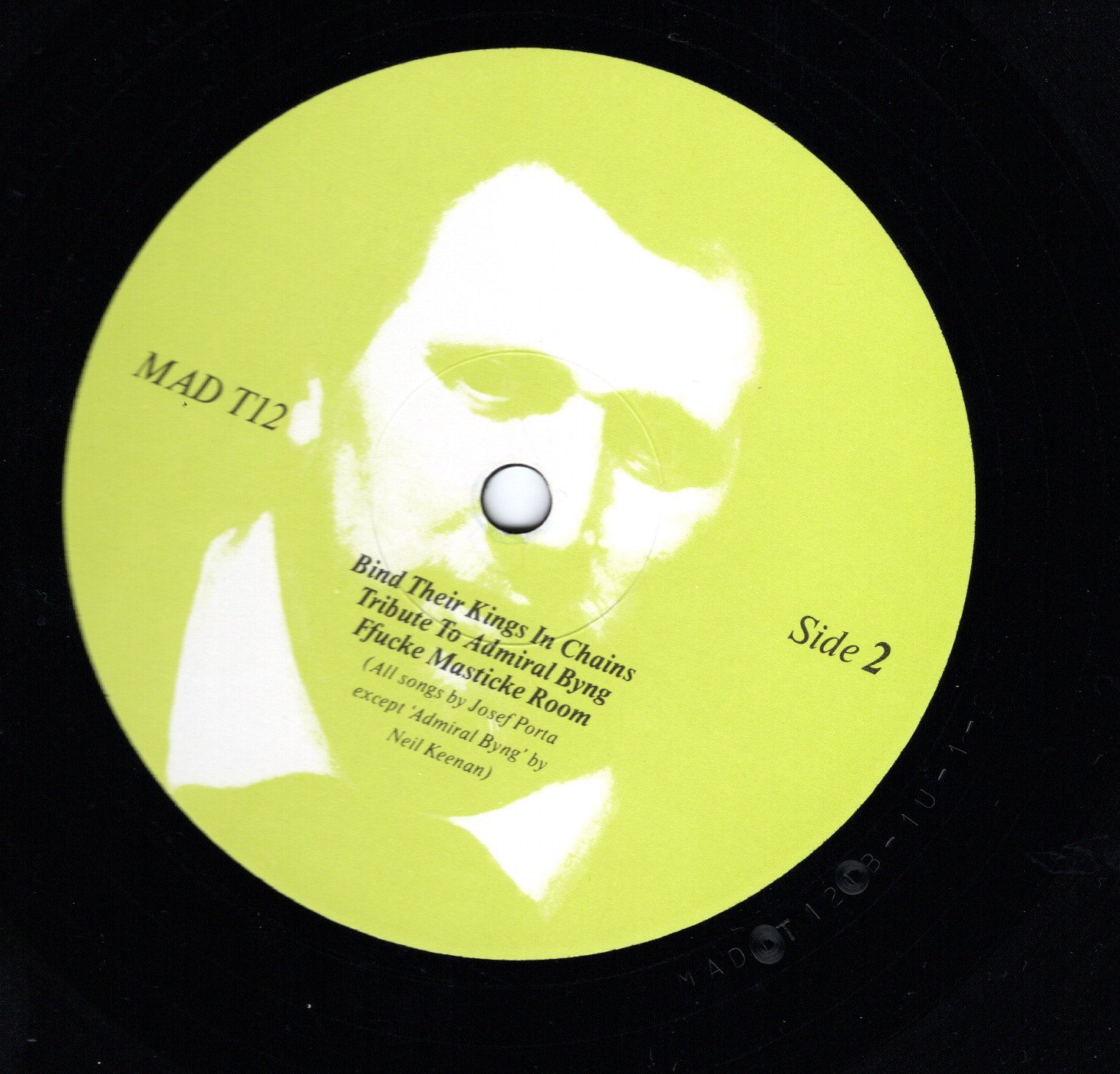
As mentioned Junction Signal was recorded in 1986 and released on All the Madmen and it is a recording that relevantly stand for what BP's early incarnation was about in terms of intents. Three of the four songs were recorded in Cold Storage studio in Brixton, a bigger studio, which, along with the presence of Grant Showbiz as the producer (he worked with bands like The Fall, Alternative TV or Androids of MU) account for the very clean sound of the 12''. I suppose you could argue that Junction Signal is slightly overproduced and you would not be entirely wrong as the songs would have benefited from a more direct, more organic sound (like on the song "Sordid tales" or the fist Ep that were recorded in Street Level Studio), however I don't think the production betrays the songs' nature. BP remain a highly difficult band to describe. Medieval anarcho pop punk? Anarcho folk rock? They certainly built on the catchiness of '77-inspired punk bands like Chron Gen or Naked, the moody poppiness of Zounds (Joseph also drummed for them) or Rubella Ballet, the strangeness of unidentified acts like The Fall or ATV and folk music. I have been told that Joseph's vocals were not unlike marmite, you either loved or hated them and I can see why as he has a very peculiar, dramatic accentuation and tone that makes him sound like a naughty minstrel or a medieval trickster. Whatever you think about his vocal style, it is at the core of BP's identity and completely unique as I cannot name another punk singer sounding even remotely like him. Another key element to BP is their almost excessive use of vocal harmonies and upbeat, infectious melodies that are but impossible not to sing along to. Some find the music too joyful, if not cheesy, and I can see why, as it is very accessible because of the intrinsically pop aspect of the music - even my mum could enjoy the music. Junction Signal is still a punk record though on the whole. The eponymous song is a Homeric mid-paced punk anthem full of harmonies with an epic singalong chorus that goes la-la-la and is just impossible to resist; "Bind their kings in chain" sounds akin to a medieval punky pub-rock tune with another brilliant melodic achievement for the chorus; "A tribute to admiral Byng" is an instrumental song demonstrating that you can be very tuneful without a singer; finally, the faster "Sordid tales from the ffucke masticke room" (it will be wisely renamed "Strawberries" later on) is an even more upbeat, sweet, bouncy and danceable number that makes me want to wear tights and jump around for some reason (but then, do I really need a reason to do that?). The lyrics (that you can read here) are unconventional for a punk band, closer to traditional folk music or even to poetry than snotty punk-rock. References to Thomas Hardy, Cromwell, the trial of Charles the First, adventure novels, mechanisation, pastoral tales, serve metaphors for social justice, liberation, submission, the need and desire to live a free life, the weight of history, but also loss and longing ("Who locked the door who holds the key who speaks the charms / Who gives His orders through the Junction Signal's arms"). I feel the imagerial words enrich the music and change its mood, confering a underlying sense of melancholy to the tunes that somehow balances the overall buoyancy, not unlike a bittersweet effect.

Junction Signal remains quite easy to find for cheap and another version of the Ep - in a 7'' format - also exists but with a blue cover and only two songs.  


Sunday, 8 March 2020

Last Week's Trend is Now Passé (part 3): Toxic Waste / Stalag 17 "The truth will be heard' split 12'' Ep ,1985

I don't know if you have noticed yet, it depends on how perceptive you are, but it would not be an overstatement to venture that, here, at Terminal Sound Nuisance's international headquarters, we could be described as being rather fond of records. Not just the music, but also the record, apprehended as a contextualised subcultural artifact telling its own story, while at the same time being part of many broader narratives related to a specific time and place.


I can vividly recollect how, when and where I got this particular piece of wax, the Toxic Waste/Stalag 17 split 12'' Ep, as it was a very lucky pick, one that, I now realize, had a lot to do with the locals's relative ignorance of anarchopunk. The happy event took place in 2013 at a punk festival in Paris where a few historical anarcho bands were playing (The Mob, The System or Hagar the Womb were on the bill). Being a good friend of the organizer, I was quickly told that Roy Wallace was present and that he had brought some 80's records he had found in a box in his attic. I was aware that beside being responsible for the very good punk documentaries Amebix - Risen and of course The Day the Country Died, the man had played in Toxic Waste so there was, after all, a small but credible chance that original copies of vintage Belfast anarchopunk would be floating around. I remember the record box to be rather small and there was a light emerging from it, as if it were cradling a godlike entity. I immediately spotted the grail, this old and worn out copy of the split (as if water-damaged or something) which I ruthlessly grabbed, my hands acting quicker than my brain, as if by reflex, at the speed of a crocodile surprise attack (that's what bewildered witnesses said in awe afterwards). I just could not believe how lucky I was. It was fate and miracles did happen after all. A near mint copy of the fantastic Toxik Ephex's Nobby Porthole Lp also ended up in my welcoming lap causing me to hyperventilate a little and I know full well that a third pick of that order would have probably sent me to the nearest hospital, if not directly to the morgue. I would have died happy, mind you. And because they were offered by a noble punk who still believes in anarchopunk decency, the two records were sold at their original prices with no inflation or speculation whatsoever. For once, I did not pay more than the "pay no more" tag which felt like an exhilarating victory and like I was back in the 80's and not just an easy prey for speculating wankers. Ebay could fuck right off. It was a great day indeed.


Although Toxic Waste was never a "famous" punk band outside of Belfast, my mates and I listened to them a lot in the early 00's as I owned the split cd with Bleeding Rectum which I bought in 2003 at Out of Step Records, a brilliant record store in Leeds that I visited several times. I think I bought the cd because it had the Active Distribution logo and I really liked what they stood for, although I could not figure out why they would help distribute a band called Bleeding Rectum, a goregrind name for a non-grindcore band that puzzled me. Punk works in mysterious ways. But anyway, I took the cd home and everyone loved it, TW sounded better than DIRT and their radical lyrics about life and politics in Northern Ireland really appealed to us. We were already fond of Ulster bands like Stiff Little Fingers, The Outcasts or The Defects, but this was a Belfast anarchopunk band singing "Burn your fucking flags" in the 80's and that took courage and we admired them very much for that, even twenty years later. Although I don't remember us ever listening to the 21 (!) Bleeding Rectum songs at the time (we did giggle a bit when mentioning the name to be honest), we played the TW songs so often that we considered starting a band that sounded similar, dual vocals anarchopunk with grit and tunes. Alas, the year was now 2005 and we ended up playing rough metallic neocrust like everyone and their mother at the time. Hindsight sucks.

The early Belfast punk scene has been well documented and I strongly recommend the documentary Made in Belfast and the book It Makes you Want to Spit, and obviously The Day the Country Died if you want to see what Toxic Waste and Stalag 17 have to say about their experience as young anarchopunks in the 80's. Context is everything and I suppose growing up in such a violent, polarised, sectarian environment, if not a warzone, made punk so much more than just a look or a genre, it was a liberation and sung in the Northern Irish context, many words took on a different, stronger, more radical meaning. I suggest you read the many testimonies from far more eloquent people than I with actual first-hand experiences of the events, and I am now going to proceed to The Truth will be Heard's content. It was the second recording of TW, the first one being the Unite to Resist demo tape, recorded in 1983 with the first lineup, a song off which, "Good morning", was included on Mortarhate's We don't Want Your Fucking War compilation Lp. The band then moved from Newtownards to Belfast, with Roy from Wardance replacing Dane on male vocals. Following a UK tour with Conflict in 1984, the band was offered to record a split that would be released on Mortarhate. The three TW songs were recorded in a proper BBC studio in Newtownards and therefore the sound is unusually clear for an anarchopunk records. Whereas many anarcho recordings at the time had a rather raw and direct sound (which they both suffered and benefited from), TW's is - excessively? - clean and probably more suitable for a cheery pop-rock act than a juvenile pissed punk band. As a result, these three songs are quite unique in that they are objectively overproduced but still remain in the department of snotty straight-forward punk anthems, with the professional production highlighting rather than hiding the mandatory sloppy bits and the heartful amateurishness (the distorted bass sound is naively overwhelming for instance). That's the thing with a clean sound, you can hear everything with clarity, both the good and the, hum, not so good.


I absolutely love these songs though and how passionate, urgent and incendiary they sound in spite of the production. There was no shortage of reasons to feel angry and frusrated and you can easily tell that TW were outraged at the injustices, the state oppression, the narrow-mindedness, the brutality, the bloody polarisation that were part of the Northern Irish context, and this concentration of anger is reflected in the music's teenage urgency. Rephrasing TW's lyrics would not make much sense but they are certainly more clever than those of your average 80's British punk band (but then, I suppose one had to grow up fast in such a charged context). TW were not just a direct punk band though as they included many tuneful arrangements in the songs, from the melodic poppy introduction to "Traditionally yours", the torturous, slow-paced, stomping introduction to "Burn all flags", to the epic conclusion with spoken words to "Song for Britain", there are enough catchy hooks to remind you that 80's Ulster punk was essentially and memorably tuneful while not wandering too far from the classic formula. It's got both spikes and tunes. The dual male and female vocals work perfectly together as they achieve the right balance between snotty aggression and poignant hopefulness. I would personally argue that very few bands have done this type of trade-off anarcho vocals better than TW. Because of the mutual history between the two bands, the comparison with DIRT is very common and quite sensible. I would personally also send invites to Alternative, early Conflict and maybe The Partisans, but with an Ulster flair.

Following this split, TW recorded four songs for a split with Stalag 17 (again) and Asylum for the We will be Free Lp released in 1986 on Warzone Records. This time with a proper, more balanced production, these new songs sounded even better. Absolutely wicked stuff. TW then gradually disintegrated, with Roy moving to London and recording songs with Deno from DIRT on vocals that would appear on the Belfast Lp in 1987 that also included the TW songs from the two former splits and Marty forming the mighty Pink Turds In Space (the two would reunite in Bleeding Rectum, hence the cd reissue with the two bands). The band has reformed sporadically in the 90's and even in the mid 00's if memory serves (does it?).

Trigger warning: the lyrics are Miltonian long.

A part of me - the indecorous one - would love to tell you that the other side of the split is just not that good, that it borders on the average and is thus not worth a maniacal rant on my part, especially since it is sunday, after all, and I could rather take a long walk and try to catch the coronavirus in order to skip work instead of educating the unwashed masses about the greatness of mid-80's Belfast anarchopunk. But who am I fooling, really? You and I know full well that we are both in for an epic love letter to Stalag 17. Again, I strongly advise you peruse the chapter devoted to them in The Day the Country Died in order to grasp the context from which they emerged. Like TW, S17 were very active in the Warzone collective and helped open Giro's, a self-run social centre in 1986 that played a crucial role in Belfast (full story here) and in the collective punk memory, TW and S17 remain the two most iconic 80's anarchopunk bands from Belfast, who conveniently shared two records as well. So if you ever end up having to speak in public about anarchopunk in Northern Ireland, just sternly declaim the lyrics of "Burn your flags" and "Forgotten victims' and you should be alright.


Like TW, S17 (I am really doing my best not to think about East 17 whenever I type the abbreviation) had a song on a Mortarhate sampler, 1984's We don't Want your Fucking War!, but I don't think I heard them until the release of the Anti-Society compilation cd in 2006, and although it would be erroneous to hail the song "Doomsday machine" as an undying S17 anthem, it still showcased one element that immediately comes to mind when someone mentions the band: Petesy's vocals, and more particularly their particular tone and flow, neither really sung nor really spoken, and fast-paced. I must have downloaded whatever I could find afterwards and instantly fell head over heels when I got to listen to their side of The Truth will be Heard. The opening number "Party talk" aptly demonstrated what the band could do. Starting with an extract from a political speech that has Thatcher spewing Tory propaganda about Ulster and denying the brutality of Britain's colonial rule, the listener is quickly aware that some serious political anger is going to be unleashed. The song itself is a rather raw (especially compared to TW's side!) and mid-paced anarchopunk song that ticks the correct boxes in terms of catchiness, intensity and moodiness, but it is the vocal style that turns a rather classic piece into something different. The singer almost never stops, delivering a politically-charged speech about the parties in power with that sort of vocal inbetweenness that characterised Petesy's work (although I would venture that it came naturally to him and he just had a lot to say in less than three minutes). It is indisputably a pulchritudinous anarchopunk song (right?) but the next one, the gloriously epic "Forgotten victims", really takes the cake.


Anarchopunk being after all, for the most part, punk-rock, the average length of an anarcho song is about three minutes. Of course, there are many exceptions and anarchopunk was fortunately not as generic and restrictive as the so-called UK82 school, but still, seven minutes long songs were not exactly the norm in 1985 for any punk band. And yet, S17 did exactly that with "Forgotten victims". Whereas Chumbawamba also tried to write longer songs by adding a more narrative aspect and by diversifying the song structures, S17 did not change its recipe at all. Again, I feel like they had too much to say in just a couple of minutes so they basically played the song twice in a row. And not only did it work, since the listener is never bored, but you could argue that the song's insistence and emphasis reflect the sum of emotions and hardships that living in wartorn sectarian Belfast generate in a teenager's heart. "Forgotten victims" is basically an alternation between a heavy and rather dark anarcho tribal beat and a faster, intense but tuneful moment with, once again, an unstoppable vocalist speaking out against oppression (there are no less than thirteen stanzas to the song). It must be one of my favourite anarchopunk tune of the era, despite its odd construction (the end is quite abrupt), and I cannot think of many contemporaries that were able to convey so vividly such a sense of outrage, hope and despair, in just one sloppy song. For all its flaws, it is a genuine anarchopunk anthem that gives me the goosebumps every time I play it. As I said, the vocals really set S17 apart and make the band instantly recognisable, although the music can be described as classically trained anarchopunk, reminiscent of Flux of Pink Indians, The System or Subhumans.


With a different lineup S17 went on to record a song for the You are not Alone compilation Ep on Words of Warning in 1986 (that was reviewed here four years ago almost to the day), two demos (And all the Birdies Sang Fuck this for a Lark and Erection 87) and contribute five punktastic gems to the We will be Free split Lp with Asylum and Toxic Waste. The new lineup made S17 tighter, harder-hitting, but also more tuneful and diverse, maybe not unlike the nascent wave of melodic hardcore punk with bands like Depraved or Hex. The band dissolved in 1987 and Petesy formed the brilliant FUAL with Crispo from Crude & Snyde.

A poster? What poster???


It is high time TW and S17 get properly reissued since their materials are quite hard to find and above all preposterously expensive. The Truth will be Heard was a cojoint release between Mortarhate and Warzone Records and my copy contained a political pamphlet entitled Divided Conquered and Shit Upon... or Nearly edited by the Warzone collective, a very interesting read that epitomised what anarchopunk was about in Northern Ireland. It is more than just music so read it. 


Friday, 21 February 2020

Last Week's Trend is Now Passé (part 2): Lost Cherrees "Unwanted Children" 12'' Ep, 1985

Was Lost Cherrees' catchy, upbeat poppiness the cause of their demise in the mid 80's? Maybe a more relevant formulation would be: were they too poppy for their contemporary punk audience? I mean, they were probably the most melodic band released on Mortarhate, not a meaningless achievement since the label also released materials from Hagar the Womb and Flowers in the Dustbin. Apparently, Unwanted Children barely made it to the indie charts upon its release in september, 1985, whereas All Part of Growing Up, their glorious album released but ten months prior, was a genuine success - on a punk scale of course - and there is a general consensus that this Lp is a classic anarchopunk album, worthy of inclusion in the grand anarcho canon (and no, I am afraid it is not calculated with the number of views it has on youtube). In a parallel dimension, I could definitely envision LC becoming really popular because of Unwanted Children and attracting a more mainstream audience. Their subsequent 1987 album - let's call it Tears of a Mermaid - is a pop-punk masterpiece and a phenomenal commercial success. Mortarhate becomes so rich that Conflict can finally buy their own private anarcho-jet, the mighty ungovernable fly, which would result in a bloody feud with Iron Maiden in the following years. Meanwhile, with Sian back in the band and three women fronting it again, LC embark in a world tour and their anarcho-feminist stance triggers a global revolution and, after a bloody war against The Man, we finally get to live in peace and harmony forever and ever (except Conflict and Iron Maiden who are still bitterly fighting), eating organically grown veggies, managing our own lives and basically listening to Antisect all day, in a world free from Chumbawamba's a cappella album (there would have been no need to record it now that the world is one big hippie commune). But of course, LC split up shortly after the release of Unwanted Children, Conflict never got their jet and Chumba did do English Rebel Songs (which I have kinda grown to like, if I'm being honest) and became the ultimate anarchopop band. 


I first heard LC on A Compilation of Deleted Dialogue double cd which I bought in 2002 (I think). I remember being quite confused by the compilation (especially by The Apostles, Flowers in the Dustbin and Class War, bands whose punkness I struggled to give an accurate estimation of, a very troubling feeling indeed at a time such trifles mattered) and now that I am a sensibly wiser, but still rather intrepid punk, I realize that it was all but impossible to digest at that time. I remember being floored by Icons of Filth's two Ep's, because they sounded so bloody intense and pissed, and Lost Cherrees' A Man's Duty, A Woman's Place, because it had a warm, tuneful and dynamic quality but still sounded punky and raw. The Ep also displayed lyrics against sexism and since I was reading a lot about women's struggles and feminist theory, it definitely struck a chord. I have to concede that I have always disliked that reggae-tinged number though... Anyway, from that point on I started to consider bands like LC and DIRT (and of course Crass and Poison Girls) as epitomising 80's feminist anarchopunk and whenever someone would require a band that fits that specific description, I would proudly namedrop LC while gazing pensively at some imaginary horizon and trying to look tenebrous as hell. But then, it must have happened only twice. With the rise of the internet, the legacy of 80's punk bands has become quite arduous to assess with originally very obscure bands becoming as easily accessible as rather popular ones. This monstrous equalizing process can result in awkward, anachronistic claims and grotesque comparisons. LC however, just on the strength on All Part of Growing Up, can be legitimately seen as belonging to the vintage anarchopunk canon. If there were an Olympus with anarchopunk bands, LC would probably not make it to one of the twelve seats reserved to the major gods, but they would definitely be a powerful and gracious deity revered by mortals nonetheless.


The band is fairly well documented so I am not going to linger too long on their illustrious career. Like Political Asylum, LC were a second generation anarchopunk band that put out records between 1983 and 1985, a time when the original anarcho wave was grinding to a halt not without leaving in its glorious trail a new generation of anarchopunk bands that thrived to emulate the spirit and the music of their punk elders (a 23 year old punk was actually 53 in punk years at that time). It was anarcho-influenced anarchopunk and that makes a massive difference. Contrary to Political Asylum who were relatively isolated and thus only, but happily, did tapes before their first proper vinyl release in 1985, LC got to release three Ep's and one album in about two years and the Mortarhate connection implied that the records were well distributed and it insured a decent exposure to the band, without mentioning touring with Conflict, who were extremely popular at that time. What set LC apart from their numerous peers was their open feminist agenda and, for a short while, the presence of three female singers which allowed for some magic, epic harmonising and rather extravagant pop-oriented and postpunk songwriting, with tunefulness always strongly at the helm. This incredible trio behind the microphones combined with a solid sense of catchy songwriting turned a good, but rather classic anarchopunk band, into a memorably melodic punk bands with a combination of female vocals that had no equivalent at the time.


The Unwanted Children 12'' Ep was the last LC record of the 80's and the only one without Sian - who left to ride trains, play cricket and sing with Blyth Power - on vocals, leaving Debbie and Bev handling all the singing. This last Ep, recorded in 1985, is the band's formidably melodic epitaph, one that might have been too uplifting and poppy for the band's Mortarhate crowd. It is often said that "the punx" are a self-righteous, narrow-minded bunch who cannot handle change and see it as "selling out", and as a consequence they will still demand that a band play their faster sloppy songs off their old 4-track demo rather than a number from their brand new, well-crafted, progressive album that is supposed to broaden their audience (I can be that punk to be honest). In substance, that's pretty much what happened to LC and it was probably that depressing attitude that, in the end, prompted the split. Incidentally, the last live performance of LC in that decade took place in 1986 at the Mermaid in Birmingham, according to the band a particularly dispiriting and poorly attended gig that saw them played without motivation before a foul audience shouting "show us your tits" to the singers. Of course, only a few months later, the Mermaid would become one the focal points of the UK hardcore revolution, turning from a wretched place where anarchopunk goes to die to a legendary venue that played a major part in the rise of crust. It might be just a coincidence as the band had probably run its course by then and there were heavier, faster, harder bands in the mid-80's that were gaining momentum whereas the second wave of anarchopunk was starting to decline. In a world where storytelling has permeated all areas of our cultural life, it is temptingly easy to see symbols where it might only be sheer coincidence. The irony however still remains.


So what about Unwanted Children then? It is the most uplifting, triumphant, freshest swansong I can think of. The moodiness and melancholy present on the album are mostly gone as the songwriting focuses on dynamic and anthemic crispy pop-punk. The two singers sing their heart out and some chorus are so catchy that I can - almost - picture myself wearing a dayglo headband and doing aerobics listening to these cracking tunes (the last chorus to "Consider the challenge" is to die for). It is not difficult to see why some would find that lovely 12'' Ep too soft or even cheesy, but then if the thought of vintage dual-vocal female-fronted anarchopop disgusts you, you have probably knocked on the wrong door. In terms of references, the fun-loving Hagar the Womb - the closest comparison in the anarcho realms contemporary to LC - and the always extravagant Rubella Ballet do come to mind, though I would argue that LC were more dynamic and poppier. Unwanted Children is also not unlike the very tuneful Chin Chin from Switzerland, though the former were nowhere as political and I highly doubt LC had heard of Chin Chin (the opposite could be true however). Finally, one could make the claim that LC's dynamic blend of catchy tunes, pop-punk energy and politics, one that is propelled melodically by multiple female vocals, must have inspired important mid/late 80's UK punk bands like Dan or Joyce McKinney Experience in their songwriting. In any case, if you are looking for a quality punk record to play at your birthday party and make your merry guests dance, then this Ep could be a winner (let's face it, no one wants to dance to the early Doom demos as last year's party showed well enough). The only issue I have with this record - and it is a rather minor one that has more to do with my personal taste I suppose - is the presence of horns on the title song. Horns should be forbidden in punk music. In fact, I read somewhere that a country has already prohibited punk bands to use horns in their songs, so it is a first step. But they are not too distracting here, they just add another layer of cheesy poppiness where there was clearly no need for any. Oh well... Lyrically, the band had a lot to say with lyrics about poverty, depression, education, violence, social conditioning, they are much darker and angry than the melodic music or the very new-wave looking cover (not the record's strongest assets in my opinion but then the cover of the Lp was also memorable for the wrong reasons) would incite you to think, but then that's punk, innit? Unwanted Chidren was released on Mortarhate Records in late 1985 and you can find it on the 2012 reissues.


Monday, 10 February 2020

Last Week's Trend is Now Passé (part 1): Political Asylum "Winter" Ep, 1985

It is hard to believe that it has been more than two months since my last proper review. To be honest, after Sonatas in D-Major, I felt drained, vapid, both uninspired and uninspiring. Of course, like any modern individual who believes in the performative power of virtual validation (the whole "like and be liked" paradigm) and actively seeks it, I was greatly confused by these feelings of self-doubt and insignificance. Why do I bother raving over proudly unoriginal d-beat bands or rough cavemen crust punk that actual cavemen would be likely to find a tad excessive? Does this existential scepticism and fear of irrelevance merely point to a coming mid-life crisis? If it is widely accepted that the average Joe, as he starts to get seriously bald, predictably buys a new flashy car to impress younger potential mates, then would getting some obscenely expensive Japanese punk records the equivalent for Western male punx who are reaching that same critical stage in life and thus have to wave goodbye to full on charged hair? I'm no sociologist but there could be some truth in this theory (it also works with obscure heavy metal and cheesy cold wave from the 80's obviously). 

Anyway, faced with the meaninglessness of life itself (oh yes, make no mistake, that is what has always been at stake), I decided to get back to basics for this first series of the year, and explore and revisit a couple of records and bands that, I feel, are underappreciated and you could say that this self-righteous, quixotic quest to promote and offer a critical insight about bands that our current superficial epoch unfairly ignores is at the core of Terminal Sound Nuisance, in that it makes feel somewhat useful and on the just side of History, a bit like a jedi but with a proper punk jacket instead of their hippie robe, although sucking hard at fighting and being shit scared of heights are rather unjedilike. 

So, basically, what I mean is that we should have a series about 80's anarchopunk from the British Isles, with a selection of 10 records that were all released between 1985 and 1989, a period that saw the decline of the anarchopunk movement and the rise of hardcore and crust in the UK. With the current renewed interest in the classic anarchopunk sound (although you could argue that the diversity of the movement renders such a concept irrelevant), the focus and attention have often been on the first half of the decade, and while I wholeheartedly enjoy seeing people get into classic '81/'84 bands, there is a relative indifference towards ulterior recordings, sometimes at the cost of overlooking genuine anarchopunk classics like Political Asylum's Winter.


It would be untrue to claim that Political Asylum were an obscure band back then and the mere fact that they were included on so many - usually homemade - compilation tapes in the 80's shows that they were a well-liked and rather popular band at the time, one that managed to sell 6000 copies (!) of their first demo tape, Fresh Hate. If Winter was PA's first proper record, they had recorded two demos before that, the aforementioned Fresh Hate in 1982 and the rather fantastic Valium for the Masses in 1984. It may look quite odd for a band to wait that long before releasing their first vinyl, especially at a time when anarchopunk was lively and at its top, and far lesser bands than PA got to have records under their belt. But then, if you manage to get your tapes around efficiently, tour a lot and get your message across, why bother doing a vinyl if you don't really need to (and I guess being young Scottish lads didn't exactly help either)? In our present day when more and more bands can release a full album before having even played ten gigs, the idea of taking one's time to put out a vinyl almost sounds blasphemous, but I suppose that many youthful anarcho bands of the time were just not as materialistic. Shame on them.

Despite the anarcho/UK82 trend that swept through the last decade and saw relatively confidential bands like Vex or The Mad Are Sane retrospectively gain a virtual cult status, PA, although one of the most important Scottish anarchopunk bands along with Oi Polloi and Alternative, are rarely discussed and, I suppose, seldom listened to (Valium for the Masses is not even on youtube, for that matter). At a time when self-proclaimed cool kids are prone to wear shirts from even the most obscure 80's anarcho bands, I have yet to see a PA shirt, a clear sign of a slight contemporary indifference toward the band. If they are a genuine classic anarchopunk band, PA never sounded like what we modernly reconstructed as "the classic anarcho sound". In fact, PA, with their overuse of vocal harmonies, their endless guitar solos, genuine prog rock moments and a folk influence, sounded like no other band and that's precisely what I loved about them. I remember being really confused the first time I heard them. I had ordered a cdr online and did not know what to expect as I was only aware that they were an anarchopunk band from the 80's and that was why I wanted to give them a go. I shall not palter with the truth and readily admit that the out of control technical solos almost killed me and in other circumstances would have had me burning the cd and calling for an exorcist, but there was a sense of melody, an incredible tunefulness and an intensity to the songs that compelled me to keep listening. Of course, they also had punkier songs that were easier to relate to (like "Disarm or die" of course), but the ones that really stuck were the moodier, darker ones. And I couldn't believe they just shamelessly ripped of a Black Flag line. I suppose it is the band's uniqueness that both made them quite popular at the time and rather unpopular nowadays as we always crave for comprehensible styles that can be pigeonholed, and while it makes sense to do so with the d-beat genre for instance, you cannot really do that with PA and with large fractions of the 80's anarchopunk world.    


I am not going to write about the band's history as they are well documented (their chapter in The Day the Country Died as well as the booklets to their cd reissues come highly recommended and showcase Ramsey's witty sense of humour). Suffice to say that Winter is one of my favourite anarchopunk Ep's of the 80's. It just has everything I look for in an anarcho record, it is angry and yet melodic, melancholy and yet strangely uplifting, the lyrics are political and sensible, the harmonies are perfect to sing along to it in the shower and I have even grown to like the epic solos. Winter may not really be classified as a punk-rock record nor is it a postpunk one, and I guess it effortlessly transcends genres without ever sounding artsy or even intentional. The song "Winter of our discontent", an obvious reference to the Winter of Discontent of the late 1970's, is a poignant antiwar ballad (I guess the term is somehow fitting) with plenty of harmonies and solos (the PA trademark) and an instantly recognizable opening. An absolute anthem that is authentically emotional. Ace. The next song, "Do they care", is a bouncy punk-rock number with a great vocals, a simple but highly catchy chorus and an eerie atmospheric moment toward the end. "System of war" is another beautiful, moving punk ballad that even the excessive use of solos cannot spoil. The folk element in the music can definitely be felt in the songwriting and in the ways PA conceptualized their two slower songs and there is an acoustic version of "Winter of our discontent" on 1992's How the West was Won 10'' which makes a lot of sense. The two issues I have with this Ep is the use of a drum machine (the cymbals were laid down afterwards) that sometimes sound a little unnatural and too mechanical and don't fit perfectly with the very organic and warm vibe of the songs, but I concede that it might make the Ep even more unique and different. My second issue is that Winter will always be the name of an Amebix record for me.   

Winter was recorded in early 1985 and released on Bristol-based Children of the Revolution Records, of which it was the fifth record (right between AOA's Who are they Trying to Con? and Potential Threat's Brainwashed). If you have never heard PA, today is your lucky day. Just imagine a fusion of Zounds, Chron Gen and Lack if Knowledge with a folk music vibe and a prog rock guitar player. Or maybe just listen to Winter and feel the unstoppable power of the harmonies. And sing along my friend, just siiiiiiiiiiiing.