Showing posts with label 2011. Show all posts

Sunday, 15 February 2026

1981 "The Only Governement is Your Self" tape, 2011

It's always a little tricky to name your band after a year. It can get cryptic fast unless you go for 1984 like about 36 other bands according to Discogs (among which a very fine Polish postpunk band from the 80's). Orwell's novel is, undeniably, a clever work that resonates deeply with many and whose influence - direct or indirect - permeates a lot of popular sci-fi creations and political literature, and obviously a lot of punk bands. You could make a whole compilation series with punk songs that have "1984" in their title. The cynic in me would point out that most may not have actually read the novel and if they have it's probably because it is one of the few novels that the Punk Elders officially allow you to. Pretending to have read Kafka, Dostoevsky, Camus or Butler can also come handy if you want to look smart. Thanks fuck we have Wikipedia these days to spare ourselves the pain. 

But today's band did not pick the highly symbolical 1984 - although they legitimately could have, given the lyrics - but the year 1981 and I am absolutely clueless as to why. Being from Turku, Finland, it must refer to some sort of historical event like a local political movement or a strike. But for all I know it could also refer to Kaaos' early split Ep or the bass player's birth year.


I don't quite remember exactly when I first heard of the band but that would have been around 2011. They played in Paris in 2012 so that was definitely before that. To be perfectly honest, I was a little suspicious of the band for reasons that quickly proved to be wrong. At that point in time I had noticed that some styles I loved dearly but that few people cared about locally, started to get more popular or at least garner some interest. Namely old-school UK anarchopunk or UK82. Don't get me wrong, some old-timers were of course really into it and definitely influenced me and made me discover priceless - and often pricy - bands but, Paris being Paris, most people, beside big names like Crass, Conflict or Subhumans, didn't really give a shit about Zounds, The Mob or Chumba, bands that didn't sound or look as punk and were a bit more challenging. These are bands your mum could probably bear to listen to which makes them unacceptable for the majority of punks. 


But anyway, the fact that MRR, through Lance Hahn's work, documented that scene, that Glasper published The Day the Country Died, that Overground Records released their wonderful Anti- compilation series and that a lot of those old bands started to reform and reissue their material, well, it was unavoidable that people who couldn't care less about Bluurg or Spiderleg started to pay attention. Which should have been a source of joy but also made me a little wary. It was very childish and these days everyone can know everything with a couple of clicks so that's not really an issue anymore. So yeah, stupid me.


1981 was one of the first bands to bring back the traditional anarchopunk sound at that time as the 00's  (beside some exceptions like Life's a Riot! (who were coincidentally also from Finland), Surrender (with whom they'd share an Ep), Counter Attack or Active Slaughter) had been deprived of classic anarcho influences on a musical level and the exceptions by no means relied on the more morose and poppier side of the genre - goth-punk was right on the corner for that. 1981 were an oddity in the musical landscape of the time and to an extent they still are 15 years on. Them being first introduced to me as an "anarcho-pop" band of sorts certainly didn't help alleviate my suspicion so that when I was first exposed to The Only Government is Your Self I was ready to scoff, loathe, dismiss, despise and hate the thing, which of course I didn't and, on the contrary, I found it incredible. Seldom have my prejudices and biases been proven so wrong.  


It sounded fresh, the perfect balance of referentiality and originality, a recording that could appeal to genuine learned fans of anarchopunk and also to people looking for good tunes and smart politics. Granted your basic grindcore freaks were possibly unimpressed but I for one was immediately converted. The singer (who had been active in bands like The Phoenix Foundation among others) told me that 1981 was made up of people from your usual DIY hardcore punk scene as well as from the indie-rock scene, which I thankfully know virtually nothing about. On paper this association would have me call the Punk Police immediately but in that context it works perfectly as the poppier aspect blends seamlessly with the punk sound. It's basically an update on bands that were already influenced with progressive, trippier, poppier elements anyway, like the aforementioned Zounds, The Mob or Chumbawamba (if 1981 really had to be paired with one it'd be with them). The first song "Nightmare/Reality" announces what's to come. It opens with an Alternative riff and ends with an homage to Omega Tribe's softer side. Fan service but done with originality if you know what I mean. The rest cannot be said to be as referential - although the connoisseur will be able to identify the nods - and 1981 have their own way of creating melodies, with their clear guitar sound, the upfront bass lines and sung male and female vocals (my one minor negative comment about the tape is that the female vocalist is not present enough but she would be in the later records). 


This last element could be what really set them apart from the other anarcho-influenced or goth punk bands that were about to pop up. Whereas most bands used a lot of reverbs, delay or echo on their vocals, 1981 did not. They sang with their real voice which gives the songs a sense of genuineness and immediacy, but also vulnerability and imperfection which I think goes very well with the genre. Sure, the singers are not always in tune but then who was in the 80's? Mark Mob was not. 1981 would have fit right in with the All the Madmen crew and bands like Thatcher on Acid, Null and Void or A Bitter Lesson. For good measure they covered Political Asylum  as singer Ilmari was a massive fan and even reissued on cd the Scots' early materials on his label Passing Bells. Now that's love. The Only Government is Your Self was 1981's first recording and the eight songs are memorable. I hadn't played them in a while and once the start button was hit they all came back to me in a heartbeat. As the saying goes, if you can whistle a tune in the shower, then it's a keeper. 


Surprisingly this was never reissued on vinyl (it would make for a rather glorious Lp) even though it does feel like a proper album more than a demo. There is lovely booklet coming with the tape with all the lyrics and cut'n'paste artwork and it's overall clearly a labour of love and passion which is more than one can say about a lot of bands these days (alright, I'm being grumpy). There are two versions of the tape, mine being the 2011 repress on Cut the Cord... records. The band went on to be quite prolific but stuck to Ep's (9 of them!) and you should be able to find some for a relatively good price (Acts of Aggression or In the Dead of Night, that have rerecorded versions of some songs, come especially recommended). Svart Records did release a vinyl compilation with the early singles but this no longer comes cheap unfortunately. I am not sure whether 1981 are still active but they released their last Ep in 2023 so they could be. The world being where it's at these days they should probably release something new.  


Friday, 2 January 2026

HARD SKIN "We're the fucking George" tape, 2011

2025 has been a pretty grim year on a global scale, I suppose it's hardly a scoop. However, truthfully, on a personal level 2025 has been quite generous to me what with the new extension to my manor I had build to store my Agathocles discography and the acquisition of a second yacht. A man has to live, innit? Who would have thought a position as Head of the Crust Studies Department and my bestseller book The Rise of Crust Pants: Crust Attires as Radical Deconstruction and Transversal Challenge to the Oppressive Normative Hygiene Basics in the Fragmented Context of Postindustrial Capitalist Society would finally earn me that much money? Take that dad.

In order to fight the overwhelming bleakness, it makes sense to write about punk's best comedy band (ever?): the mighty Hard Skin from Gipsy Hill, sarf London. Humour is difficult to pull out in punk and God knows we have had our fair share of dreadful "joke bands" in France failing miserably at being funny or witty, usually flavoured with distasteful sexist buffoonery, childish puns and just plain anti-PC obnoxiousness (but then it can be said about French humour as a whole so it is unsurprising). I'm sure every country has its own breed of stupid or silly bands, some possibly much better than others but you obviously have to understand the lingo and the cultural references to really grasp a comedy band so that it is hard to be a global expert. England sucks on a lot of levels, like food or penalties, but one thing they excel at beside crumpets is humour. I have always loved their approach to comedy and it stands, by far, as my favourite. Hard Skin mainly rely on that typical British humour, walking the thin line between gross and awkward and witty, they are self-aware as they play with the codes and conventions of a subgroup - in this case oi-loving skinheads - to create a parodic tribute that is both entertainingly silly and somewhat spirited at the same time. Their cartoonish caricature engages the listener in form thanks to its many singalongs (the easiest way to have people join in, "you know it, sing it!") and its specific cultural references about not only the oi but working-class life as whole. When you really get them, Hard Skin could be said to be the best band in the world. I mean, like they say so, right?


I distinctly remember when I first heard them sometime in 2000. We would often go, a mate and I, to a now sadly closed record store in Paris called Sonic Machine. It was located in Montmartre quite far from our sleepy suburban town and it took us about an hour and a half to get there so that the trip to the big city had a pilgrimage quality to it. It felt very much like a small adventure. We would spend hours there in this shop that looked like a punk version of Ali Baba's cave and where you could smoke and drink your beers (which we did copiously of course). We did not know much at that time - it's an understatement - but craved to listen to everything, mostly so-called streetpunk and oi records (my friend was in his short-lived skinhead phase then) because these were the most accessible contemporary styles for us. We did not really go to punk gigs at that point so that going to Sonic Machine was where we'd meet other people and stare in awe at older and much cooler punks. It was during one of those afternoons that I first heard UK Subs, Infa-Riot, The Unseen or Dick Spikies, influential stuff for me then. We had little money so buying a record was the result of a careful and sometimes painfully long process as we wanted to spend our 5O francs on the right record. It was on such a day that my friend grabbed the first Hard Skin cd Hard Nuts and Hard Cunts and asked the friendly, understanding, advisory, passionate and above all patient guy behind the counter to play the thing. It was love at first listen. I was already an absolute sucker for massive singalongs and terrace style chorus and this album is replete with them - little did I know that this use was in fact ironical. My mate bought the cd (he was the skin of the two so it made sense, I think I bought Oxymoron's The Pack is Back).

There was a good reason for Hard Skin's first oeuvre to be so easily available in a French punk store then. The English label that originally released it back in 1996, namely Helen of Oi! Records, had sold its whole catalogue to Noco in 2000, a label based around Paris that mostly released ska but also some oi (the boss was a skinhead and the singer of Skarface). I think Dick Spikie's Let's Start from In Complate was the first release under the new ownership. Not only did a vast amount of original Helen of Oi! records landed in Paris but a couple of represses (of Braindance or Vanilla Muffins) were also done at that time, among which Hard Skin's glorious first album. Funnily enough, the guy running the label had no idea Hard Skin were a comedy band satirising the genre and I distinctly remember the leaflet slipped in all Helen of Oi! release advertising Hard Skin as having members of the shitty Close Shave, probably because the band had "the new wave of the close shave" on the cover of the first Lp. Yes, French people are terrible at foreign languages and everyone at that time (or almost everyone) must have thought they were for real although even I found that there were an awful lot of "oi! oi! oi!" in their songs. Of course, it's much different these days, and a quick glance at Discogs will teach you that Fat Bob played in Wat Tyler (an equally humourous band albeit nowhere as catchy) and ran Rugger Bugger Records and Johnny Takeaway in Thatcher On Acid, two bands connected to the anarchopunk scene. I have always wondered whether the original boss of Helen of Oi! knew they were a joke or not, but he must have and would have seen them as a cheeky tribute band done well and therefore appealing to the gritty oi crowd. The catalogue was very serious and skinhead-oriented and some of the bands included could be said to be rather dodgy - but then it also released the first Bug Central album, a genuine anarchopunk band so who knows. A surprising choice in retrospect but one that reinforced the parody and kinda blurred the lines for us. I mean, they were label mates with On File so they must be for real, yeah?


A friend of mine could burn cd's at home (cdr's seemed to be insanely high tech for me at the time) and he made a copy for me which I played to death. My mate and I even got to see Hard Skin live, in January, 2002, along with some other local oi bands (among which Les Teckels that had Frustration's singer). The crowd confirmed to me that they were real skinheads as no one was really laughing and everyone looked hard, bald and rather unfriendly and I don't think I ever went back to a proper oi gig after that. As I improved my English significantly, I realized that Hard Skin were indeed a comedy band - I feel the second Lp is even more parodic - and that made them even better in my eyes and I'd play them whenever I feel blue and just want to listen to good punk, warm tunes that you remember instantly and have a good laugh. I suppose they are better live because you have all the stage banter accompanying the hits and that makes the experience unforgettable and the perfect place for a romantic first date.

But Hard Skin are not just about the jokes and swear words, they can actually write songs with catchy hooks and tunes, infectious choruses and great punk energy and that's why they can also seduce people not necessarily knowledgeable in the things of oi. Obviously, oi fans (and ex oi fans like myself) will enjoy them far more and will delight in spotting the ripoffs of Cockney Rejects, Cock Sparrer, Sham 69 or Blitz (are they the equivalent of a bingoi night?) and giggle at the clichés about British working-class life. Shoegaze fans won't probably get it though, because they suck. But what about this tape then? We're the Fucking George was released in 2011 in vinyl on their own JT Classics and on tape on Germany's Cut the Cord That... Record, responsible for records from much more businesslike bands like Catholic Guilt, Neon Piss or Generacion Suicida. I think the title of the tape refers to the term used to call generous tippers during casino sessions which would make Hard Skin's music priceless gold charitably offered I guess. The tape includes the band's singles (beside 2008's Cocks and Cunts which may have been a wise decision) and compilation tracks released between 1996 and 2010 - by which I mean between 1978 and 1981 as the band claims. Until recently, I never considered Hard Skin to be a "singles band" as I only owned the albums and never really saw the Ep's in distros. This release is therefore a convenient one to own if you do not have the originals because you are poor or if you are a lazy twat and can't be arsed to listen to Ep's because you have to turn them over quickly. There are a lot of classics here like "We are the wankers", "Make my tea", "First day angry song" or a live version of "Beer and fags" (but there is a mistake in the tracklist as it indicates "Sausage man" while the song is actually "Two bob cunt"). Elite UK oi indeed that have never tired of listening for 25 years. Pretty neat and educational if you want to warn your kids about how shit Romford is or teach them Santa is a skinhead or that darts are a real men's occupation.


Sadly - and I mean that - Hard Skin are no more as they played their last gigs in December and I was lucky enough to be at the London one on the 12th with The Restarts and Passion Killers. The show was brilliant as usual and Fat Bob's banter as funny as ever (I think Chumbawamba's ears are still red). It was a little emotional for me, after all these years of being a fan and if I had kids I would have them recite the lyrics before going to bed every night.

Oi not jobs!    


They're the fucking George

Thursday, 26 September 2024

Last Night a D-Beat Saved My Life (part 4): DESPERDICIO "¡Impulso De Destrucción!" Ep, 2011

There are a number of things that all d-beat bands agree upon, elements crucial to the genre without which you just cannot qualify as a proper believer. Things such as disliking bombs but still using them as a main topic. In a subgenre based on the imitation and the emulation of a strictly established formula, there is obviously very little room for originality. The stakes are elsewhere. D-beat in its most orthodox Discharge-loving form (I'm not talking about the legions of bands that are merely influenced by it) can be described as "a tribute made genre". It fundamentally relies on a web of signifieds and signifiers, the meaning and implications of which are understood and accepted explicitly and implicitly among a group of listeners sharing common knowledge. To an extent all subgenres revolve around these dynamics but none as much as d-beat. Referentiality is intrinsic to the "D", to its basis and its end.

It doesn't mean that bands cannot play with conventions. A band like Thisclose, the ultimate self-aware meta d-beat band, was a comment on this peculiar phenomenon and brought tasteful humour to obligatory bleak aesthetics (quite the tour de force, few bands were able to successfully blend fun and the D without falling in the trap of awkward metalhead jokes about "rock'n'roll life"). But the genre cannot be said to be prone to changeability as it values predictability and how accurate and intertextual a band manages to be (No Fucker being a great example). Basically, the covers of d-beat records, as part and parcel of the tribute and of the web of references, seldom lie to the punters. You must be able to spot a traditional, orthodox d-beat record and the church it belongs to from afar. It is all a matter of subtleties.


It would be dishonest to claim that Desperdicio tried to mislead the honest d-beat fan but I have to admit that I was not really expecting this style of D when I grabbed ¡Impulso De Destrucción!. I owned the Acceleration to Destruction compilation Ep (an oft overlooked, good little record) when I got this one but could not quite remember what they sounded like with precision. In my mind, judging from the cover, the error margin was but non-existent: Desperdicio must sound just like Destruccion. The Ep cover is a copy of their split Ep's with the equally raw Sida: it has the same setting, the same composition, the same style and the same intent to produce a naive but punk-as-fuck representation of d-beat as "hardcore radical" as the locals put it. The visual copy was so enormous that it made me curious of how close Desperdicio were to Destruccion, especially as a Japanese bandhaving a go at singing in Spanish. 

Such linguistic endeavours are not rare occurrences in the Japanese punk scene. Indeed, local bands aiming for a highly specific language-based hardcore genres would sometimes adopt the foreign language to make the music sound closer to the original (which is both daring, admirable and more than a little extravagant). Distorted käng fanatics Frigöra or Ferocious X sing in Swedish, Laukaus and Poikkeus in Finnish, Isterismo and Tantrum in Italian and Voco Protesta in Esperanto (and Corrupted sing in Spanish too of course). This trend is actually fascinating as it implies that languages make and create national genres as much as the music itself and the idea emphasizes the importance of linguistics (with the scansion, accentuation, tonalities, flow and so on) in punk. And well, Japanese punks are crazy enough to try to sing in a language they know nothing about. What about French then? 


And there you go, Desperdicio sing in Spanish and yet do not sound as much like Destruccion as you would expect by now. You would assume a d-beat band en Español to be all over classics like MG15 or Destruccion or Mobcharge but Desperdicio are a little more (or less) than that. There is a delightful simplicity and straight-forwardness in the riffing that do point to the Spaniards, but the enjoyable balance of distortion and aggression reminds me of Disaster or indeed Deadlock, a Japanese Disaster tribute band of sorts. We are not wandering in fast and filthy rabioso d-beat land here but the music pummels its way through a well-paced d-beat with an almost hypnotic quality. Beside the slower number "Pesadilla" that I don't really get, the three other songs are ideally predictable but some details point to that characteristic sense of epic songwriting that you find in a lot of traditional Japanese hardcore like the opening guitar lead on "Tomar un futuro", the Bristol-crasher drumming on "La ciudad portuaria pequeño" or on most of the energetic and mean backing chorus, although this may partly have to do with the heavy and highly signifying Japanese accent. The vocals can be seen as the Marmite effect in Desperdicio who are pretty easy to appreciate on the music alone. Recognizing the Spanish language straight away can be a little difficult because the flow and accent patterns are so different to Japanese but I don't dislike the band's choice as I think it does make one pay attention, which, I admit, is not necessarily a good thing in some cases. Beside the vocalist does not growl or yell like a nutter, he is of the shouting variety with a reverb (bands using the effect were still few in 2011) so that you can actually make out what he is on about (although you will have trouble actually understanding). On that level Desperdicio are more in line with a band like Final Bloodbath, even though the intent is different, and I can enjoy this type of vocal style for the duration of en Ep. It makes me think of a man lost at the top of a snowy mountain crying for help.  


It is not a masterpiece but it is a fun and well-executed humble d-beat Ep and the inspiring longevity of this clearly passionate and still active band who believe in their recipe is inspiring and other recent Japanese raw punk bands in Español like Stimulus, Consocio Sentencia and Povlacion owe as much to the national tradition of singing in foreign languages as to Desperdicio. ¡Impulso De Destrucción! was released on the emblematic label Overthrow Records who would also take care of their two subsequent Ep's.

Desperdicio + Destruccion = <3


Saturday, 27 April 2024

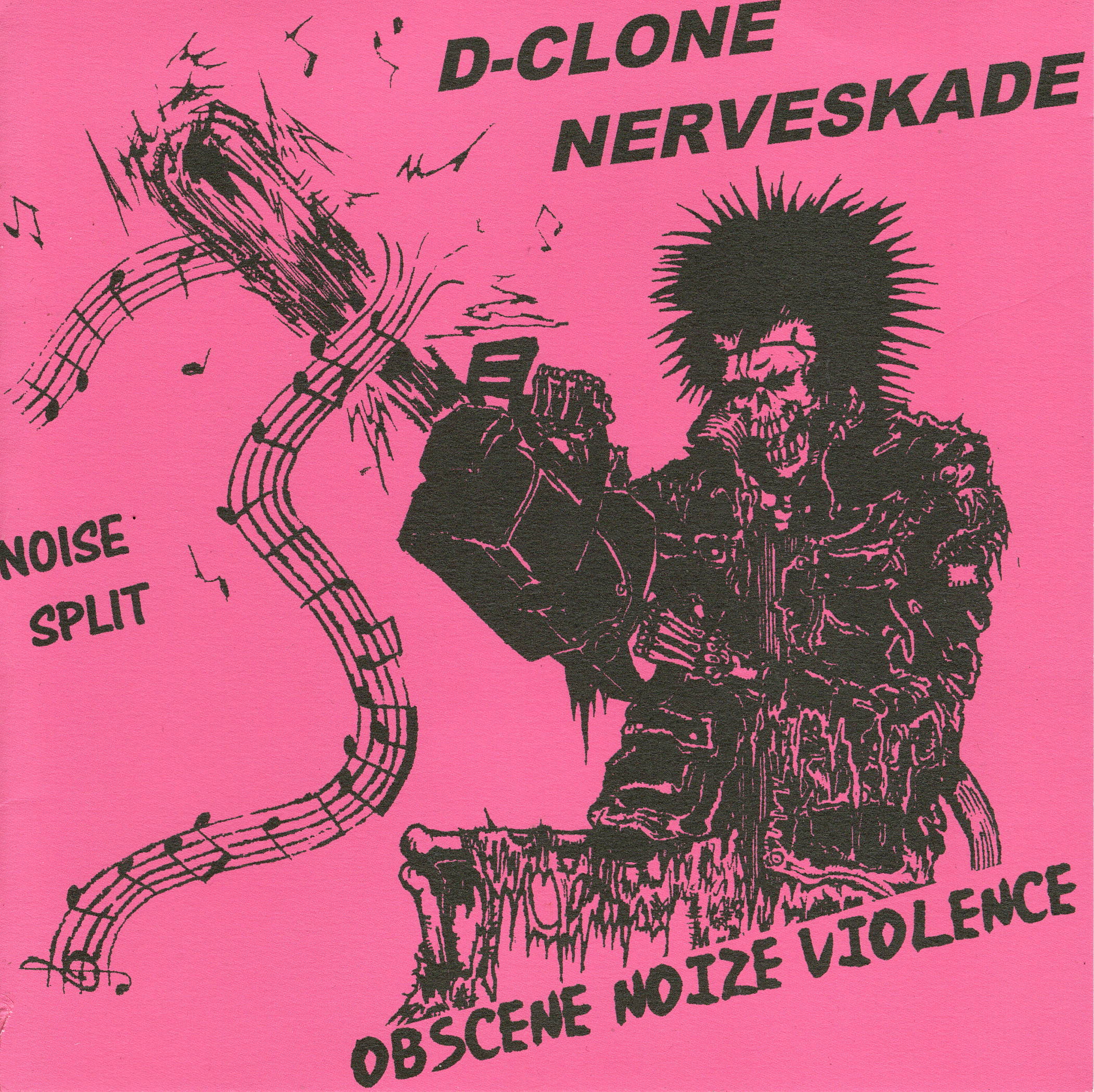
An adventure in split Ep's! I have no gun but I can split: D-CLONE / NERVESKADE "Obscene noize violence" split Ep, 2011

I suppose playing the song "Mental disorder" to that epically annoying colleague constantly claiming that he loves to listen "to a bit of everything" - which always means "a lot of nothing" - and seeing his reaction of utter disbelief and barely concealed disgust could be the funniest thing to do with this Ep. Neither surprising nor curious at all: how could someone considering that listening to Marilyn Manson once in high-school is similar to living and breathing for the almighty D possibly take listening to D-Clone? If anything the band is a wanker remover. The most curious thing about this very fine split Ep is that D-Clone were never a genuine d-beat clone. The choice of this name could be seen as slightly treacherous at the beginning of the band's run in the mid 00's (they formed in 2004). After all, what could you possibly expect from a band called D-Clone beside precisely a dis-clone? 

They first came to my attention in the late 00's, likely when the Drop a Noise Bomb Ep came out, but I remember being unconvinced with the name and did not properly listen to them. If I wholeheartedly welcome actual tasteful dis-clones nowadays - and yes that includes Disclone - I did not have as much time for that at that point, what with mourning the inevitable downfall of the stenchcore revival (Stormcrow's split with Laudanum was the nail in the coffin). So as usual when it came to the really noizy Japanese stuff, I did not get it right away and had to go back to it several times, like an aural masochist, to understand what the hell was happening. Strangely, it proved to be easier to understand Death Dust Extractor than D-Clone. It probably has something to do with the former's perfect crust pants. But once I managed to really immerse myself into the Nagoya power trio's art of noize, I was massively impressed and significantly deafer.


If they were never a one-trick d-beat clone, the band always and proudly held Disclose in high esteem, especially for Kawakami's sense of distortedness, which they built on and arguably enhanced, and for his singing style (in terms of scansion and tone). They clearly relied on elements of d-beat but they were never as strict, especially as they progressed. On that level, they are a little like Contrast Attitude, influenced by orthodox d-beat and its template and loving the tradition of distortion, but not to be describe as Discharge mimicking lunatics like Final Bloodbath or, of course, Disclose. D-Clone was a band that grew angrier, wilder and more intense with each release, to such an extent that their only album Creation and Destroy can be considered as one of the most brutal and noisiest hardcore Lp's of the 2010's. It is at the limit of sounding too extreme, too relentless and it leaves one exhausted but happy (or traumatized). It is no coincidence that the aforementioned Lp was the last thing they recorded: where could have they gone from there without falling into noisecore? An absolutely fascinating and almost frightening work.


D-Clone's timing was perfect. When they really kicked out in 2007, the punk world was just ready for them as a wave of noize-loving bands was starting to rise then and, if it would be far-fetched to assert that the band initiated it, they were certainly initiators and they have come to be closely associated with the so-called "noisepunk" trend (the term is vague and somehow inaccurate but we'll get back to it) that saw bands working on the classic distorted sound of Bristol and Kyushu as well as Japanese crasher hardcore and d-beat. A lot of those bands sounded well different but they all had a highly distorted guitar sound and aggressive hardcore style to offer. Enjoy D-beat and Noise as D-Clone rightly said. It is not easy to formulate a relevant retrospective critique about that short but prolific burst of the late 00's and early 10's and define and identify its best moments. D-Clone undeniably were but there are many bands to examine here so that will be for some other time. Still, let's all agree that The Wankys were the real - not to mention the self-proclaimed - noisepunk heroes.


But what makes D-Clone so compelling then? I would argue that it is the dementia they managed to build through their hectic and intense songwriting and their articulate art of deafening distortion. D-Clone sound like a storm of noise, a relentless shower of hardcore music. The introduction "Mental disorder" is masterful in that respect. Sure, for your Bruce Springsteen loving dad, it is just a weirdo screaming like he is totally mental over some chaotic fuzz but the way the way the music speeds up and how the changes in guitar distortion and textures goes along the changes of vocal tones is brilliant and really confers a sense of impending madness. The music often stops without warning, sharply, leaving you on edge and gets back to the intense bollocking right after, conveys powerfully the feel of an angry capricious storm. The two songs leave the listener in a state of shock, in awe. D-Clone were quite versatile and narrative too, there is even an almost emocore-like transition in there to give you the hope that the torture could be over and overall the songwriting does tell a proper story with many moments - albeit one of dementia through noise overdose. On this recording, the Kyushu-by-way-of-Bristol is pretty strong and I can hear a lot of Confuse and Chaos UK in some of the bass lines and pogoable tunes. Classic crasher crust legends like Gloom and Collapse Society and distortion-driven Discharge-love stand as obvious sources of inspiration but they somehow manage to crank up the insanity through a fantastic frenetic drummer able to change paces and electrify the music through typical crasher-style drum rolls. Just great stuff from one of the best hardcore bands of the 2010's. 


D-Clone are a difficult act to follow. I remember the painful experience of having to recite a poem that we were supposed to memorize at school when I was 8 before the whole class. I roughly knew the text but had to go just after the best pupil and despised teacher's pet, who of course absolutely killed it, leaving me with a lot of pressure. I honourably failed but somehow managed to shift the blame from my own laziness to the perfect student. Nerveskade were a good solid band though and if they don't quite match their tag team partners' intensity, they still stood as one of the most convincing noisepunk bands of the 2010's with a solid discography and an early start. The Obscene Noize Violence Ep was actually released for their 2011 Japanese tour with D-Clone during which they got to share the stage with average bands like Reality Crisis, Axewield, Framtid or Death Dust Extractor. There is actually a tour poster with all the different flyers included with the Ep which is a lovely thought to make you feel well jealous.

Nerveskade crashed into the scene in the late 00's and by that time you could sense that something was up by the way everyone suddenly became fan of Disorder and Chaos UK. The term "noisepunk" appeared around that time, not just to talk about the new generation but also to refer to the classic distortion-loving 80's bands, something of a retroactive move, the relevance of which is relative. It is both convenient and somehow reductive (there were a lot of different takes on noize) and it followed a terminological route that is not unlike the UK82 coinage that rose a couple of years earlier. For once France was not late to the distortion party with bands like Saint-Etienne's State Poison (reviewed here in 2015) and Bordeaux' Warning//Warning (both towns being natural reserves for punk nerds), and unsurprisingly quite a few bands from the US of A like Perdition, Effluxus or Nomad, Australia's Nuclear Sex Addict, England's Wankys, Sweden's Giftgasattack and Sex Dwarf or Finland's Kylmä Sota (let's ignore Japan, they have their own dynamics). As mentioned, those bands did not necessarily sound alike but they had the love of distortion in common, which I think was contextual and part of a new global trend. Ironically, the noize revival happened at the same time as the postpunk one and one day we'll try to make sense of all of it.


Arguably Nerveskade's situation might be seen as a little different since they came from Portland and the style had been worked on earlier locally for a while through bands like the mighty Atrocious Madness and of course Lebenden Toten, who could rightly be seen as the most significant and obvious modern band that would influence this noize wave. For what it's worth, Lebeden Toten was to "noisepunk" what Hellshock was to "stenchcore" a few years prior: a spark. Bloody Portland at it again. So Nerveskade were pretty close to the source, and, if one must highlight that they did not sound like Lebenden Toten, there shared enough sonic elements (the degree of intentionality is irrelevant) to link them both. 

It was a real punk band with spikes, studs and all and I would say British acts like the immense Chaos UK and Disorder, perhaps more than their Japanese heirs (beside Swankys), were Nerveskade's major influences. I would be tempted to throw some post-Bristol bands like Dirge (especially) as well as Insurrection and some Ad'Nauseam's demos (wild guesses here as the youtube supermarket had not really opened when the band started). The Ep format fits the band perfectly, they play quite a bit faster than the aforementioned cider-drinking bands with the classic binary hardcore beat and the gratuitous snotty punk screams just to make sure you get the gist. Nerveskade could appeal to the pogopunk crowd, the DIStortion-loving crowd and the nerd crowd made up of people arguing with one another about Japanese flexis that no one can afford. A good band and this recording is probably my favourite of theirs, it goes nicely with D-Clone's style as they had a different kind of energy. Some members were also playing in Bi-Marks at that point and would end up in Frenzy or Rubble, but guitar player Jake would also do time in the Gloom-worshiping Zatsuon and the solid d-beat band Aspects of War. 


This lovely little Ep was released in 2011 on Tokyo's Hardcore Survives. Time flies.


Obscene Noize Violence


Monday, 11 April 2022

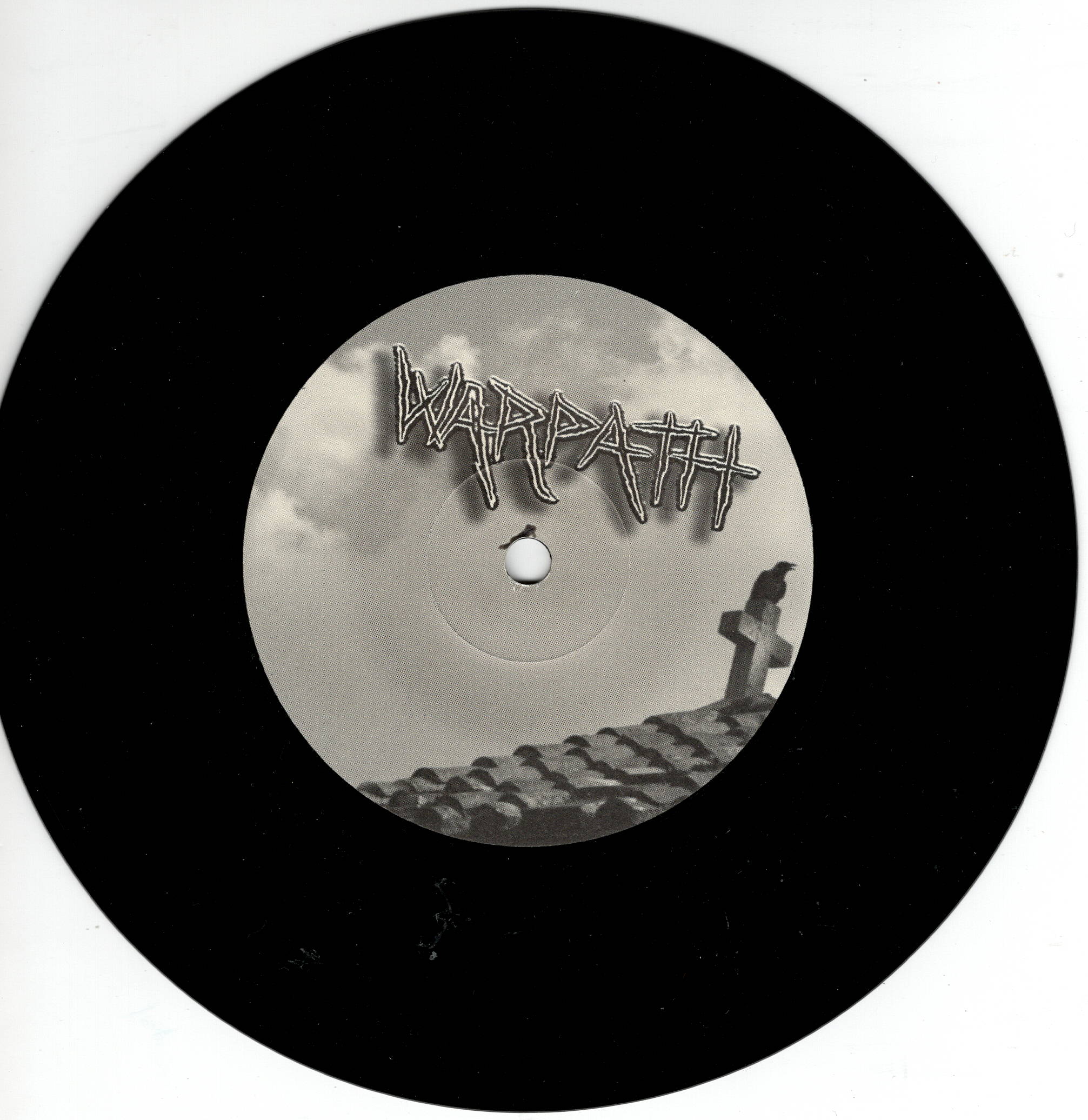
Live by the Crust, Die by the Crust: NIS / Warpath "Origini D'Odio / Nel Dilagare Della Follia" split Ep, 2011

The series is supposed to be a grandiose show of force for the ages, a fearless masterclass of resilience, wit and crushing expertise that will assert my absolute domination over the crust game. I have recently been told, to my disbelief, that I was pretty much the only wanker around even willing to play the game anyway. But rest assured that such pathetic displays of envy do not affect my quest and leave my unbreakable faith unimpaired (I still resolved to call my trustful bludgeon-men and had the libellous bastard sent to the indie-rock gulag, that'll teach him). The only thing that does bother me is the subject of my heritage. To whom should I bequeath this well of crust wisdom? I am certainly not going to procreate (I shiver at the thought of what a baby would be capable to do to my Macrofarge flexi?) and although I do have a nephew, for now he seems to be solely interested in running after pigeons so I cannot say he is completely ready yet. If you know someone pious enough in your circle of friends or enemies, I have been thinking of taking apprentices to train in the arcane arts of crust. Resumes can be sent through the email address above. Ta.

If anything, the crust genre can be described as rather humble and unpresumptuous. Crust band do not strive to reinvent the wheel or pretend to redefine, challenge or question conventional notions of what hardcore is supposed to sound like (which is what every fancy punk labels claim to be doing). They just aim at sore-throating you into the ground or axegrinding you into submission. Noble endeavours indeed that rarely need to be disguised as something else than what they are already noisily professing to be. In the last review, I wrote about ancient crust traditions and about the need to protect and care for them. Silly naive Bristol-styled punk sketches, ripping off Antisect and Amebix, not tuning properly your instrument, dual vocals sounding like a mean argument between irate cavemen, having too many pints of cider just before getting on stage... All traditional crust rituals that must be safeguarded in the face of aggression by oi music, pricy pedal boards, high-waist jeans and indie-rock: the Four Horsemen of the Apocalypse. 

                                                                            Vomitcore?


The piece of Unesco-validated Intangible World Heritage of crust I am referring to today is the modest split Ep released by a dozen or more of tiny DIY punk labels. The NIS/Warpath split Ep was released by no less than twenty labels and while it's not exactly a world record (a mate of mine was recently involved in a release that saw one hundred labels join forces) it's still pretty impressive. The basic reason for this abundance has to do with finances. Hardcore punk labels - and I am not even talking about grind or crust-oriented ones - are often short on cash so that such collaborations tend to minimize risks. No one wants to sell his or her Doom collection because he or she was crazy enough to put out 300 copies of a full album of a mate's solo grindcore project and badly needs money after selling only 5 copies, to the mates of the aforementioned mate. It is after all a fragile economy and even though some established labels often put out records on their own, many "smaller bands" - the euphemism traditionally used to refer to bands that are not fashionable (and also, although not necessarily, just not very good) - rely on small structures that can contribute modest sums of money. Some of the labels involved in the split - like Droit des Animaux or Alma Mater - were short-lived and probably not actual labels, but rather a band member or a loyal friend willing to spend a bit of money, 50 euros maybe, on the release which, in such cases, challenges the notion of "label" I guess. Others however have consistent discography and are (or were) active on that level, like Tanker Records or the sadly defunct Undislessed from France and Death Crush from Italy. Since NIS and Warpath are DIY Italian punk bands, it is little wonder that there are many DIY Italian punk labels involved in the project and browsing through the discography of these labels proves to be a great way to discover local bands that you have probably not heard of and, in the end, that's what it's all about.


Let's start with NIS (Nevrosi Irresistible del Sistema). The band was from the Foggia region in the South of Italy and was around in the late 00's and early 10's. I first listened to the band through a 2008 cdr demo (these were not frowned upon and deemed uncool at that time) of theirs, Presagi di un'Insulsa Rovina, and enjoyed their rough grinding cavemen crustcore sound seasoned with filthy stenchcore, like Embittered meeting Berserk at a 90's eurocrust night or something. Pretty good shit indeed. A much better recorded split Ep with the manic fast hardcore unit Humus followed the year after seeing NIS taking more of a metal-punk inspired approach to their gruff crust rather than a filthy old-school crust one if you know what I mean and I did not relate to the recording as much. Their side of the split with Warpath was recorded in July, 2010 in Bari and sounds more convincing than their previous work. For some reason, I get an unintentional (I can only presume) rocking and gruff Mexican crust vibe, like Coaccion, Massakro or Antimaster. As mentioned, it is not completely my cup of tea but I do believe the three raw songs work well in the style and I enjoy them enough. As I said, not unlike Latino American rocking crustcore, with some Cop On Fire grooviness and late Giuda's metallic epics. Still, the real nuggets on this Ep can be found on the Warpath side.


Before buying this record, I was completely unaware of Warpath as I had only grabbed it on a small Italian distro because I liked NIS' demo well enough. I have already talked about how amazing it feels to buy a record from an unknown band and realize it is the dog's bollocks and how rare such incomparable experiences have become because of music streaming. We just no longer like to be surprised. The unoriginally named Warpath were from Milan in the North of the Country (the two songs they contributed were recorded in Alessandria though) and listening to their two numbers for the first time was an elating experience. In order to convey a sense of my enthusiasm I will be rather bluntly plebeian and unusually plain: Warpath ticked all my boxes and were right up my alley. They had that heavy, nasty, organic crust sound, they played filthy stenchcore with the adequate variety of paces (from the crushing mid-tempo, the charging Dis beat to the punishingly fast) and they still practiced the ancient crust tradition of gruff male and female dual vocals. What more can one ask from an unknown band? If you are into stenchcore, and I suspect you are if you have made it this far into the review, this Warpath recording is for you. I am heavily reminded of '09/'11 era Cancer Spreading which is an excellent thing and makes sense in the Italian crust context but also noticeably of the ace 90's Polish metallic crust bands like Enough! or Silna Wola and some cavemen US stenchcrust hordes like Hellbound and Man the Conveyor, all top references among the Terminal Sound Nuisance staff. The vocals are brilliant and I love how the atmosphere of polyphonic inferno, the injured bear engaging furiously with the hellish witch and the more classic shouting anarcho singer. Fury unleashed. 

Warpath did record a full album released in 2016 after a change of personnel, Martina replacing Manu on vocals - thus with two women on dual vocals - and Ale replacing Simo on guitar. Oblio is not as stenchcore-oriented and does not have that super heavy disgusting down-tuned sound of decay to it, which at first was something of a minor disappointment to me. However looking back, it is still a solid album of fast and heavy dual-vocal 00's-styled crustcore and with the current shortage of such bands, one cannot afford to be a vain perfectionist (to be honest, something of a challenge for me).    

A humble and strong split Ep overall that illustrates what the Italian crust scene was producing in the early 10's and can be said to be a minor stenchcore classic because of the Warpath songs. You would be a fool to dismiss it.           


NIS vs Warpath              

Tuesday, 3 May 2016

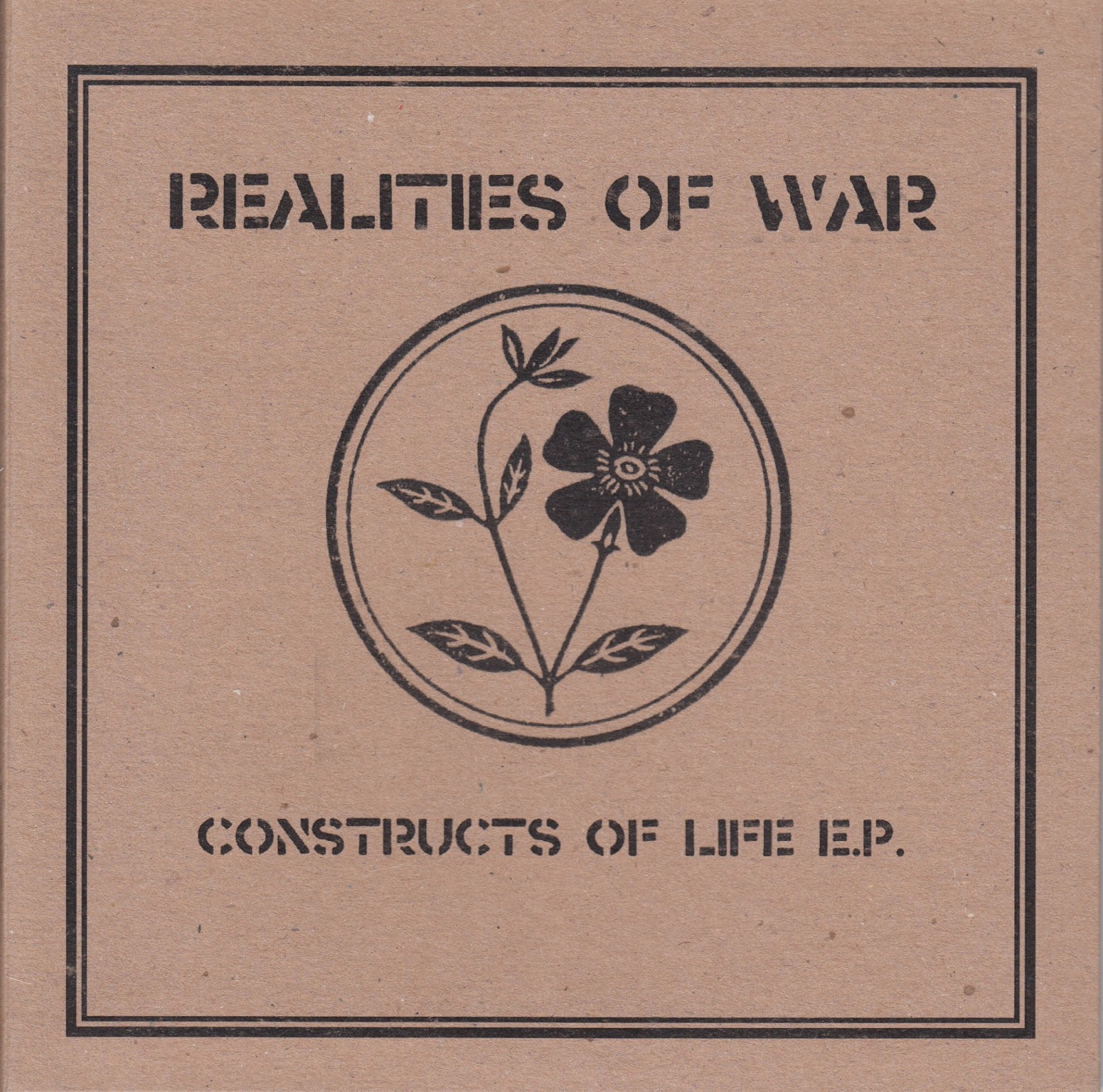
The Chronicles of Dis (Part 9): Realities of War "Constructs of life" Ep, 2011


This one is a little personal I suppose.

I got Realities of War's "Constructs of life" in 2012 while visiting my friend Steve in Leeds. I had not been there for a few years and the trip was prompted by the opportunity to attend a great show he was putting on at the 1in12 Club in Bradford with Antisect, Hellkrusher and Cress (no less). A top gig which saw giggle like a 16-year-old fanboy at my favourite punk venue and some catching up with an old friend, it was bound to be a great weekend.


On the second day, we were chatting about our past and future respective projects and he told me that he had been singing with a dischargy band called Realities of War a few years back. Now, I was a little surprised (if not slightly upset) since I had literally never heard of the band and I do try to keep myself updated about what is going on in this part of the world. They had released an Ep, "Constructs of life", that had come out in 2011 but the recording session was actually much older, from February 2006. It took five years for the record to see the light of day and this slow process made me smile a little since it is quite the opposite nowadays, when bands usually release one Lp and two Ep's (often the demo, originally released as a tape, is repressed on vinyl) in 18 months, tour Europe and then split up leaving a hot trail of average records in their wake. I knew Steve had been singing for Project Hopeless in the mid-00's and I always loved his writing in his fanzine, Attitude Problem, which epitomized the politics and aesthetics of proper anarchopunk to me, so I was looking forward to listening to ROW. After all, it couldn't really go wrong: the band took their name from the first song of the first Discharge Ep and the booklet was replete with anarcho symbols. I was confident. Besides, I knew how much Steve loved Discharge. After all, he was the one to introduce me to Disaster. When we regularly wrote letters to each other, he would often say "and I am still listening to Discharge". Now, I guess anyone with even just a small amount of good taste in punk-rock could say the same: who isn't still listening to Discharge? Exactly. But in this case, I would read the sentence as meaning "I am doing fine and I am still here". Listening to Discharge had come to signify this kind of continuity and resilience in the face of daily life. And to this day, when I am being asked "How's life?", it is still what I mean when I reply "I'm still listening to Discharge (or Antisect or Amebix)". It is an encoded answer, to some extent, but those who love such bands as much as I do will know exactly what I mean.


But enough sentimentalism already. ROW formed in 2005 and, apart from Steve on vocals, had ex-members of Flyblown (from Essex) and Burning the Prospect (from the other Boston). Now, I have sadly never seen Flyblown live but their "The fear and the fury" Lp from 2005 definitely rates as one of the best British punk Lp's of that decade. It is a crushingly intense, almost excessively so at times, angry and powerful album that manages to sound savage and yet completely focused. It often struck me as the perfect balance between the heaviest brand of Scandinavian hardcore and British anarcho-crust, and the fact that the line-up also had (at least) one Swedish member (on drums) was of course meaningful in that respect. So even before playing the Ep, the Flyblown connection indicated that I was in for some seriously heavy hardcore. And then, flipping through the thick booklet on my way home, I realized that there were two guitars. That could be a problem. I was expecting something really Dis-oriented (couldn't help it and I'm not even sorry) but two guitars sounded risky. In fact, when someone usually mentioned a two-guitars D-Beat band, it was inevitably to talk about much dreaded sub-sub-subgenres such as "Rocking D-Beat" or, even worse, "Crust'n'roll". Bands daring to adopt such genres usually sounded like a cheap version of already cheap early-00's Disfear or mid-00's Inepsy. I am not necessarily against having two guitars when playing the Dis-thing but you really have to know what you are doing because I, for one, am not into seeing bad heavy-metal solos, cheap Lemmy impersonations and lazy D-beat paces spoiling otherwise relatively decent (at best) Discharge riffs. And besides, why would anyone want to do a "rocked out" version of Discharge? They were intrinsically a groovy band and the bass lines were rocky enough to start with. So I was really anxious when I got home, although, truth be told, I was not that worried about the quality of the music as Steve had never struck me as the kind to have Motörhead posters in the bathroom.


"Constructs of life" is a solid Ep. The sound is, as expected, heavy, pummeling and thick. The songs (which blend together through feedback) have a relentlessness that I always crave for that genre as it aptly reflects the idea of disastrous endlessness that pertains to Discharge. It should grab you and not let you go. My worrying about the two-guitar attack was unfounded. It allows for extra heaviness and a few tastefully wise guitar leads but the guitars never hide the bass, which is essential as D-Beat is a bass-driven genre if anything. Here the balance between the punishing, ominous sound of the guitars and the all-important groovy bass hooks is cohesive and effective: it just works very well. The riffs are probably more rooted in Scandinavia than Stoke-on-Trent in nature, I am reminded of Disfear or Skitsystem at times (especially on the metallic intro and a on a couple of breaks) or even Consume, and while the pace never strays far from Discharge, it is also harder-hitting. Swedish-inspired early 00's D-Beat in a word. However, contrary to Flyblown who used harsh, over-the-top anguished screams, the vocals on "Constructs of life" are actually much closer to the original Discharge and discharge-loving 80's anarchopunk bands. Like Cracked Cop Skulls, the band opted for vocal doubling which gives a very vintage energetic feel to the music and roots it in 80's territory. Since the music itself was already relentless enough, the idea to use the double tracking was brilliant, especially if it accompanies the bass work closely. As mentioned, I am reminded of old anarcho bands like AOA or even Icons of Filth and the presence of a few delectable spoken parts delights me.


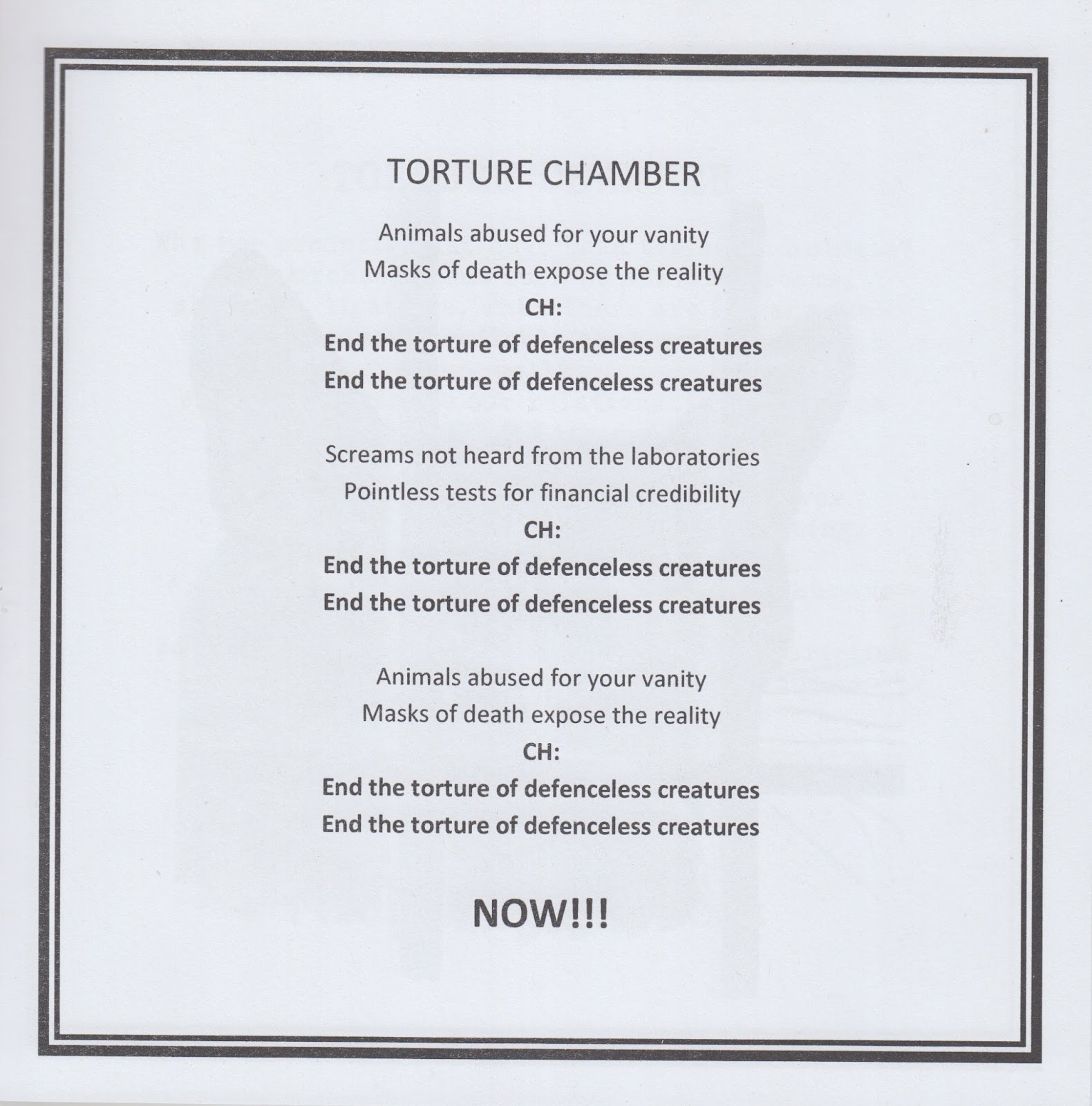
As the artwork and the thick, superb booklet with cardboard covers can attest, Realities of War were probably more an anarchopunk band having a go at the D-Beat orthodoxy, rather than an all-out D-Beat band: Crass font instead of the Discharge one, an antisectish logo instead of a dead soldier. Aesthetically and thematically, the booklet is replete with anarchopunk references and topics and while the lyrics themselves are short (but they need to be given the genre's requirements), explanatory texts developing the topics at stake and useful resources are provided as well. The songs are about the validity of a State-run society ("When will we ever learn?"), animal abuse ("Torture chamber"), state surveillance ("Orwell nation"), subservient conformity to social norms ("Complicit") and the need to do something positive and constructive with our punk lives ("Look within"). This is thoughtful, meaningful and caring political punk music coming from the heart. And there is even a free patch coming with the Ep. What more could you possibly ask for?


As I remember it, "Constructs of life" was a benefit Ep for the 1in12 Club in Bradford (it was recorded there by Bri) and it was released by Active Distribution, Crisis Point, Never Healed and Not Enough Records. Below is a link to an interview with Steve about Realities of War and "Constructs of life" that appeared on TrakMarx: Dis-interview   


And there is the bloody patch!