Showing posts with label 1984. Show all posts

Wednesday, 15 December 2021

UK84, the Noise Ain't Dead (part 5): Solvent Abuse "Last salute" Lp, 2007

According to me - and my fine perception of punk is of the highest standard and therefore bound to get you some punk points if you abide by it - Demo Tapes has been one of the best punk labels specialized in reissues - if not the best although I also a lot of respect for Antisociety - in recent years. After checking, I realized A Touch of Hysteria's one-sided Lp - Demo Tapes' first undertaking - was actually released in 2006, which is really not that recent and some hairlines certainly receded since then, but you know what I mean by "in recnet years". I have already touched upon the label's work in my old review of the Passion Killers' Lp but I decided that the idea to write about Demo Tapes again was a marvellous one indeed that should be followed through with my customary determination - and since I haven't had that many great ideas this year, I am hoping this might make up for the inconsistency. Beside Demo Tapes' work is easy to get excited about and hopefully it will bring some joy to all the miserable bastards reading this. You're welcome.  

The past 15 years have seen an insane number of reissues, in all subgenres of the big dysfunctional family that is "the punk scene". New labels started to devote much of their efforts toward making old and classic - by which I mean almost always from the 80's - bands available to the next generations and to experienced - by which I mean almost always hoarding - record collectors, modern Sisyphuses craving to complete their collection at the expense of an adequate diet and often of a working marriage. Labels like Radiation and Vomitopunk with UK82 punk for example. Other established labels like F.O.A.D and Mad Butcher also started resurrecting vintage and rare records, with the former, whatever one thinks about the highly productive fellow, displaying a truly remarkable passion and attention to very diverse reissues (from Svart Parad, Brigada do Odio, Human Gas or Industrial Suicide to name but a few). There have been far too many punk reissues - on vinyl for the most part - since the mid noughties to even consider making an exhaustive list of them all. Let's not be silly. But had anyone predicted ten years ago that I would be able to get hold top releases of old recordings from Bed Boys, Ψύχωση, Disattack, Post Mortem or Kalashnikov, I would have diagnosed a case of severe marble-losing or registered the prophet into a rehab center for deluded punks. But here we are in 2021 and there are just too many desirable reissues of canonical bands around, so many in fact that keeping up with them has become a time-consuming, expensive and at times even fastidious, task. While at first, I was annoyingly overexcited and probably insufferably enthusiastic about reissues of once-unattainable seductive records, the novelty of affordable nostalgia on vinyl slowly started to wear out. Today, I have a hard time feeling the same eagerness for most reissues, even from bands I genuinely love. Even the Chaotic Youth Lp barely made the ole heart beat and I consider them as one of the most underrated bands under the UK82 umbrella. 


Why why why but why? I would hypothesize that this overabundance of reissues of 80's bands has a lot to do with the internet. I know it can be easy and convenient to put the blame on "the internet" but I feel the growing reliance on streaming platforms, that have now turned into near monopolies, has changed the way we listen to punk and how we reflect on old punk music. The internet and its corollary, the incentive of overconsumption of readily available cultural artifacts that are decontextualised in order to be lazily absorbed, have contributed to radically broaden our knowledge and speed up considerably the reissuing process. We all want and need a piece of history in order to feel like we belong. I do believe that this process was inevitable and is very positive in some respect. After all, knowing the culture and history of punk music is indeed important and enlightening - I remember getting quite emotional whenever I bought a Captain Oi reissue in the very early 00's, even the shit ones, so I completely relate to this idea - and the possibility for discovery is limitless with the internet. However it has also created a juicy market for nostalgia which, combined with the great equalizing effect of the internet, has profoundly changed the way we engage with the past. But then, I also think that reissuing some bands, and not only that but also the reasons why it is done and the way it is done, can be necessary and crucial. I have regularly touched upon such fascinating topics on the blog and, while it makes me look clever and scholarly (and possibly a bit boringly self-admiring), they are not really fun to read and a series called The Noise Ain't Dead has to be fun so let's bloody 'ave it. But if you long for more bitter whining, I suggest you buy my brand new book entitled Things were not quite as dreadful before: a punk's mid-life crisis in the age of Spotify


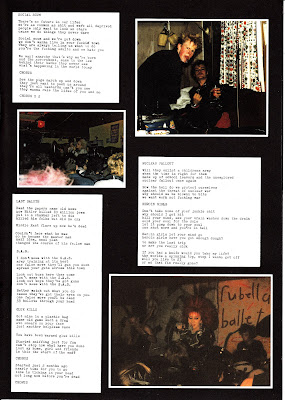
So yes, Solvent Abuse. Brilliant punk name in the context of widespread glue sniffing, an activity I would not recommend, especially when over 20. I got this Lp when it came out in 2007 (or was it really early 2008?). I had thoroughly enjoyed DT's first release, the demo of A Touch of Hysteria, and it was one of those records that got a lot of airplay at the squat I was living in at the time - golden days when a shower every fortnight was deemed acceptable - especially the song "Death cart", a miracle of tuneful darkly poppy anarchopunk. I had also acquired the second DT's production, Extended Play by The Mental (Dick Lucas' first band) but to this very day I have never really managed to get into it, connect with it, although I very much expected myself to, what with the band sounding sloppy, snotty, unashamedly punk and having a song called "God for a day" about the giro. Both Lp's were well done with accurate details about recordings but nothing out of the ordinary. Just serious enough reissues and the opportunity to discover bands I did not know the existence of so I could brag about them afterwards, just standard punk behaviour really. So it made sense to buy DT's third record as Solvent Abuse were another band that was completely unknown to me - and to anyone I knew as far as I could tell - and the cover had a circled A and a studded belt so it could clearly not disappoint. Little did I know that Last Salute would be the best Lp reissue - by a good deal - I had ever seen at that point in time. Even before playing the record, looking at the massive booklet that included so many band pictures, letters from classic labels, all original artwork, fanzine reviews, gig posters... The object in itself and the amount of work that went with it were breathtaking indeed. I had always been a sucker for records accompanied by thick booklets so it felt truly awe-inspiring and made some other records at the time - and today still - look a bit tepid and half-arsed. I am aware it might sound a little harsh, and I suppose it is. Last Salute carried an irrefutable admirableness, or, as modern bellends too lazy to form actual sentences would say, it had a "wow factor".  


Solvent Abuse - which will be referred to as SA from now on, which feels somewhat uncomfortable - were from the Nottingham area, existed for three years, from 1981 to 1984, and only enjoyed the one vinyl appearance, one song on 1983's compilation Lp (I've got those...) Demo-Lition Blues! on Insane Records, a label unsurprisingly run by members of The Insane. Apparently the band formed on the glamorous bus from Notts to Alfreton, where future members bumped into each other by chance. They were all from Watnall, a place I have never been to but sounds like a town out of The League of Gentlemen. SA played with quite a few established 80's bands at the time like The Adicts or Peter so I suppose they must have been a significant act locally, although there were so many band then that it must have been hard to get noticed at all. They are the epitome of an obscure band, pretty much known and genuinely appreciated by people who were either there or people into punk archaeology. The 2007 Lp amazingly managed to give SA a second life and spread their name around, certainly much further than when they were still around as a local band. I don't suppose they have retrospectively really become "a classic 80's band" - as the formation of this category, of the canon, has become shaky and somewhat meaningless with the hegemony of youtube. Yet the fact that a contemporary Paris band proudly covered "Heroin girls" definitely proves that the reissue achieved what it meant to: bringing SA in the conversation about UK82. And I, for one, am both thankful and grateful for that. 


But what about the music then? Last Salute is made up of SA's three demos, the first two both recorded in 1982 - in June and October respectively - and the third one in early 1984. The first five songs of Last Salute are part of the band's first endeavour into the Nottingham-based studio and illustrates what those young punks were originally all about. Before I go any further into primitive 80's UK punk territories, not unlike a hound following a scent, let me warn you that the sound is raw, if not rough, on the first demo (and on the second one as well actually) but with a series called The Noise Ain't Dead precisely dedicated to raw, fast and noisy mid-80's British punk, you are expected to know what you're in for. SA's music is interesting and worth investigating for two main reasons. First, the band had both a male and a female singer. They did not sing together, in the trade-off style for instance, as each of them had their own numbers to angrily shout to, kinda like The Violators' vocal structures. Still I would venture that SA are primarily remembered and enjoyed as a "female-fronted punk band" which is both true and incorrect, especially since only the bloke remained for the last 1984 demo. The second reason why a basic knowledge of SA might come handy during punk trivia night is that a significant number of their songs fit the early Discharge-influenced template, raw and direct proto-hardcore punk with a pure form of d-beat. "Vigilante" (top singalong chorus on this one) and "Last salute" - which ended up being picked for inclusion on the aforementioned compilation Lp Demo-Lition Blues - are great examples of the rawest kind of proto d-beat Discharge-loving anthems, like The Varukers, Anti-System or Antisect - not quite as dark and furious as the former though. The other three songs (two of which are fronted by Jar) are your classic dynamic and snotty anarchopunk songs somewhere between Action Pact and A-Heads and they work well enough. 


Hurray, acceptation letters!


The second demo certainly showed some improvements, albeit rather limited ones, with the two primitive, primal Discharge-y songs were sung (well, you know what I mean) by Jar thus making "60 seconds" and both versions of "Chant" - two were included although they sound very similar - the first examples of female-fronted proto d-beat thrash music, along with Potential Threat as we saw in the first part of the series. There should be some sort of music award for that. The remaining four songs are of the mid-paced snotty punk variety again, with a vibe reminiscent of The Defects or Picture Frame Seduction because of Shelley's vocals. The last demo saw SA develop that more rocking GBH-infused heavy and catchy punk-rock to great effect - the songs "They've got guns" is really good - thanks to a noticeable progression in terms of production and musicianship, but it does go a little beyond the Noise ain't Dead template. 

Last Salute can sound a little too long at times primarily because some of the songs could probably have been shorter and because discography often feels a bit lengthy.  The Lp is, however, a magnificent work of passion and loving dedication and, from that point on, Demo Tapes has always delivered the very best in terms of research, context development and packaging. Their records makes you feel like you get to know the bands in a meaningful fashion, almost intimately so (alright, maybe it is just me). DT is run by the very knowledgeable Sean Forbes, who used to take care of Rugger Bugger, so that you know you are going to be offered the most exhaustive and accurate details and comprehensive pieces of archaeologic evidences about unfairly little-known punk bands that reinforce that sense of punk's collective history and remembering. It could not be better. In SA's case, polite but firm - in that typical English way - rejection letters from Clay Records and Riot City Records - who must have been receiving hundreds of such requests at that time - are even included. You will also find a short article about solvent abuse and how this dangerous pastime was tied to the worsening living conditions under Maggie's rule original reviews of the band's tape and live performances. And dozens of pictures of teenage punks with spiky hair and questionable sense of fashion of course. Time-traveling to the days when punk was fresh and at its peak from your sofa. Last Salute was actually a collaboration with Pure Punk Records, an Italian label that reissued the very underrated Soldier Dolls - they too had stellar Discharge-loving numbers - and catchy Brummies Drongos For Europe. 


Demo Tapes would keep releasing top notch early obscure Discharge-y bands (like Violent Uprising or very recently Disattack) as well as amazing tuneful anarchopunk (Passion Killers and No Defences) and even some classic early crust (Pro Patria Mori), three of the things I love best in the world. They are all works of love and the process of gathering the many pieces of information and getting hold of all the original master tapes is a long one so that DT has "only" released eleven records so far, but with Asylum's Is this the Price? being just out, the serious punk who cares about legacy and being bollocked by noise just knows that quality requires time. The passion has not been killed.           


                                                                         Solvent Abuse

Sunday, 5 December 2021

UK84, the Noise Ain't Dead (part 4): Leukaemia "Demo 1984" Ep, 2016

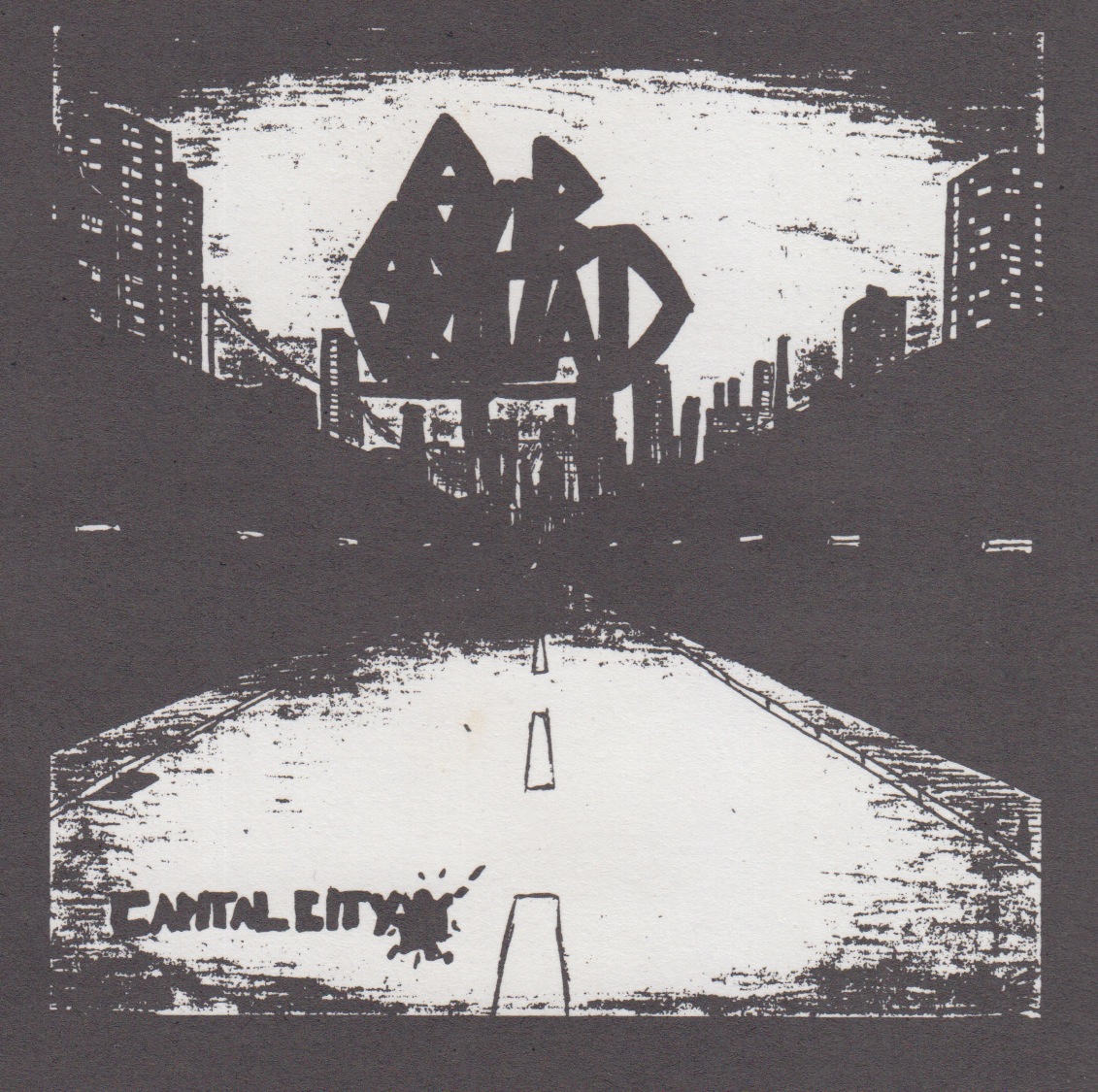
Originally, I expected this piece to be a difficult one to pull out. First, let me apologize, with humility. I incidentally inserted the wrong download link on the previous write-up about Legion of Parasites. Basically, I pasted the Leukaemia link instead of the Undesirable Guests one but then I presume the heedful readers of Terminal Sound Nuisance - yes, like yourself for example - will have noticed this unusual blunder and realized that this was no LoP and another band entirely and I am grateful to the benevolent soul for quickly spotting my faux-pas and calling for its prompt correction. So I salute your vigilance my noise-loving Comrade. But my gaffe is not the reason why I thought this post might prove to be quite hard as I have never been one to be in any way hindered by loss of face. The main concern I had was that there is not much information about Leukaemia and that therefore there was an alarming chance that I might not be able to show off my usual breathtaking knowledge about punk-rock with accurate details and insight about the life and death of the band and what they did music-wise after the demise of Leukaemia and their favourite brand of cider. 

Unfortunately, this 2016 reissue does not include any particulars about Leukaemia which, I think, is a bit of a missed opportunity. Quite austere really. I am one to support any effort aimed at offering a new life and exposure to little-known, obscure bands and recordings and this is where the record's intentions point to: allowing unsuspecting punks, and potentially a new generation, to discover what Leukaemia were all about. The Ep still is the only way to hear and enjoy the songs with a decent sound and, if, I feel, constructive criticism is necessary, I was not the one heroically getting through the long and sometimes laborious process of releasing it so that I am, first and foremost, thankful, even if a little frustrated too because everybody's looking for a little bit more, innit?


So Leukaemia, right? Clearly not the most famous band of the era and I suppose that, if you are familiar with them at all, you either saw them "back in the day" and probably forgot much of their live performances because you were still in your teens, got plastered at all gigs then but not so drunk that you did not pick a demo tape; or you downloaded the demo from the colossal blog http://degenerik666.blogspot.com/ that has been uploading an insane amount of punk recordings from all decades and countries since 2008, a prehistoric time when there was neither Instagram nor Snapchat and Twitter was still only a small twat farm. The blog is very much a database in which you can lose any sense of time and priority and slowly starve yourself to death because you are too busy downloading 80's Czech punk-rock. There are worse deaths than that and the blog is shoegaze-free so that it is very much a safe space for all. However I did not personally become familiar with Leukaemia through any of these two ways (the first one can be eliminated straight away as I was much too busy baby crawling in 1984). 

Sometime in 2009, I downloaded a tape compilation called To Russia With Love from a blog, out of curiosity, a trait that I consider to be the greatest quality only as far as punk music is considered (I am no melomane and others genre leave me cold). I sadly cannot remember the name of the blog, at all, and could not find any trace of it on the web so if you were the one behind the uploading, I wish to thank you solemnly. At that time there were a lot of fine, praiseworthy punk blogs and, well, my memory is failing me right now. To Russia With Love looked a little mysterious and, as a consequence, alluring to my thirsty for knowledge self. Being a lifelong fan of British punk music, the compilation tape's lineup appeared exciting indeed as it included some UK bands I had absolutely never heard about. While some bands on the tape were already mates (like Liberty, The Deformed or Symbol of Freedom), others were merely passing acquaintances (I only knew the one song from Anathema) and a significant number were total strangers that eventually proved to be brilliant. Elating indeed. Schutzhaft were a snotty and direct catchy classic Mortarhate-ish anarcho band with a brilliant guitar sound; Co Exist were a tuneful Alternative-like act; Ted Heath were a strange mix of progressive rock introduction and hard-hitting raw UK hardcore punk Last Rites. But the band that really caught my attention was Leukaemia.


To Russia With Love - the title is actually completed with "Piss Off to Russia Yourself" in case you were wondering about some sort of worrying James Bond worship - was released in 1985 on LOL Tapes, a label I did not know when I first heard the comp but was very meaningful locally (and yes, the name has not exactly aged well but no one knew at the time what would become of the acronym "lol"). Based in Surrey, LOL Tapes - meaning Love Of Life - was run by Lorenzo from Anathema and existed from 1984 to 1987. Beside releasing Anathema demos, including one shared with the amazing Systematic Annex, and tapes from bands like The Apostles, Martial Law or Post-Mortem, LOL put out many homemade tape compilations that exemplified the staunch autonomous DIY spirit, the radical politics and sense of togetherness of the anarchopunk scene at that time. Discogs tells me that there were eleven of these compilation tapes (there were three volumes of Persons Unknown) which usually included smaller bands that often did not have vinyl releases. Seeing the lineups in 2021 might give the wrong ideas about the level of popularity of the bands but I would assume that, in 1984, bands like Passion Killers, Onslaught, Kulturkampf or Dirge - who all enjoyed proper vinyl reissues in the last decade or so and have become rather known about - were not exactly headlining festivals and very much local bands (though I could be wrong, in 1985 I was still babbling, and not about Discharge, so what do I know). Many other bands have remained locked in obscurity and unfortunately, so far I have only been able to hear To Russia With Love and Somewhere Over the Rainbow There's a Better World (the latter wan the award of "Cheesiest Name for Punk Mixtape" in 1985) and although many of the songs from the compilations are now available elsewhere, I would love for someone to upload them properly. They are pieces of our common history and provide a look at a particular time, place and stance and are therefore significant.


To get back to Leukaemia, their two songs appearing on To Russia With Love, "3rd World annihilation" and "Pain and suffering", were previously included on another LOL tape, the split demo tape shared with the aforementioned excellent Schutzhaft for which Leukaemia had recorded a total of seven songs, which make up the 2016 Ep. Leukaemia were from Peterborough (like Schutzhaft) and Stamford and were part of a thriving local scene in the mid-80's with established bands like Destructors or English Dogs and certainly dozens of other local bands that I am unaware of. Leukaemia can rightly be said to be one of those "underestimated bands" that punks regularly debate about. Sometimes such verbal jousts can be endless - they obey to the typical "the pettier, the longer" theorem - but I can safely claim that Leukaemia is a hidden UK hardcore gem and maybe the best band of that category that you have never heard of. The demo was recorded (live in the studio I assume) in November, 1984, in a studio in Peterborough (although the singer says "Cheers goodnight" at the end of the song "Roman conquest" so it is a little confusing, perhaps it was just in jest) and you'd be very wrong to expect Leukaemia to unleash the kind of chaotic noise-loving Bristol-styled (like Dead Meat for instance) that UK punk is oft associated to. 

First, the band's recording is really tight, especially considering that it was only a first demo and that the deliciously raw production indicates that there probably were not many takes or tracks. Second, Leukaemia were more diverse than your average punk band and I see them, not unlike Legion of Parasites, as an early example of a UK punk band being influenced by American hardcore. They do not really sound like a US hardcore act though. The chorus clearly have that British sensibility, the themes, occasional dual vocals and spoken bits and anarchopunk topics also point to a national tradition. But still, the demo hinted at what was to come: the rapid spread of non-British punk influences, which was, for such an insular place, not to be taken for granted. Leukaemia manage to combine a punky singalong vibe and catchy UK punk arrangements with more subtle guitar parts, thought-out bass lines and some vocal work and energy typical of early American hardcore. If the band was rather fast, they always kept a tuneful, hummably memorable side, unlike the more Discharge-oriented bands of the period and on that level they do remind me of a cross between bands like Potential Threat and Legion of Parasites, other mid-80's punk-as-fuck proto-hardcore bands like Last Rites, The Fiend and Criminal Justice, some US hardcore of course and even Conflict for the threateningness. The guitar has a distortion but does not sound heavy in the mix and the clear sound of the bass drives the thing. The pissed vocals are high in the mix and you can understand everything they are saying which makes the songs even more aggressive. I personally love how the drums sound like, primitive and energetic (and there is some solid drumming on the demo), and I feel that, for this kind of raw punk hardcore, this recording is quite ideal. 


Someone mentioned in the comment below the youtube upload of the demo that Leukaemia were influenced by The Stranglers, Rudimentary Peni, Discharge and American hardcore and who am I to say that a cocktail of these four wouldn't sound like them? If you are looking for genuinely raw dynamic fast punk music, the 1984 Leukaemia demo will delight you. My favourite song has to be "Reactor disaster" with its dual vocal work and opening spoken part it basically pushed all the right buttons. I am an easy man to please. The band did not record anything else, which is a shame, since the demo definitely displayed potential and one can only dream about what the boys could have achieved in a proper studio and with a proper vinyl release. Some of the songs are actual hits and, had they been given the power the band probably craved for, the world could have been a very different place. Or at least I would doubtlessly own one more record. 

This Ep was reissued by Pro-Anti Records, a label based in Switzerland and run by one Grant Dow, who previously played in The Desecrators, an epic local crossover act that also had Gizz Butt - from English Dogs and yes, Prodigy - on the guitar. So I suppose Grant Dow lived at some point in Peterborough and moved operations to Switzerland. I have no idea what or if the members of Leukaemia did afterwards band-wise so you may enlighten me.   


Monday, 29 November 2021

UK84, the Noise Ain't Dead (part 3): Legion of Parasites "Undesirable guests" 12'' Ep, 1984

Legion of Parasites is one of my favourite band names ever. Sure, it might sound like a bit of a mouthful at first, especially for non-English speakers - witnessing your average French punk even trying to pronounce it is a once in a lifetime experience - but LOP is a name that works superbly, both metaphorically and literally, and it always retains a majestic punk-as-fuck connotation regardless of the meaning you see in it. I first came across this truly exquisite name on Ebay, of all places, which is, I'm well aware, something of an anticlimactic and unromantic revelation that could have cost me some punk points back then but - in a world where (dis)liking a youtube link is the most common acceptable way to engage with new music - sounds almost charmingly innocent 16 years later. I wish I could say I first heard of LOP from a vintage 80's mixtape that a benevolent older punk gave me as a sign of acknowledgement and gang recognition or upon finding out that my mom had had an affair with the bass player when she visited England in the early 80's, but reality is often trivial and disappointing and still we have to live with it as best we can as my wellbeing coach would say. 

A guy on Ebay - he would later on create the very exhaustive UK punk-oriented Nation on Fire blog - was selling homemade cdr's with many - and I do mean many - rare and obscure recordings from UK punk bands that I had never heard of. It was the mid-noughties, I was not the stinking rich bastard I have now become and my Dickensian lifestyle meant I did not have an internet connection at home and could not download anything from soulseek. Therefore, once you got past your reluctance to sell your soul to the evil speculating, commodifying machine that was - and still is - Ebay, getting cheap DIY cdr's full of old-school punk goodness was a good solution and allowed me to become familiar with dozens of incredible anarcho and UK82 bands (A-Heads, Fallout, Potential Threat, Death Zone...) that I had never heard of and I could not find anywhere else. It was a time of excitement, wonder, discovery, celibate and also of waiting since the cdr's did not just instantly appear on your doorstep. Now I check new bands by clicking on a Google-sponsored youtube link and then complain about it on a Google-sponsored blog so that ordering cdr's on Ebay may almost sound deliciously quaint which is already saying a lot about the prevalence of nostalgia.

                                
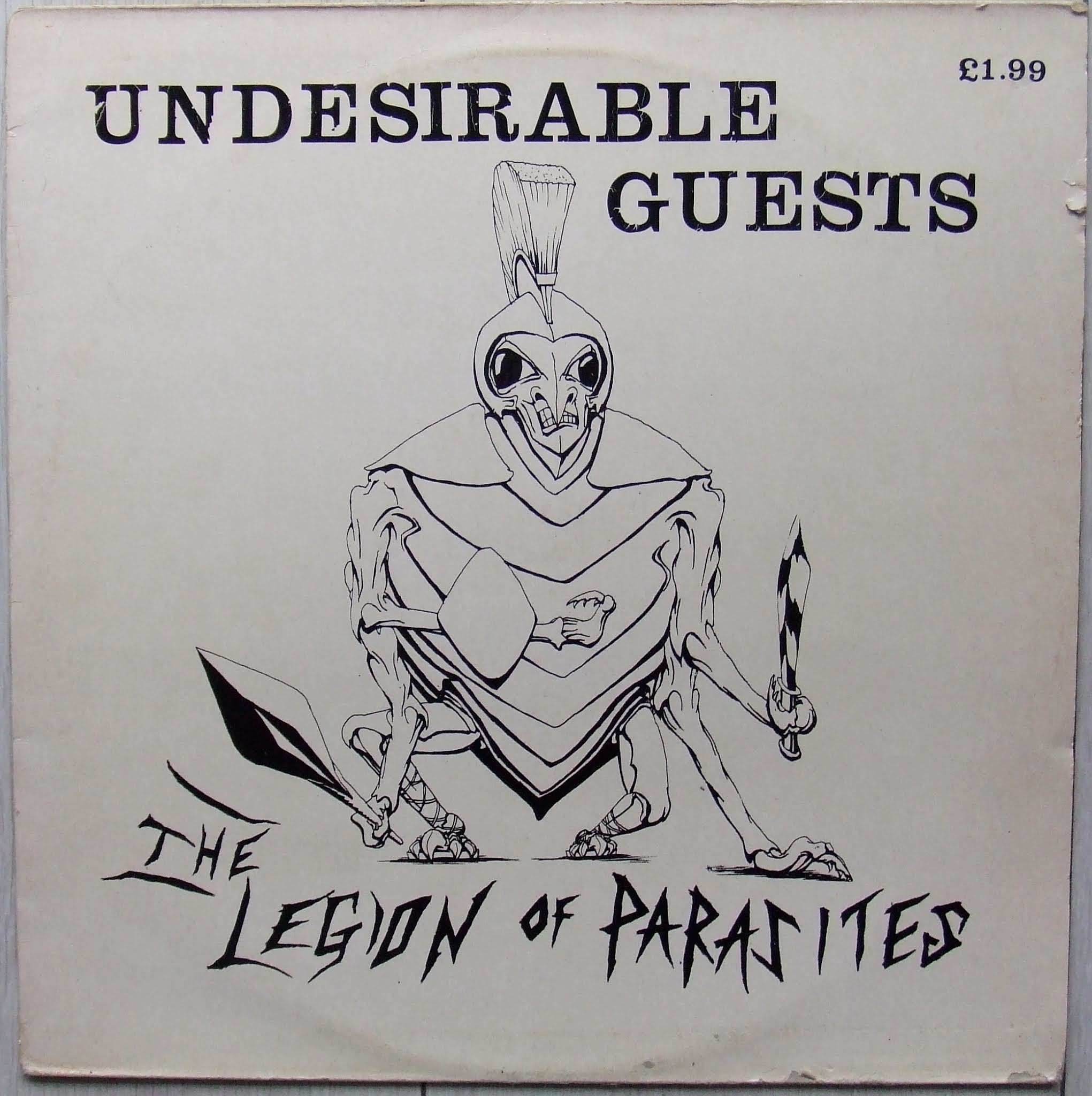
 You've got to love the tiny shield and the determined facial expression

Reading the name "Legion of Parasites" on that cdr list made me giggle like a schoolboy upon hearing a fart. Now, that was a name I certainly could relate to. In those years dominated by the pompous neocrust lexicon, the name sounded rather puerile, irreverent and fresh and evoked music you could eat your bogies to. Most of those cdr's came with a cheap xeroxed cover of some original artwork and I was looking forward to seeing how the band had transcribed the notion of the legion of parasites pictorially. The name was highly significant after all. Did it refer to how the State treated the young and the unemployed as social parasites to be crushed and tamed? Or did it mean that, in the face of state capitalism, you should resist and become a so-called parasite, live on the dole, on the fringes, squat buildings, shoplift and shower as little as possible (this last one is not compulsory but still recommended)? Perhaps it met both definitions as it would have sounded more relevant politically? Perhaps it was a comment on capitalism' s parasitic nature? And then it could also be adequately used by a spikes'n'studs unit getting smashed in front of a derelict brick wall they just happened to walk by? And being "a legion of parasites" could mean all of that at the same time! With such a moniker, I thought, you just could not go wrong. In spite of the many hypotheses I silently pondered on upon waiting for the parcel of cdr's - it was best to buy them in bulk - not once did I imagine that the visual accompanying the cd would be that literal. 

In The Day the Country Died, guitar played Sean said about the striking choice of name that "we - everybody - were just this legion of parasites on the face of the Earth really. (...) We knew we were parasites as well, but we were trying to change that, trying to put something positive back in..." which points to the people-as-parasites-under-the-capitalist-system theory and makes sense. However, the first visual of LOP I saw did not exactly reflect it. The early discography cdr displayed the front artwork of Undesirable Guests as the cover which shows a rather crude - I have seen better technique from middle-schoolers - drawing of a body louse dressed as a Roman legionnaire. Was it some sort of postmodern situationist statement about the performativity of our radical political projections onto art or was it just a matter of "wouldn't it be funny if we had a louse legionnaire on the cover"? The insect parasite trope was further developed on the backcover through a drawing - quite accurate this time - of a flea (or is it a lice? Because of Fleas and Lice I can never tell) which seems to indicate that LOP were quite serious about the literal parasite-as-organism visual theme and the title Undesirable Guests seem to suggest that those body lice may have settled, uninvited and unwanted but clearly determined, in a comfortable and warm locale of the nether region. No more shall be said on the subject. Rather surprisingly when comparing with Undesirable Guests', their first demos' artwork, Another Disaster and Death Watch, displayed typical 80's anarchopunk imagery of blurry warships and sloppy drunk-looking grim reaper so that the choice of going body lice on their first vinyl could appear somewhat of a bold decision. Unsurprisingly and for the best, LOP did not use that fascination for parasitic insects on their next work. Still, for all the oddity of the cover, I would claim that the cover of this 12'' Ep might be the most relevant visual representation of the "noise ain't dead" series: unpredictable, punk-as-fuck and chaotic. And I love it.

LOP can be said to be a classic early UK hardcore band so details about them are rather easy to find now. But still, let me brief you a bit. The band formed in Bedford more or less officially around 1982 and recorded their first demo the same. Another Disaster was a primitive and quite discordant thoroughly enjoyable twelve-song effort if you are, like myself, into raw and energetic snotty anarchopunk, a bit like a cross between early Flux of Pink Indians, Disorder or early Anti-System, with some songs pointing at the fast noisy hardcore unit they would soon become although a significant portion of the demo was still traditional mid-paced anarcho music. The next recordings, Death Watch and Party Time, both recorded in 1983 and released on a single tape emphatically illustrated that LOP were the fastest band in the land, especially with Death Watch. Relentless and absolutely furious hardcore punk with a proper rawness that made most of the competition sound a little tame, the songs making up the demo opened the cdr I ordered - which covered LOP's punk years, from 1983 to 1985 - and I remember falling in love instantly. 


To be fair, the recording might possibly be a little rough for some but I would argue that this typical fast 80's hardcore vibe with the angry and snotty vocal delivery of Cian - guitarist Sean's brother - and the anthemic singalongs actually has to sound raw. Mob 47 with too good a production would have not have sounded half as good. As mentioned, LOP were one of the fastest bands around (with 1982 Antisect just a little behind) and one of the first British bands to incorporate a US hardcore influence into their recipe while keeping a distinct UK touch at that point in time (they would little by little turn into a US-sounding crossover hardcore thrash act). Let's say that in 1983, the band sounded like a boisterous piss-up with early Antisect and Anti-System, Perdition's Disorder, Void and Neos as guests. Something like this. The demo was so good that Marcus from Pax Records included two songs lifted off Death Watch on the Bushell-bashing Bollocks to the Gonads 1983 compilation Lp that included bands from the anarchopunk world like Anti-System or Instigators, UK82 acts like Riot Squad and Xtract but also foreign hardcore punk bands like Crude SS or Subversion which, for the very insular Britain, was something of a novelty. 

The next logical step was of course for LOP to record a proper debut which materialized in February, 1984 in Rocksnake studios (fellow Bedford band Government Lies also recorded there). Undesirable Guests can be seen as a perfect record once you get used to the so-bad-that-it's-good artwork. Like the previous demo, LOP's 1984 12'' without a doubt delivered a severe blow of anarcho hardcore thrash and, as could be expected, the sound on the record is clearer and cleaner but still rooted in the raw punk tradition. In 1984, they were not the only band delivering goods of that sort in the world of hardcore, although you could claim that few others delivered goods of that caliber. But what made LOP stand out was how genuinely catchy and anthemic their songs sounded like. While most fast bands of the era were perfectly happy to inflict six equal slices of all out bollocking hardcore to the eager listener - and I for one am perfectly happy to be inflicted such an pleasurable hardcore punishment - LOP's songs offered some significant variations in terms of tunes and speed. In fact, on the record, LOP make me think of a hardcore thrash version of Subhumans. Of course, there is a vocal closeness but there are also a lot of clever guitar leads and inventive technical drum beats highly reminiscent, probably unintentionally, of the anarchopunk classic and it has to be said that, just like Subhumans, LOP were a tight and proficient lot by 1984. 

Keeping in mind that pervading Subhumans creativity, the first song "Promises" offers a solid rocking metallic blend of Broken Bones, Skeptix and Anti-System; the second one, "Savages" is a gloriously memorable almost oi-ish UK82 mid-paced anthem with a threatening singalong chorus that goes "We are savages"; "Party time" takes you back to a much faster intense thrash attack with highly snotty Disorder vocals and amazing drumming; on the other side, the catchiness continues with the speedy Neos-meet-Dirge "Eroded freedom" and its simple but effective chorus "No, no, no, no"; afterwards "Hypocrites" sounds like Sketpix on speed; and finally "Condemned to live in fear", arguably the best and most intense, relentless of the fast songs of the record and one of my favourite raw hardcore punk of all time, the prosody, accentuation and intonation on that song are pure magic, assuming that, like me, you see magic as something a spiky punk can actually pull out thanks to frustration, passion and a couple of cans. The energy permeating Undesirable Guests is incredible thanks to the very impressive and energetic drumming style and to the typically British defiant and juvenile vocal delivery that clearly marks LOP as a real PUNK band and, combined with the top notch hooks, singalongs and overall songwriting, makes Undesirable Guests one of the strongest UK hardcore punk record of the 80's that can easily please any punk subgroup, although for different reasons. This slice of greatness was released on Fight Back records, a sublabel of Mortarhate, that also released absolute anarchopunk classics by Exit-Stance and Vex, and it has become a very expensive item because of unscrupulous sellers and too many drunk people impulse buying on Discogs. What a shame that it has not been reissued yet.   


Undesirable Guests


EDIT: being a bit messy I originally inserted the wrong download link. In fact I inserted the link for the next post so that I have spoiled the surprise. Just don't open it right now, yeah? Here is the correct link to LOP's 12". Sorry for the mistake. 

Monday, 22 November 2021

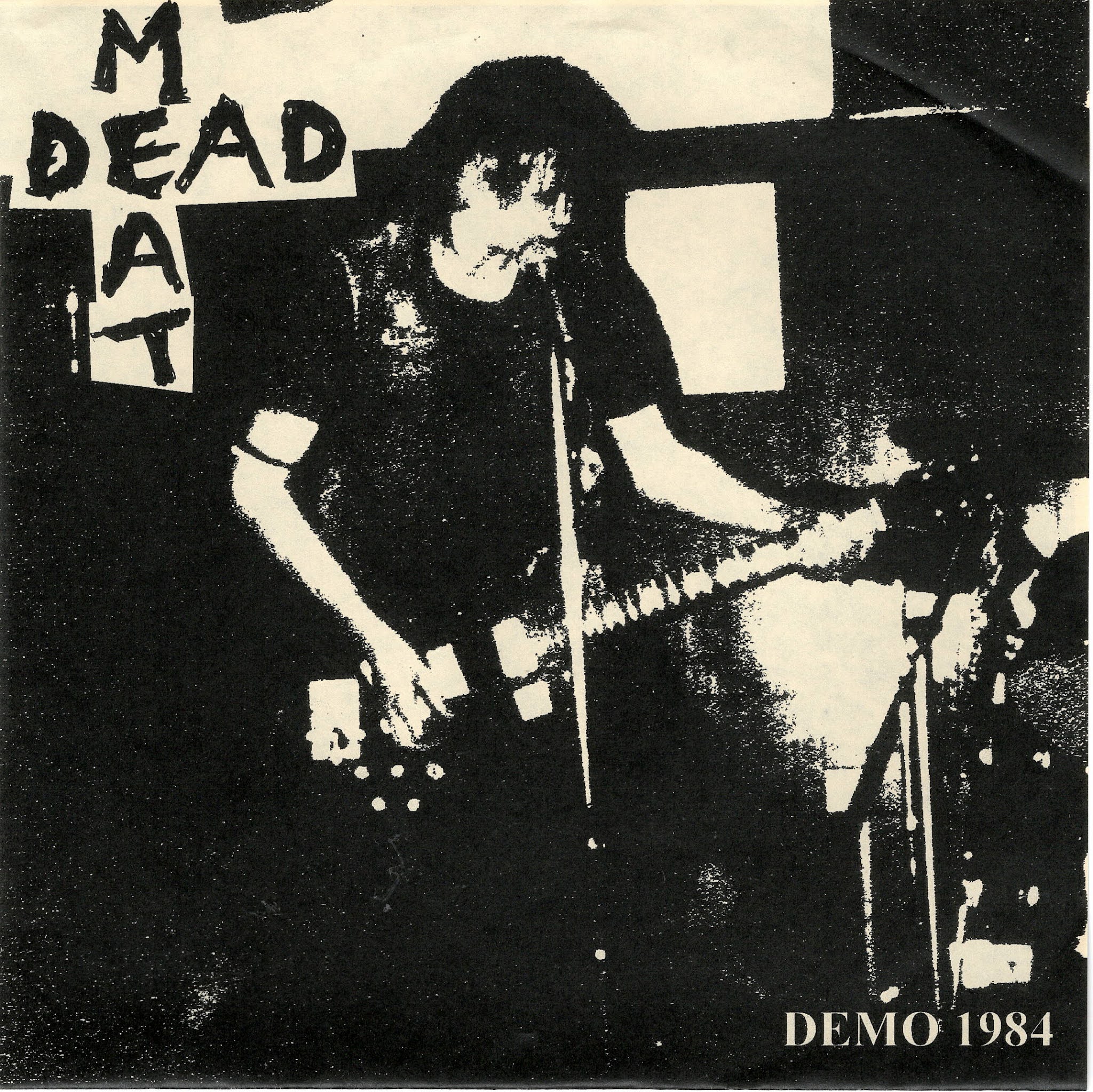
UK84, the Noise Ain't Dead (part 2): Dead Meat "Demo 1984" Ep, 2011

To be perfectly honest with you, finding titles for the full series I have been inflicting on the punk scene for five years now is becoming harder and harder. When I initially started Terminal Sound Nuisance in 2012, the thought of undertaking proper series structured coherently around specific tropes and prism (subgenres, areas, eras or random personal fancies) had not struck me as being particularly relevant to a blog. Of course, I was wrong - I rarely am but I don't mind admitting shortcomings when I reluctantly have to - series are more relevant indeed and about five years ago I realized that, not only does the series format allows me to develop my analysis further and progressively, but it also provides a framework reflecting global collective dynamics in punk rock rather than isolated items just happening to gravitate together. Beside, everyone is pissing about watching actual series on Shitflix so that it made sense to jump on the bandwagon and write eight, ten or twelve part online conferences to reach out to the Gen Z. I haven't quite caught up to the famous platform and tragically had to let some of TSN staff go, some genuinely deserving loyal workers had to be put down in order to avoid dishonour, but I remain quite optimistic about the future. Netflix, if you're reading me, you know what to do.

There are significant drawbacks, of course, to series format. You actually have to make relevant selections that highlight both the binding similarities and the diversity of context and content (or on the contrary, the significance of non-diversity like in the case of "just-like Discharge" d-beat) and this process involves more thinking and reflection. A series literally has to make more sense. And you have to plan a precise writing schedule in advance so that you do not end up leaving long gaps between the entries which, because of our narrowing attention span, would lose my modern fellow sapients always eager for novelties. One of the drawbacks I had not predicted at all has to do with titles. I have often prided myself on my skill to easily find top punk puns that make me look both knowledgeable, witty and self-aware, which might be akin to being a punchable twat in some illiterate quarters but is a sensible stance given the polishedness of my readership. A series' title has to sound good, otherwise the modern sapient will not even bother to click on the link and hours of hard work will just be swiped away like the average selfie of a vaguely attractive and muscular wanker. We sadly live in a world where one has to bait innocent punks into reading, as opposed to heary a bloody podcast, what could be a revelation, a redemption, a way out of shoegaze or Casualties cosplay. I am like a missionary promoting Anarcho Crustianity. But for conversions to work, you need a good pun that grabs the readers' fragile attention and sometimes I feel I have run out of them. It's not like I am going to test my jokes on random passersby because I don't think they would quite understand why "let's not discard Discard" is side-splittinh. So if I don't at least giggle at my own jokes, it means they are rubbish and do not make the cut. Simple as that. For this series however I just chose the name of a Dead Meat song for the title. 


As I immersed myself into 1984/1985 British hardcore punk for the series, I listened to many raw recordings, drank a lot of white cider and sniffed some glue - an organic brand, I'm not an animal - to get myself in the right mood. When I finally got to Dead Meat and played the demo, I immediately knew upon hearing the first song that the title of this series would have to be "Noise ain't dead". Dead Meat was one of the bands I was almost certain to include in the series as they ideally reflected the core principle of the series: typically British mid-80's raw and noisy hardcore punk. Not necessarily the harshest or meanest bands, just recordings illustrating what was being done and created with the Discharge and Bristol sound - which I call early UK hardcore punk in the context of that series - at that time and place. And to me Dead Meat were a great example of that and because they do not get much attention nowadays - which I have always found odd especially since the UK82 resurgence in the past decade led everyone and their mum to be superficially conversant in obscure acts without even mentioning that No Dead Meat (the continuation of Dead Meat) were actually briefly tackled in Glasper's Burning Britain in the chapter about Septic Psychos - it felt like a noble task to write about them.


Let's have a bit of context first. Though it is not completely clear, this being a demo recorded in 1984 and given the rather rudimentary musicianship of the band - not a criticism, it is exactly how that style should sound like - I guess DM started out sometime in early 1984 in the Chesterfield area (Derbyshire). As it is pointed out in Burning Britain and alluded to on the insert coming with the Ep, the members of the band had already played in other punk bands prior to the noise not being dead. Vocalist Chiz used to sing in Septic Psychos, a band that also had his twin brother Mick who would eventually join the No Dead Meat version of the band. If you have never heard Septic Psychos and are able to go past or learn to appreciate the silly moniker, which you should, they were a primal and raw UK82 band with angry snotty vocals that had two songs (recorded at Stockport's legendary Hologram Studios) on Pax compilation Lp Punk Dead - Nah Mate the Smell is jus Summink in yer Underpants innit in 1983 (how did they tell their parents the name of that record they were included on remains a mystery) and will have you shout "No you're not wanted!" in no time. DM's guitar player John and original bass player Rich used to play in Society's Victims (hallowed be Discharge's name), a local band whose rough primitive punk sound was even cruder than Septic Psychos' (the dodgy, if not completely haphazard, tuning cannot have helped). Finally, the drummer played in a band called The Corpse, not to be confused with the anarchopunk band Corpse (I think?). One could think that the boys, upon the split of their respective bands, would have chosen to go for a more polished, refined, mature style, but did they fuck! Dead Meat is even rawer, snottier, angrier and blatantly PUNK. 


What I particularly enjoy in that recording is how the songs instantly sound familiar. Take "Noise ain't dead" for instance. If you are keen on second wave UK punk-rock or any sort of 80's spiky and pogoable punk-rock really, you just know what the song is going to sound like upon hearing the first riff. Classic raucous singalong shouted chorus, fast pogopunk 1-2-1-2 beat, raw as fuck guitar sound with sloppy solos, pissed meancing vocals, this is exactly the sound of the Saturday nights of my teenage years where you get ready for a night out on the piss or for a squat gig (I used to listen to the Dutch Antidote on those occasions and the feel in DM is very similar). This shit could raise the dead. Is it really a wonder that the band also had a promotion agency called... Noiz Ain't Dead? I don't think I need to describe the band further but let's say that it sounds like a friendly but chaotic speed-fueled brawl between Instant Agony, Disorder, Last Rites and Ad'Nauseam. A lot of people today posit that the heritage of the Bristol sound of Chaos UK and Disorder is to be found in distorted, noise-drenched hardcore punk but I would argue that bands like DM, for their attitude and obnoxious primal approach to fast punk, can also be considered as belonging to that punk-as-fuck tradition. The six songs included on the Ep (there is a reworking of a Society's Victims' song, "Takin over") were originally released on an excellent tape compilation in 1985 entitled The Final Decay where you can find other UK82 pogopunk gems from the aforementioned Ad'Nauseam, the little-known but ace Reprisal or Death Zone. It is a solid tape that deserves to be revisited if you are interested in proper raw and primitive 1984 British punk-rock. Real deal here. The reissue of the 1984 recording was made possible thanks to Fear of War Records, an American label also responsible for reissue of The Mad Are Sane, Italy's Impact, Tom & the Boot Boys and, of course, Septic Psychos. It is a safe bet that the person behind Fear of War must be something of a pogo expert.

Shortly after this recording, the band changed its name to No Dead Meat (because two members went vegetarian) and Mick from Septic Psychos eventually joined them on the bass guitar and took part in their second offering, a 14-song demo in 1987 which saw them delivering the same exact blend of fast and loud direct UK pogopunk with "new" versions of old Dead Meat numbers. The sound might be a little better and the band tighter but it's pretty much similar and it is precisely why it is perfect. Noise ain't dead and noise will never die, innit?

Noise ain't dead!!! 

Sunday, 14 November 2021

UK84, the Noise ain't Dead (part 1): Potential Threat "Brainwashed" Ep, 1984

A close mate of mine, one of those wise punk elders whose foregone tales of mayhem and chaos we listen to around the bonfire while drinking half stale cans of lager, once detailed how he methodically organizes his record collection since he moved with his partner years ago. The setting of your record collection says a lot about you and one should be careful not to reveal it to malicious punks only out there to destroy your hard-earned reputation and mock your procedure of organization or point out any fashion faux pas publically. When a fellow punk confides in you about records' organization, you know you're officially family. Collecting hardcore records can be a cut-throat business which is often used as a way to assert one's superiority over the rest of the pack. Not unlike gorillas fighting each other for dominance, a stronger and larger record collection can ensure you the much coveted alpha male spot (only blokes engage in this kind of immature behaviours, let's be real). Losers have to bow their head in order to recognize alphas and compliment the winners, in a collective act of submission, on their perfect collection of 80's Japanese flexis, original pressings on Boston hardcore or, if you are really an elite level punk, the actual demo tapes of classic original hardcore bands. At least, inferior gorillas only have to roll over and pretend they did not just get the shit beaten out of them and alpha gorillas actually get sex out of this circus which is a major difference with hardcore record collectors who can only hoped to get a not-too-harsh bollocking from their partners from their ascendancy (not like the time they spent their monthly wage on a mint copy of a Tervet Kadet Ep, a bargain that oddly enough caused some tension at home). 

So yeah, my friend told me that he had a very simple method. The records were organized alphabetically but divided into two discrete categories: one was made up of the records that could be listened to with his wife and kids whereas the other one only had faster, meaner and rawer music. He called the latter category "the noise" which really cracked me up. He did not say "hardcore" or invoked any other genre, just "the noise". The coinage has a poetical, almost naive (in the artistic sense) quality to it. "Noise" and the level of noisiness can be said to be, after all, the unifying factor among all the hardcore churches. I remember once playing two very different songs to a mate who was absolutely not into punk music, as co-called normie not even into "rock music" for that matter, the man was a total virgin and therefore the ideal guinea pig for the experiment. So I played a Bad Religion number and then Discharge's "Fight back" to him. And he could not really tell the difference. To him, it was all noise and the variations were too minimal and insignificant to his untrained ears to be even considered as actual differences. It was only noise. Therefore my old-school punk friend's categorization makes sense only because it is aimed at his uninitiated family and not at him (though to be fair, his little one is not insensitive to Mob 47 as far as I can tell, but who isn't?). 

This fascinating digression leads me to the present series and how and why I selected the culprits. Nowadays, the term "noise" has grown to signify a very specific subgenre and sound textures in the punk scene, namely the Bristol school of cider-fueled distorted aural bollocking and its glorious Japanese heirs ("noise" can also be associated with Sonic Youth-type of American college rock noisiness but I always pretend it doesn't exist and I intend to keep doing so and die with my boots on, know what I mean?). Here the focus will not so much be on punk bristolness or crasherness but, from a very primary and primitive perspective, on British punk bands who could be characterized as post-UK82 "noise", fast and aggressive punk music representative of a national tradition (cough, like Discharge or Chaos UK, cough) in a time when many punk bands were either splitting up or betraying the cause and turning new-wave (what SxE people call "stabbing in the back"). So I picked six recordings from 1984 that exemplified what punk "noise" sounded like at that point in time in the UK so don't expect unlistenably glorious live performances from Scum Dribblers or Sons of Bad Breath. Because of the limited sample and because I am a hard-working bloke standing proud on working-class streets doing working-class things, I don't have the time and the energy to provide an exhaustive panorama of UK84 noise. Still, I think it will manage to provide a relevant picture and highlight some sort of genuine diversity. 


Let's start with Potential Threat, according to me one of the most underrated bands of the era. I already wrote about PT's Never Again Lp years ago so that I recommend you read the writeup if you want some background information about the band. It will save me some time and potentially allow me to get some fresh air and do working-class things in working-class streets such as looking hard, walking, standing proud in front of brickwalls or just being working-class (also known as Oi music reenactment, a bit like medieval cosplay but with boots, braces and dodgy band buttons). Whatever. PT were from Blackburn, a Lancashire town located between sunny Preston and Burnley primarily known for its football club who won the Premier League Title in 1995 because they had Alan Shearer in the team. As I said, PT should be considered as an 80's anarchopunk classic. They released two very strong Ep's in 1982 and 1984 displaying a ferocious Discharge-influenced sound, two albums in 1986 and 1989 with more of a anarcho crossover vibe and appeared on a number of compilations, which was more than many anarchopunk bands of the time could claim. And they had a genuinely great name too with positive yet antagonistic implications. Yet, the band was plagued with is known in punk medical circles as the "Oi Polloi Syndrome". Researches conducted by the Institute of Punk Lineups showed that bands affected by this syndrome experienced insane numbers of lineup changes which can hinder the band's potential. I don't know if that was the case for PT but their entry on Bored Teenagers indicates that, literally, dozens of drummers ans guitar players came and went through the band and they were too many to mention. This instability may have prevented the band from gaining momentum but those are only conjectures. 

The only two members who were in the band from the beginning to the end were Foz and Pauline (though at first PT actually had a male singer), whose distinct vocals undoubtedly remain the band's hallmark and trait. Oddly enough, in a scene obsessed with its own origination - the same could be applied to our epoch as a whole - and perpetually engaging in performative nostalgia, PT are seldom mentioned in the "who was first" challenge. And yet, PT were one tof he very first female-fronted Discharge-inspired punk band around. After much cogitation, in fact, I cannot really think of any other band toying with proto d-beat music with a lady behind the mike as early as 1982. Solvent Abuse did have a couple of rough Discharge-inspired female-fronted numbers on their 1982 demo but PT had an actual Ep to show the same year. Taking part in the rather meaningless "who was first" contest - just a variation on the "who's strongest between classic hardcore band A and classic hardcore band B", not to be confused with the "who do you like best" questionaire which I happen to enjoy - is not my purpose. Still, I do think that acknowledging PT's special place in the 40 year-old history of Discharge-loving punk music is relevant, especially, and sadly, given the rather small contingent of females in that style. Therefore, I shall posit in the present erudite article that 1982's What's so Great Britain? Ep was in fact the first Discharge-inspired female-fronted hardcore punk Ep in punkstory. Bring on the controversy of you're hard enough.

One might ponder over the relevance of such a statement when applied to the context of the early 80's, a time when the practice of Discharge worshiping was still very much in its infancy. Clearly, PT never sat down and decided to be "just like Discharge" - a conscious thought process born only in the early 90's - and we often tend in an anachronistic move to project our own vision of the Discharge influence onto a time period when Discharge were not yet myth and legend (by 1982 Hear Nothing See Nothing Say Nothing had only just come out). Beside, there was no such thing as a "hardcore scene" in Britain and even the consensual gap between the so-called UK82 bands of Riot City or No Future and the anarchopunk wave of Crass Records and Spiderleg was not always pronounced, if at all in smaller towns (I think there was a consensus among all punks that skinheads were wankers to be avoided though). The presence of a female singer in PT becomes anything but surprising if you see the band for what it primarily was: an anarchopunk band. As is commonly known among the learned punk circles, anti-sexism and feminism were important issues and many women were very active and involved in the anarchopunk, notably - but not only of course - in bands. There were dozens of female-fronted anarcho bands in the 80's and the band's birth and development must be seen in that light. In the end, PT were both just a young Blackburn-based anarchopunk band fond of Discharge (and who wasn't apart from Gary Bushell?) and retrospectively, at the same time, the first female-fronted Discharge-loving band.     

However, although undeniably influenced by the mighty D, this first Ep was much punkier sounding and not as mineral as Discharge's primal bursts of anger (bands like Blitz, The Insane, The Violators or The System were recorded at the same place, Hologram Studios in Stockport, which may account for the typical 1982 punk sound). The beat clearly points in the early Discharge direction ("Cheap labour" literally opens on a d-beat) as do most of the riffs, although the sound, if raw, is nowhere near as aggressive. And of course, Pauline vocals, half sung half spoken, were not the angry shouts commonly connected with Dischargy punk. I suppose What's so Great Britain could be compared to 1980's Discharge and Varukers' first Ep's infused with a punkier, more tuneful and dynamic vibe (early Conflict maybe? A-Heads?) and direct anarchist lyrics, a balance that is bound to please both Discore bouncers and spiky punks. This Ep is a brilliant artifact of early Discharge-influenced UK hardcore punk but the real kick up the arse would come two years later in the guise of the Brainwashed Ep.


Brainwashed probably stands as one of my favourite hardcore punk Ep's of the period, a statement that, I am well aware, is not a light one to make but that, as a free-thinker comfortably hidden behind a computer screen (an activity also known as "pissing about"), I am ready to make boldly. Stand strong, stand proud, right? This second Ep was recorded in November, 1984, with a different lineup (which can explain why it took the band two years to actually pull that one out). It was not the band's second recording however since PT had already worked in the studio the year prior but the five songs recorded then were sadly never released. I have bumped into a PT recording supposedly from 1983 but the five songs from this demo session clearly belong to the anarcho-crossover period of the band and different versions of them would all appear on Demand an Alternative, so my guess is that this "1983 demo" is plausibly a "1985 demo", unless PT switched genres every other year. Unlikely but punk-rock is like the World Wrestling Federation: anything can happen. 

To get back to Brainwashed, this Ep should be seen as one of the strongest proto d-beat records of the 80's. The drumming stands as one of the purest d-beat style of the era. It sounds highly energetic, pummeling and very prominent in the mix which I personally love. It reminds me of the drums on Anti-System Defense of the Realm, Varukers' Massacred Millions and even Iconoclast's demo. The guitar riffs are not as punk-rock oriented as on What's so Great Britain and there is an evident shift to a more primitive and aggressive form of Discharge-loving hardcore punk, which was not an isolated case in the UK (with the two above-mentioned bands as well as classics acts like Antisect and smaller noise units like Violent Uprising or Warwound). In instrumental terms, Brainwashed is a model d-beat raw punk record. The guitar sound is raw, distorted but still discernible and adequate in its vigorous delivery. What makes PT stood out was, of course, Pauline's warm, heartfelt and raucous voice and strong dynamic singing style. Where many similar bands of the era went for dark and angry shouts with varying amount of snottiness, the vocals in PT kept that half-spoken, half-sung punk touch reminiscent of a more classic anarchopunk sound that defined their sound on the previous Ep. The words are very distinct, you are not exactly yelled at relentlessly - though it does occur - and the lyrics are rather long, not unlike early Antisect and Anti-System again. I love how she can jump from d-beat driven speeches to a more classic in-your-face Dischargy prosody. Brainwashed, beside the three top notch raw Dis numbers, also included a melancholy song with only vocals and - gasp - non-distorted guitar dealing with vivisection from the animal's point of view (an issue that the band felt very strongly about), again in the 80's anarchopunk tradition which made PT's strongly and fundamentally embedded in that particular scene. The anti-Thatcher cut'n'paste cover is also perfectly coherent with the protest punk aesthetics as the massive circled A indicates. That should have made for a great shirt were it not for the additional inclusion of a swastika and the statement "a nazi with a social degree" which unfortunately makes the shirt unwearable in certain social gatherings and of course at work (speaking from experience here) as it could definitely send the wrong message. I therefore recommend placing a button over the swastika and carrying a spare one in case the first one falls (also speaking from experience here). 

This wonderful fast and loud Ep - it is only five-minute long - was released on the legendary Bristol-based label Children of the Revolution Records in 1984, which made Brainwashed one of its first releases. Following the Ep, PT experienced yet other lineup changes and managed to regroup to record two albums, Demand an Alternative in 1986 for Mortarhate and Never Again 1989 for Recordrom Records, which saw them go for a more crossover metallic punk sound while keeping the classic anarchopunk vibe and politics. Like Civilised Society? and The Sears meeting English Dogs and early Concrete Sox or something. The first album was recently reissued so there is hope that some kind soul will take care of the first two Ep's too at some point which would allow people to discover or re-explore those two gems of early Dischargy female-fronted anarchopunk. It would be well-deserved.


Brainwashed                 

Monday, 20 August 2018

Summer comps not summer camps (part 2): "Who? What? Why? When? Where?" compilation Lp, 1984

As one Steve Lake once put it, you can't cheat karma. 


Last week I received my copy of the Instinct of Survival/Asocial Terror Fabrication split Lp, a hot new record I had been dreaming about for months (so much so in fact that I was checking the website of Doomed to Extinction pretty much on a daily basis, just to be sure I would not miss it). My hands were shaking slightly with anticipation when I put the record on the turntable and pressed the button. I was expecting, or rather I was begging to be blown away by a healthy slice of proper old-school crust, I wanted this record to be a crunchy and solid work in and of itself as well as a prime example of smart referentiality, of crust reflexivity. And this record might very well do that but I would not know... The sad truth is that when I pressed the "on" button on my turntable, it did not turn at all. After thirty minutes of grumblings and mutterings (the national sport in France), I came to the realization that my faithful turntable was broken and momentarily useless. The irony that it ceased to work precisely when I was on the verge of playing a record I had been waiting for months did not escape me and I am still hopelessly wondering why the gods of punk would do that to such a reliable servant as myself. 


That my turntable is on its arse also impacts Terminal Sound Nuisance since I will not be able to complete this series of compilation in due time, and let's face it the joke does not work as well with "winter camps" (the images it conjures up are a bit grimmer...). Unfortunately, I did not think of ripping all the compilations before. However, the second part was ready so that is what you get for today. And summer is almost over anyway. Maybe I will work on some 90's tapes until I get the turntable repaired but only time will tell. It would be also be wise to sacrifice an unplayed Discharge record to appease the gods of punk and restore balance.


That I would one day eventually write about a Mortarhate compilation was, not unlike the apocalypse in every crust song, inevitable. People can gossip about Conflict and their doings all they like, the fact is that the band's labels, Mortarhate and Fight Back, released some crucial anarchopunk records between 1983 and 1986 at a time when the UK punk-rock scene as a whole was starting to recede. Of course, the popularity of Conflict at the time certainly helped the bands that Mortarhate also put out as much as it may have overshadowed them (some great bands like Icons of Filth or Exit-Stance remain to this day tagged as "Conflict's touring partners"). I first came across the Mortarhate roster through the Compilation of Deleted Dialogues double cd that included 14 of the early Ep's of the label. It was a great introduction and a mate of mine had an original copy of Who? What? Why? When? Where? which he bought for a fiver in the early 00's. He often played the Lp when we drank at his place so that it has become a bit of an iconic record for me. I guess that I feel two levels of appreciation for this Lp. One that is very naive and spontaneous and youthful, reminiscent of a time when we did not have many records or information about punk bands but the ones we did have, we knew by heart and listened to constantly, and when I casually listen to the comp now, I have recollections of these days and how we related to music. The other appreciation is much more analytical and argumentative and tied to how I listen to punk music now and how I look at bands, in this case bands I know very well and can easily contextualize. I sometimes miss the much more direct and instant approach I once had, but knowledge and habit curve and polish one's enthusiasm and turns it into meaningful passion. Right?


Who? What? Why? When? Where? was released in March, 1984 and I have no idea if the title was a nod toward The Weirdos from LA (it would be a stretch but why not after all) whose first album from 1979 bore the same name. It was Mortarhate's fourth vinyl record (only preceded by Conflict, Lost Cherrees and Hagar the Womb's) and first compilation, and along with the subsequent ones, We won't Be your Fucking Poor and We don't Want your Fucking War!, it rates as one of the best anarcho compilations ever released. This is a blunt statement but even a quick look at the lineup confirms it with a balanced mix of classic bands like Poison Girls, Conflict or Icons of Filth (although it must be pointed out that the latter as well as many other "classic bands" on the Lp were still in their infancy at the time and not yet canonized), lesser known gems like Vex or The Mad Are Sane and obscure bands that no one knows anything about like Know the Drill or Stigma. And that is exactly what I love about old compilations, that blend of established bands and anecdotal ones that made sense at that time, in that place. Who? What? Why? When? Where? is pretty much an "all killers, no fillers" and it is a rather diverse listen highlighting different paces, moods and intents and maybe the ideal introduction to someone who is clueless about anarchopunk. Of course, it is an 80's UK punk compilation with all that entails in terms of style and sound but it is also undeniably more varied than Riot City or No Future compilations. There are 18 bands on the Lp, some of them not really needing an introduction so let's get to it.


Conflict open the record with one of the most powerful song "Cruise". Someone once told me that when they formed, Conflict wanted to take Discharge ferocity and infuse it with the aggression of Crass (or the other way round, it also works). I suppose that this song can be summarized as such. Think what you like about Conflict, but in 1984 they sounded unstoppable and were penning one anthem after another. The way "Cruise" kicks in still sends shivers down my spine and the strong narrative quality of the songwriting is visible in just two minutes. Urgent, outraged and even emotional punk. What we gonna be doin now it's 1984? 


Next are Anthrax with "It'll be alright on the night". Now, I love Anthrax and their insane tempo changes, fast riffs and vocals that sound both tuneful and yet super snotty. But I remember disliking the introduction of the song when I first heard it, deeming it "too melodic". How wrong I was. One of their best songs for sure, like The Clash, 2 Minute War and Flux of Pink Indians on speed. 


Karma Sutra, from Luton, are a bit sloppier than the first two but their sense of a good tune does show and I challenge you not to sing along "It's our world too" after listening to their song. Starting out with a postpunk vibe, the song is a mid-paced punk song with the usual tribal beats. Top chorus, of course. Who would have thought that Karma Sutra would record one of the most interesting  and original anarcho Lp's three years after in the shape of the situationist inspired The Daydreams of a Production Line Worker?

Moet the Poet... What can I say? I used to hate that low-fi pop song because it sounded so cheesy. It still does, I guess but I kinda enjoy it now. I know nothing about Moet, do you?   


Sub Squad was another mysterious band that only released that one song... It starts off with a strong tribal beat and a good bass line before turning into a classic UK82 number with a snotty and catchy singalong chorus about London Town. 


Chaos didn't exactly pick the most original name for a punk band. In fact, they arguably picked the least original one possible. From London, Chaos actually existed from 1980 to 1986 which is quite honourable. I must admit that I was only aware of the rather good Mortarhate Ep Tribal Warfare and one demo before an unsuspected discography Lp of the band saw the light of day last year (to be honest, it is not all good and the band was versatile). "Hey you" is a great song though. Simplistic but strangely compelling aggressive punk song with direct vocals and an ace pogo beat. Very punky. 


Like Sub Squad, Stigma did not leave much of a trace on the anarcho scene at the time and their only other contribution was on another compilation, Fight Back's We don't Want your Fucking War (a sublabel of Mortarhate). However, they were quite heavy and potentially powerful and I wish they recorded more (is there a hidden demo somewhere?). Dark and hard-hitting, chaotic anarchopunk that reminds me of Exit-Stance, Stone the Crowz or Icons of Filth. Angry stuff about animal rights and a very neat skull logo to boot. 


Toxic Shock was probably the band I liked the least on Who? What? Why? When? Where? back when I first heard it. A jazzy and dissonant number with no drums and a four minute length! I was just not ready for it. But being older and wiser and more verse in the artier side of the anarchopunk scene, I now understand and even enjoy Toxic Shock, though I don't think I could listen to a double Lp from them. Influenced by Poison Girls, they were an anarcho feminist duo with former members of Sanction and Day Five with a lot of songs tackling sexism and militarism. They did not technically play punk-rock and were more into experimental, hypnotic avantgarde music with a saxophone (an instrument I cannot stomach for some reason). Great smart lyrics (and drawings) about the hypocrisy and casual machismo of male punks. Still relevant (sadly).


Vex are - especially from a retrospective point of view with the so-called postpunk revival of the past few years that saw all the punks trade their crust pants for peacoats and profess their love for Sisters of Mercy and The Cure - the hidden gem of the Lp. I'm not sure what we thought about that song 15 years ago. Probably that it sounded like goth music. Which is true I suppose. Dark and heavy moody punk music with morose vocals and potent tribal drums. A bit like early Amebix, Killing Joke with some Southern Death Cult and UK Decay. What I really love about Vex is that the emotionality that permeates their songwriting goes hand in hand with their punk intensity. Anarcho goth-punk? Whatever tag you want to impose on them, Vex crafted some of the most poignant dark punk songs of the early 80's and their Sanctuary 12'' comes highly recommended.


Exit-Stance opens fire on the second side of the Lp with the song "Operation successful" that was recorded before their first Ep. You can tell that the band was still young and the sound is not quite as heavy and punishing as it would eventually become but the basis are already there. Fierce, mid-paced punk with angry and threatening vocals and hard-hitting riffs and beats. Exit-Stance conveyed a sense of anger that is hard to describe and even harder to replicate. Punk foaming with rage, punk that can spit. 


The amazing Poison Girls follow and what is there to say? The band was in full pop mode by 1984 but the lyrics were as articulate and clever as ever. "The offending article" is about male sexual predation, domestication, exploitation and how feminism can be linked with the struggle for animal rights. I must confess that it took me a long time to really enjoy Poison Girls but I have become a real sucker for their early years. I don't engage as much with later material musically but the words are always a pleasure. 


Know the Drill were two things: a one-hit wonder and a bizarre name for a band. To my knowledge, this is the only song they recorded but I could be wrong. Apparently hailing from the Manchester area, Know the Drill were what you would call nowadays an "anarcho postpunk" band, with a dark, moody, catchy music and an anarchopunk perspective on things. They remind me of Political Asylum - without the prog rock influence -, Blood Robots and Vex. Great song with a beautiful riff that is simple and yet so morose. I cannot believe such a top band only recorded the one song so be a dear and enlighten me, will you? 


You won't find a more UK82-ish band than Death Zone, from Newcastle, on Who? What? Why? When? Where? and it fits perfectly after some grim dark punk. A bit of a curious bunch Death Zone since they recorded a full Lp in 1989, a long time after that kind of sound had faded. They had a few thoroughly enjoyable demos in the early 80's and the song "The youth are to blame" can be considered as their anthem (with a name like that, it'd better be). Typical UK82 sound in the noblest sense of the term with snotty vocals, a catchy chorus, basic drumming and a memorable riff. Amazingly simple and simply amazing. I love that song.


Next is probably my favourite Lost Cherrees song, "The wait", at the height of the band's inspiration. I have always been a goofy fan of the band's bittersweet but highly tuneful brand of anarchopunk and capacity for expressing a wide variety of emotions (from sadness to anger, melancholy or joy) while always maintaining that rather upbeat Lost Cherrees sound that transpires in the melodies and the polyphonic female vocals (at that time, the band had three female vocalists). The keyboards bits are just a bonus here and this is powerful, sincere punk-rock with cracking tunes and energy. C'mon, let's all sing "His love is our blood" merrily!


16 Guns from London follow, right there with Death Zone in terms of effective and direct UK82 punk-rock with a good tune. I don't know much about the band (but they apparently reformed recently) but their early demo was pretty good if you are into pogo inducing UK punk-rock (and who isn't these days?).   


The magnificent Icons of Filth are next with an early song, "Stupid", that reflects what the band did best in their early years: angry punk-rock with direct lyrics and ominous riffs. Stig's vocals were one of a kind and his singing style - half-shouted and half-spoken - remains totally unique to this day and contributes to the "in your face" effect of the songwriting. This is classic Icons of Filth, heavy with a thick punky sound and energetic changes of pace. A crucial band that, for their threatening grooviness, probably had a strong influence on the emerging UK hardcore scene at the time (more about them here).


The Mad Are Sane have already been covered at length on Terminal Sound Nuisance a few years ago (here) so I am not going to repeat myself like a senile punk. They recorded a fantastic demo from which the song "Animal crimes" is taken and played heavy anarchopunk with pummeling tribal drums and mean, hoarse male vocals and shouted female ones. Top shelf recording to be stored with Exit-Stance and Stone the Crowz.


Finally the wonderful Hagar the Womb conclude the compilation Lp. I had no idea what the name of the band meant the first time I heard them (I suck at biblical references) and, pronounced with a French accent, "Hagar the Womb" sounds very funny... Anyway, I love the band of course, tuneful anarchopunk with dual female vocals and healthy pop tunes. "For the ferryman" is a low-fi but lovable poppy punk song with a hypnotic, almost psychedelic quality but keeping the punk spontaneity (and musicianship), between Lost Cherrees and Androids of Mu. Super catchy and a lovely way to close the record. 

A strong compilation that acts as a relevant and meaningful snapshot of the anarchopunk scene of the early-mid 80's, especially the interconnected Conflict galaxy. I cannot think of many other compilations that offered such a wide spectrum of the different genres and moods present in the anarchopunk scene of the time. Even Moet the Poet sounds alright now. Well, almost.