Tuesday, 25 July 2023

Still Believing in ANOK: Cress "Monuments" Lp, 1995

This is the final part of Still Believing in ANOK and I hope the reads were fun and at least a little informative. If you need to show off on social media or indeed shine on online dating website, some details included in the write-ups (or, shall I say, the columns) can be used effectively as pick-up lines. Questions like "Did you know that the singer of Avaricious was Greek?" or "How many Enola Gays do you know?" are bound to impress, win hearts and make you look suave, sophisticated and, let's get real, weak-in-the-knees level irresistible. Do not hesitate to use them on a first date. The first time I met my wife, we talked about Polish hardcore bands form the 80's Rejestracja and Insekty Na Jajach so anything's possible.

To wrap up the series about the legacy of the 80's anarchopunk sound, let's talk about a band whose name means: "any of various plants with small, green leaves, used especially in salads". Yes indeed. Cress. The hippiest anarchopunk band from the 90's (and the 2010's). Not only is the band named after a plant instead of a warplane or some other cool punk shit, but they have a keyboard and a drum machine, used strobes, weird lights, a smoke machine, looked like soap-dodging versions of Jesus leaving one unsure if they are going to spread peace, love and riffs or if they are going to ask for a fiver so they can buy herbs. I even remember them screening political films while they were playing somewhere in Scotland, as if punks could concentrate on pogoing to the music AND focusing on a film at the same time. And yet, they are absolutely brilliant. Ian Glasper suggests in Trapped in a Scene that "had it been released in the Eighties, it (the Monuments Lp) would doubtless be heralded an anarchopunk classic today" and I cannot disagree. Of all the records I have been reviewing in the series, Monuments is the one that can objectively be called a genuine 90's classic the most. Beside being a famous work (even people who have never actually heard it know about it or at least can safely pretend to and if you feel the need to lie about knowing a record, it is already saying something about its status), I have never really read bad reviews. The Lp is unique because Cress are unique and I cannot really think of anything similar before and even after.


"But when, Grand Führer of the Perfect Punk Taste, did you first bump into Cress?". Well, I downloaded one mp3 file from a British website (I can't remember the name, it was in the early 00's) that offered songs from many quite a few bands of the era. Because internet connections were slower than an avant-garde French movie, there was only one song per band (I am aware that it must sound like the Dark Ages for Gen Z's who think youtube is as old as electricity) and it took about an afternoon to download two minutes of music. I think songs from the likes of Chineapple Punks, Riot/Clone or Ex-Cathedra were available. The Cress song was "TV screen" and I must confess that I did not like the song as it reminded me of the Ramones for some reason and I have always disliked them. To this day, I feel weird listening to this particular number and I cannot help imaging the Ramones with Northern accents playing their songs on shrooms and cider with a man playing the didgeridoo in the background. Which does not sound so bad after all. Some time after this precious mp3, I had the chance to visit a great punk record store in Bochum, Germany, and they had the Cress discography which, I was told, was much better than the Recharge Lp I was also coveting. I ended up buying both (I mean there was a free patch in the Recharge Lp) and got heavily into Cress, not so much that I grew a beard, which I have never been able to anyway, what with looking like an eternal teenager, but I did stop showering for a couple of weeks. 


But what makes Monuments so special? Well, if you know a little about the history of alternative rock music in England, the cover depicting Stonehenge certainly indicates that the music and the band may have some sort of connections, literal or in inspiration, with the free festivals. Namely inventive psychedelic rock music, libertarian politics and the involvement of some anarchopunk bands in the 80's. Cress were not the first punk band to play with trippy psychedelic influences and atmospherics and 80's bands like Smartpils, Freak Electric, Hippie Slags and even The Mob claimed such influences. Later on in the late 80's/early 90's, Zygote, Bad Influence or Contropotere (and later on Iowaska), in their own specific way, also used psychedelic elements in the songwriting but none of these bands went as far as integrating a keyboard in the equation. A bold move that, interestingly, could also be found first in old-school crust bands like Amebix or Axegrinder, but also Χαοτικό Τέλος/Chaotic End or Counterblast, and although they used it differently the intent still had to do with creating a particular ambiance and atmosphere. Cress however went further as Monuments relied significantly on those long atmospheric passages providing narrative spaces and an epic ark for the story the album aimed to tell. It is beyond punk-rock and for all the apparent simplicity of the songs, and a lot of them are simple punk songs in the best Crass sense of the term, there are additional layers and textures and quieter trippier moments to widen the scope.


Monuments can thus appeal to different crowds. If you are fond of dynamic, tribal, anthemic anarcho punk-rock, or of Hawkwind-inspired rocking atmospheric punk music, or heavy crusty punk, Monuments has something to offer you, as long as you take acid beforehand. Often reduced to a Crass-like act (for the danceable directness of the riffs and some beats and the bloody name), Cress can also be defined as a heavy and dark band and I can hear Antisect influences in some of the mid-paced moments and of course in the vocal style and tone and anger of the two vocalists (In Darkness There is no Choice era) so that it is not surprising that they also appeal to crust lovers (the dreads and the scruffy look also help). This album works is versatile enough to work for all kinds of mood as well. It is Sunday morning, you are in a good mood because you only drank eleven pints the night before and you are looking for some UK punk-rock with tunes: Monuments. It is Monday night, it is pouring rain and work is killing you, you are looking for something heavy, snotty and angry: Monuments. You are on holiday and for the first time since April, you look up to the sky and, fuck me, these are stars, ain't they: Monuments


The lyrics on the album are solid and tackle a wide array of subjects, some classic anarchopunk rants about progress, ecology or the capitalist class, other are more original "Monuments" is about the free unrestricted access to Stonehenge (the monument in question) and our common heritage, "Fear" is about the omnipresent fears that we have in society, fear of being unloved, alone, ignored, irrelevant, it is a great topic, genuinely personal and political. And apparently Cress don't like the police either for some reason. The album was released on Flat Earth Records (one of my favourite labels from that period) and the band recorded a split with Doom and an Ep before taking a break. Cress came back in the late 00's and since then have released a split Ep with Burnt Cross, a benefit Ep for the hunt sabs and a very solid split Lp with fellow psychedelic anarcho punks Buff from Manchester.    

My copy was second-hand and there is some surface noise on a couple of songs so that you can enjoy the full - lesser - Terminal Sound Nuisance experience. Did I mention that one of the members was barefoot when I saw them in Paris in June. How many punk points does that make you lose?


Monuments to cress        

Saturday, 15 July 2023

Still Believing in ANOK: Kismet HC / Αρνητική Στάση "Love is our strongest weapon" split Lp 1991

My mate Paul often says that doubt is the origin of wisdom, which is pretty sensible. But he also argues that reptilians once raided his weed stash so I suppose it is safe to examine his philosophical stance in context. Can Love is our Strongest Weapon, beside sounding like an R&B song recorded for a charity against world hunger, be considered as an anarchopunk release as far as the 80's legacy goes? In terms of politics and aesthetics, the split Lp is without a doubt a relevant anarchopunk record but, in a series that focuses on those 90's works that specifically built on the foundational sound of the original anarcho waves, does it belong? What would Paul do (or smoke)?

I realize such intellectual hair-splitting considerations may look very trivial but, in my quest to be viewed as sophisticated, they have become the basis, if not the raison d'être, of Terminal Sound Nuisance. Reflecting on records or bands few people give a fuck about (I could be wrong about this one but I very much doubt it) and on how they fit or don't fit with certain pre-defined categories, how they challenge them or on the contrary embrace them and how such processes are intentional or unintentional. But yeah I offer lossless files and clean scans for printing shirts for your Etsy shop as well. Of course, aforementioned questions are meaningful in retrospect when it comes to 90's bands, a time when bands did not try to replicate specific schools or bands quite as much (the then novelty d-beat wave being a crucial exception musically but not conceptually). You had bands influenced by Wretched, but not bands who thrived to sound just like Wretched. Throughout the series, we saw that bands like Counter-Attack or Wlochaty certainly loved Conflict to death and a large part of their sound relied on their musical and structural influence but they did not sound "just like" Conflict. The question remains: how influenced by the original anarchopunk wave were Kismet HC and Αρνητική Στάση/Arniki Stasi? Alright, you can think about it for a couple of days before reading what's next.


Kismet HC, from Stoke-on-Trent (yes, just like...), is a band that I have known for a very long time. For some reason I cannot quite remember how I was able to get hold of a copy of their very strong cd-only 2001 album Our Message is of Anger... Our Voices are of Pain (I may have ordered it from Active Distribution). I have to admit that I absolutely loved (and I still do as a matter of fact) the title of the album although I seem to remember reading that it was not the original choice of the band and that one of the labels basically decided for them. Some animosity was involved. Perhaps one of the labels was run by a reptilian, who knows? In any case, that album is brilliant (if you have not heard it, imagine top notch female-fronted unhinged anarcho hardcore thrash with plenty of energy and versatility, quite original) and I really got into them and was even able to see them live in Manchester in 2004 (I think). While KH are often associated with the frantic, powerful vocals of Zanne, she only joined the band afterwards. In 1991 the vocals were shared between Fluff and Dave (I think? So many unanswered questions, so many...), providing the music with a vintage classic dual vocal hardcore attack. Their side of the split indicated to an extent what they would eventually become, 10 years after (why such a break between records? Yet another question...), but you could almost argue that 1991's KH and 2001's KH were two different bands and today we are going to focus, with determination, dexterously, perilously even (I may fall off my chair and injure meself like that one time I dozed off during math class), on the early period of the band and see how close they were to the traditional anarchopunk sound.


Well, their side does open with a poem entitled "Piggy overdose" about animal exploitation and the production of meat so that definitely sets the tone in terms of politics and of course these are issues that are inherent to classic anarchopunk and have even almost become synonymous with it. After all, having an animal rights number for an anarcho band was pretty much compulsory up until the mid/late noughties. Failure to provide a specimen could result in the members having their anarchopunk membership cards cancelled and, worse, being exposed as posers in public. We don't have such problems nowadays, fortunately. Just post a picture of yourself with a vegan cupcake on Insta with the proper trendy # and you're good to go. Why even bother mentioning animal rights in a song anymore now that we have Beyond Meat and get vegan food at the supermarket? Vegan sausages were the ultimate goal, right? 


Like the poem and some spoken parts, there are other softer, tuneful moments in the music reminiscent of the 80's school, like the Omega Tribe-ish opening of the brilliant "Honour Mother Earth" but on the whole KH was very much a high energy post-anarcho hardcore thrash band. They kept the politics and the fierce DIY non-profit of anarchopunk but were first and foremost a hardcore band musically (such a comment applies to most of the early crust bands). I see the first era of KH in the same light as other late 80's British fast anarcho hardcore like Generic, Electro Hippies and Active Minds in terms of creative intent to which you could add a healthy slice of late Anti-System and filthy spoonfuls of Mortal Terror. Raw and direct snotty hardcore. I really like the energy and the drive and unsurprisingly, what with me being a sucker for early Britcrust and UK hardcore, I think the music is bloody brilliant and makes the heart beat. Undeniably, it is more relevant to think of 1991's KH as a powerful illustration of the classic mid/late 80's UK hardcore sound rather than a draft of what they would be doing 10 years later. Very good and rather unappreciated. 


The other side of Love is our Strongest Weapon comes from Athens, Greece, with the band Αρνητική Στάση/Arniki Stasi. If you have already read my glorious prose on the blog, you will have noticed, quite certainly, that I dearly enjoy the specific brand of dark punk-rock that Greece has produced since the 80's. I even made an introductory compilation if you are interested (and you should be, knowledge of the classic Greek punk sound could help you triumph over your opponents on trivia nights). Like most people outside of Greece - beside initial followers of KH I presume - I first heard of Αρνητική Στάση through their connection to Profane Existence with whom they worked on the release of the Spectators of Decadence Ep in 1993. I distinctly remember getting the 15-year anniversary issue of Profane Existence in 2004 that included a retrospective compilation that had ΑΣ among many other bands that I was not familiar with at the time like One By One or State of Fear. The Greeks did not really sound like the other bands on the compilation (they kinda stuck out, almost as much as Karma Sutra) but their song was anthemic, dynamic and had a cracking chorus. And well, they were from Greece, that was very unusual for me at the time and the peculiar tonalities and flow of the language were challenging but also memorable and enticing. Different but good, I craved for more, the polar opposite of the time I first heard ethereal shoegaze and I ended up vomiting in the paper bin because there was already someone in the toilets. That the ΑΣ Ep is nowhere to be found on its own on youtube is ridiculous. 

As I progressively grew into a maniacal Greek crust fan (one of my favourite sub-sub-subgenres), my focus shifted toward ΑΣ's classic 1993 album Άγγελοι Του Ψεύδους, a work that blended the heavy metallic Greek crust sound with the classic dark punk sound, not unlike an orgy between Ολέθριο Ρήγμα/Olethrio Rigma, Ναυτία/Naytia and Γενιά Του Χάους/Genia Toy Xaoys. It is a great inventive album that does not totally fit into preconceived categories and it comes highly recommended if you are into 90's hardcore punk. This split Lp is totally crust-free on AE's side and their progression between 1990 and 1993 is impressive. At the start of the decade, ΑΣ epitomised what Greek dark punk is all about: melancholy but energetic, desperate but bellicose, suicidal but fighting to live, deceptively simple, always on the verge of crashing, catchy and tuneful but not really melodic, it just has a specific feel. On this side, they excel at using all the songwriting tricks popularized by Γενιά Του Χάους, Ex-Humans or Γκούλαγκ/Gulag with a simple clear sound and production, almost minimal at times but the intensity and sincerity emanating from the songs themselves are enough. ΑΣ jump from psychedelic rock, to moody mid-paced anarcho-tinged punk, fast hardcore punk or depressed, trippy yet raging dark punk and yet it never sounds like a random aggregate of songs, they really work and flow together in a very natural fashion and the overall trippy atmosphere and sonorities help the songs coalesce and echo with each other. ΑΣ are hypnotic on this record. A full discography of the band was released last year so you know what to do.


In terms of lyrics, ΑΣ was a political animal with words about fighting back against the police, resisting oppression and even an animal rights number. So they were clearly an anarchist dark punk band but assessing the influence of the early UK anarcho wave on their songwriting (or on Greek punk in general) is trickier. In addition the obvious local culprits, without context, you could definitely find parallels with British bands like The Mob, Conflict even, Karma Sutra, Two Fingered Approach or Null & Void. It could just be out of a common mood and similar desires and ways to express things rather than a conscious decision to use such influences to create your language. It could be neither or, maybe more likely, it could be both. The Greek style is not identical to its British counterpart, there are other influences going on and meeting and merging with one another, it easily stands on its own two feet, but to my ears the connections in terms of mood and content and atmosphere are obvious. They are like cousins if you like. That Bluurg Records released Ex-Humans' demo tape in 1984 cannot have been a coincidence.         


Love is our Strongest Weapon is classic because KH and ΑΣ both exemplified a specific time, place and genre and original because such a pairing was unique and the combination of a British anarcho hardcore thrash band with an angry hypnotic Greek dark punk makes a lot of sense. It is meaningful and it offers a wide array of emotions and vibes while the two bands share essential common beliefs. The cover is unusual. I'm being diplomatic here as the first thing you notice is that there is a mulleted hippie with his cock out right in the middle. It is not badly executed as the psychedelic shroomy aesthetics are not irrelevant considering the bands and you still have the reassuring figures of a nazi police officer and a crazy vivisector to indicate that it is indeed an anarchopunk record. In fact, I quite like it. But still: cock out. The Lp also comes with a poster depicting an angry-looking crucified Jesus... with his cock out! And there are two other crucified cocks, fully erect, in the background. The artist responsible for the poster is one Mike Diana who was apparently the first artist to receive a criminal conviction for obscenity in the U$ of A. Thanks for that Wikipedia. 

A delightful minor classic.


Punk is our strongest weapon


Wednesday, 5 July 2023

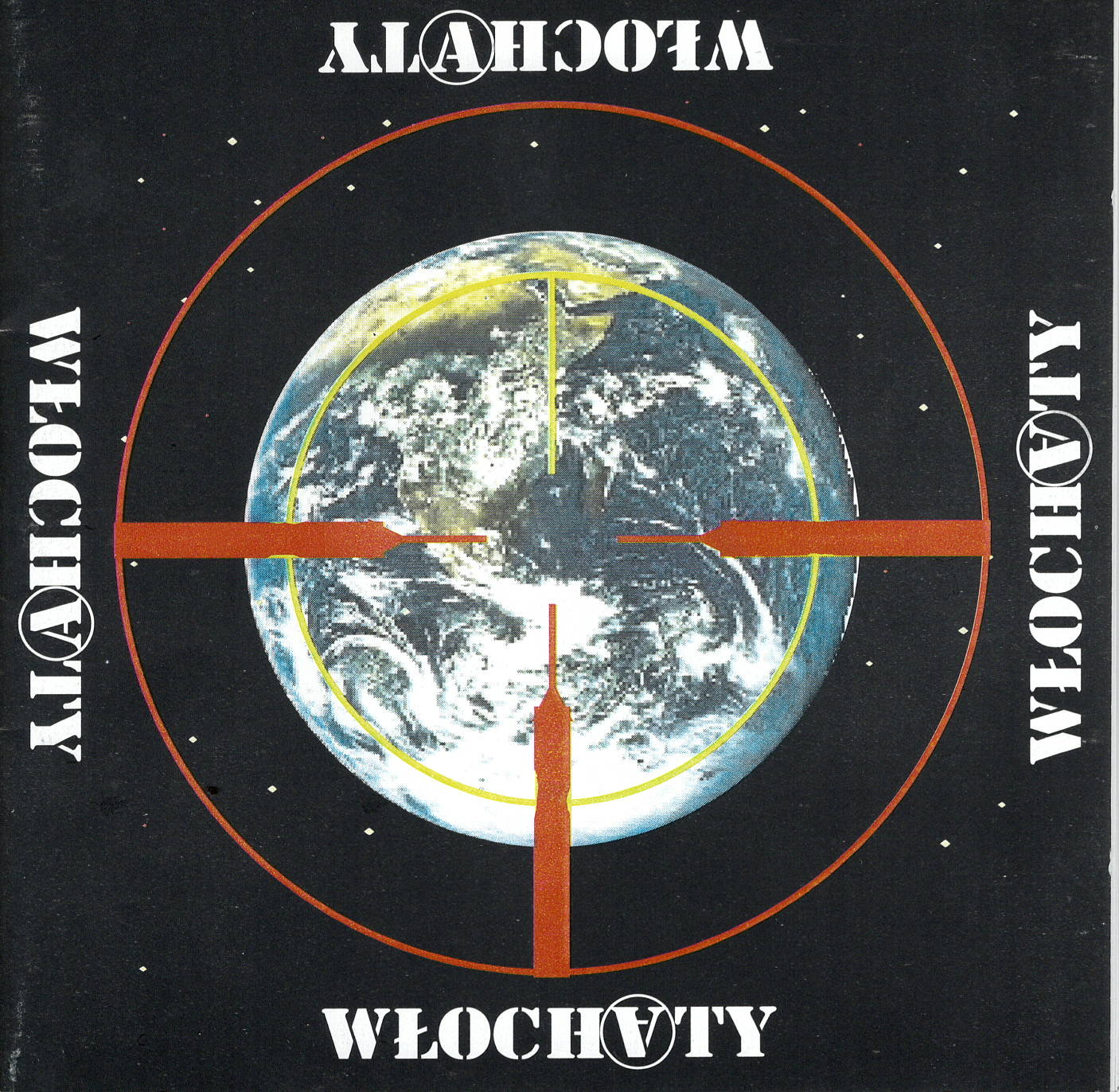
Still Believing in ANOK: Włochaty "Wojna Przeciwko Ziemi" cd, 1996

If the name FUAL, the Irish band we covered last time, was a little tricky and rather confusing, to pronounce the name Włochaty properly on a first attempt would be akin to a miracle, an event that neither science nor reason could explain. A bit like that bloke who woke up from a coma speaking a highly difficult random foreign language perfectly while he had never even left his hometown in the arse-end-of-nowhere and could barely spell in his mother language to start with. Unless you're Polish or have some knowledge of it. Sometimes I wonder whether Polish punk bands pick names that are hard to pronounce just to take the piss (I know I would). 


Włochaty is actually one of the first Polish punk bands I became familiar with in the early 00's, an innocent time when hair loss was still a prospect so distant it was practically unreal and when you could look like a fool without fearing to be the object of a demeaning viral video online. The drummer (who was Polish) and the guitar player of my very first band, a pretty basic French-style punk-rock band with more motivation than talent, were really into Polish punk-rock, a concept that, at a time when I mostly knew English and American bands, sounded about as strange and exotic as polar bear racing ("so they also have punk in Poland! Fuck me!"). I realize now it sounds a little stupid and adorable (alright, mostly stupid I suppose) but I remember vividly the Polish punk tapes my friends played in the guitar player's derelict car. The sound was ghastly as the tapes had been played to death and the tape player was not exactly top-of-the-range (cd players in car were a thing of the upper-class and we loathed them with a passion). On those tapes were Dezerter (obviously) but also Tzn Xenna, Moskwa and many others I cannot remember (those would have almost certainly been classic 80's bands in retrospect). And Włochaty, certainly the band that impressed me the most as they didn't really sound like anything I knew.


As fate would have it, Włochaty toured Europe after this musical encounter (in 2002 or early 2003 I think). A mate of ours was doing a fanzine at the time and he asked us if we could interview the band. So we wrote down some questions (pretty much the usual police interrogation about their influences, politics in Poland, nazis, the local scene and so on) which the drummer translated and we interviewed the band. I have to admit I was pretty proud of myself although I cannot say I did that much. I do remember including a question about how much they loved Conflict and lecturing a helpless friend in the audience about the correct pronunciation of the band's name. I barely knew better than him (after all I had only just talked with the band as some of them spoke English) but I was in a position to pretend I did. Włochaty played a solid gig and that was that. My band split up and I did not really listen to much Włochaty afterwards. They became that kind of good bands that you know you like but don't listen to anymore. A bit like that high school friend who got pissed with you instead of going to P.E. class. A solid dude you would love to see more often but whom you just never call.


When I started thinking about Still Believing in ANOK there were bands that spontaneously came to mind, because they epitomised the survivance of the traditional 80's anarchopunk sound into the 90's and also because some of those bands had been unfairly forgotten (like Capite Damnare or Firing Squad) despite penning some great anarcho songs with their own twist. I instantly thought of Stracony - the Polish Alternative - because they are brilliant and underrated and quite naturally my thoughts drifted towards Włochaty (it actually means "hairy" in Polish) and their magnum opus Wojna Przeciwko Ziemi. I played the album carefully because I only remembered it through younger ears that had not yet been polished and elevated by two additional decades of listening intently, intensely and relentlessly to punk music. And well, you could make the argument that Wojna Przeciwko Ziemi is easily one of the best anarchopunk albums of the 90's. 


Such a claim is a matter of perspective too of course because Włochaty were huge in Poland: the tape version of their first album from 1994 sold about 20.000 copies and the band grew into something that no longer belonged to the realms of DIY punk. And let's face it, some of their 00's albums were dreadful and the band did not necessarily take the right turns. So that if you are from Poland, because of this history with which you're obviously familiar because Włochaty is that big famous band, your view of the band is different to that of a punk with a relative knowledge of Polish punk music but oblivious to the status of the band. Because I, the coolest kid in town, am a refined connoisseur of Punk and not just a vowel-challenged nincompoop, I am of course aware of such a discrepancy and therefore I have to do my best to be as objective as possible about Wojna Przeciwko Ziemi. And objectivity dictates that this album must be seen as one of the great anarchopunk works of the 90's along with FUAL, Aus-Rotten's The System Works... for Them, Cress' Monuments or Resist and Exist's Ep's. 


Wojna Przeciwko Ziemi's main quality is how monumental, original and epic it sounds, and I mean genuinely formidable, armed with a powerful scope, a coherent meaningful discourse and a sense of narration that is rarely seen in punk-rock. Włochaty were not the heaviest or the most aggressive but the intensity and creativity displayed on their second album is nothing short of awe-inspiring and few anarcho bands can claim to have crafted a work as impressive and convincing as Szczecin's most famous punk export (yeah try to pronounce this while you're at it). There are a lot of great things going on on this Lp so that it would be impossible to list them all. Like any good punk albums (or just albums really) Włochaty's is built like a real story fueled by narrative tools and recurring themes. The use of radio samples reflecting the post-communist Polish society of the 90's, with all it entails in terms of cultural and political changes, throughout the work indicates a cohesive thematic continuity. Likewise the brilliantly epic sax (it pains me to say that I actually enjoy it a lot here) is not overbearing and only operates tastefully at some specific moments to emphasize a mood, increase the pressure or introduce transitions and interludes between songs, keeping in mind that most of the songs are tied with one another through feedback (a trick that Conflict, of course, also used 10 years prior) forming a whole. 


The very fast-paced vocal delivery, the maniacal rants and the crazy length of the lyrics are breath-taking at times and can clearly be said to be one of the band's trademarks, it has that intense, almost insane feel that some angry punks are endlessly shouting pamphlets at you (not unlike Dave Trenga from Aus-Rotten and Behind Enemy Lines but with even more words) and the listening experience can be a little exhausting, although I personally love it as it reminds me of a lot of the UK anarcho greats. On a strictly musical level, Włochaty were certainly not a one-trick poney (or rather a one-beat poney) as they experimented with a lot of changes of paces, song structures (there is a proper punk epics on Wojna Przeciwko Ziemi), wrote real transitions and melodies while hitting hard and on the whole displayed a versatile and inspired songwriting ability (yes there is some reggae, get prepared, but also spoken parts and instrumental songs). Conflict's Ungovernable Force - and even Conclusion actually - are by far the band's prevalent influences here, not just in terms of sound but also in terms of structure, form and how it helps shape the music and the message. It has to be noted Włochaty's sometimes complex songs also illustrated a context that was confusing, contradictory and polymorphous. And well, there are also direct loving nods to Conflict as well as Crass (not an easy feat) just to be on the safe side, and Icons of Filth are definitely not far away. The top-drawer riffing, with that inventiveness characteristic of Polish bands, can bring classics like Abaddon or Armia to mind. The band was definitely a 90's band though. I am reminded of what Kochise or Sin Dios were trying to do, not because these bands sounded alike (they did not) but because they built something that was relevant and original at a time when it mattered.


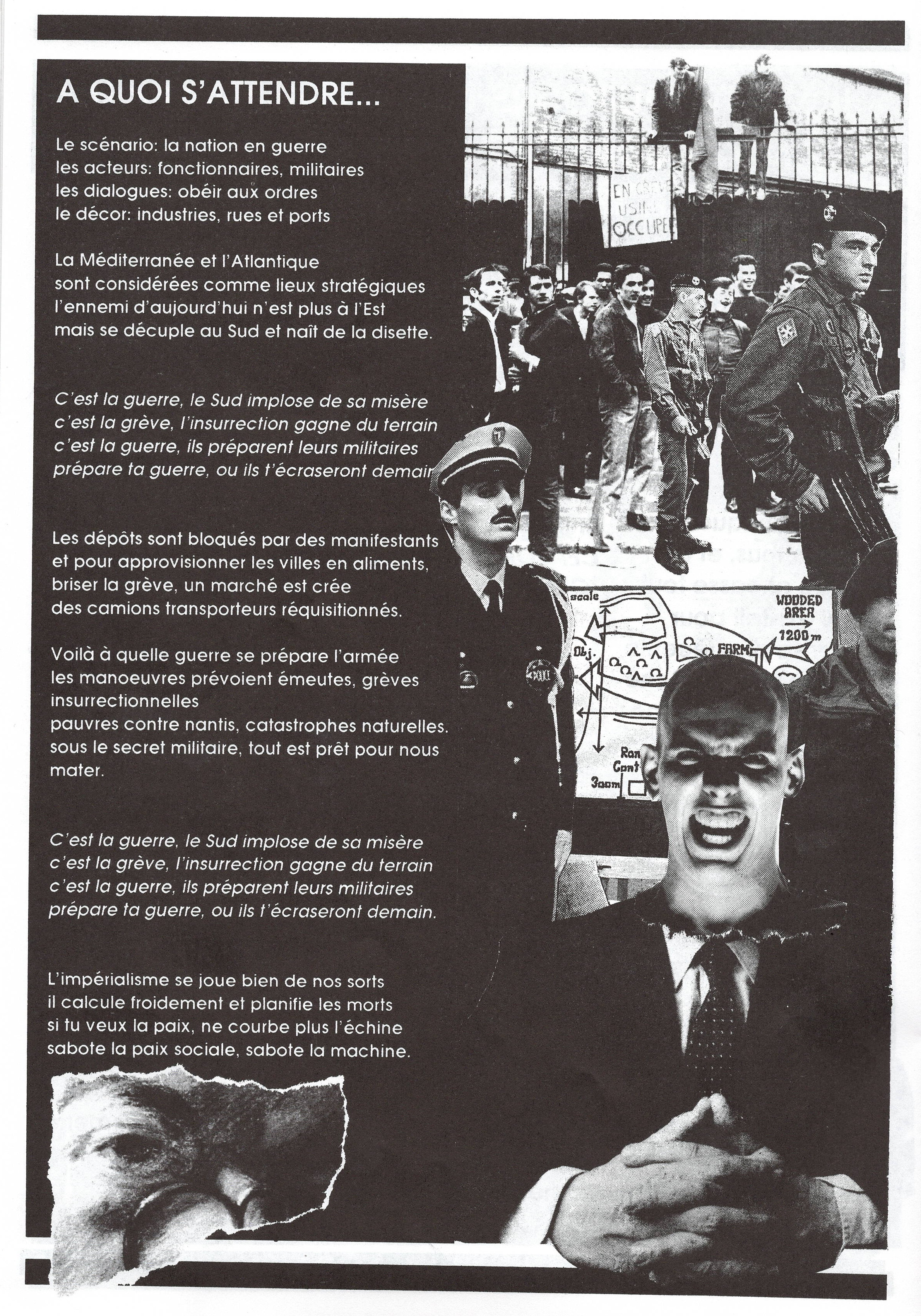
This is a wonderful punk album with a clear production highlighting the musicianship and I keep noticing new details each time I play it, whether it is a bass line, a transition I had not really given much thought to or just a jazzy guitar tune, Wojna Przeciwko Ziemi is a rich work (and it has a song called "Hiroschirac" which always cracks me up). The album has one major flaw: it does not look good. The cover is pretty bland and, if the thick booklet is packed with lyrics (they had a lot to say and those are very long, dense lyrics), it does not really look like anything and is mostly informative. English translations are provided in case you want to know what this is all about (you should). This is the cd version released on Nikt Nic Nie Wie (aka NNNW) the classic Polish label and distros that has been running since 1989. The vinyl version may look better but the cd also includes eight (!) bonus songs that were not included on the tape or vinyl versions. I am not sure where the songs come from, they were not meant to be part of the album-as-story and some are new takes on older songs with a better production but they were probably recorded around the same time, between December, 1995 and January, 1996. For once, I therefore actually recommend you pick the cd version. 


Proper anarchopunk epics here.


Wojna Przeciwko Ziemi

Thursday, 22 June 2023

Still Believing in ANOK: F.U.A.L. "Veganic wind" Lp, 2017

To this day I am not sure how you are supposed to pronounce the name of this band properly. Is it like "fuel" with the phoneme [əl] something like [ˈfjuːəll]? Or should you pronounce each letter separately like you do for T.S.O.L. or C.F.D.L.? I would be lying if I claimed that I talk about F.U.A.L. often. In fact, to be honest, I cannot remember the last time I did but it would have been along the lines of: "Do you know a band called fuel, or maybe fuale, or F.U.A.L. even? You don't? What a shame, go pose somewhere out of my sight". So not much success in terms of proselytising I'm afraid. And yet F.U.A.L. are absolutely brilliant and I believe that, would people be more aware of their existence, they would probably be right into them and some would make pricy bootleg shirts. 


Tragically, the band suffers from the same disadvantageous bias as many other Belfast punk bands who have often been isolated and forgotten in the very London-centric collective memory of British punk. The work of Ian Glasper, and several other writers afterwards, definitely gave some highly deserved space and context to the Belfast scene and its bands and I am convinced that it allowed some of us to discover some underestimated and overlooked bands from Northern Ireland like the magnificent Toxic Waste (the reissue of Belfast by Sealed Records was long overdue and I am very grateful to the label for resurrecting this classic) or the fabulous Stalag 17 (who should be reissued, I am going to petition labels). I knew Toxic Waste before The Day the Country Died, of course, because I am the coolest kid in town and I already wrote a lengthy article about the legendary split that you can read admiringly and with delight here.       


I first became aware of F.U.A.L. browsing on Ebay which I must say is not my greatest pride. I wish I had an epic story about how I accidentally found a F.U.A.L. Lp while dumpster-diving in Berlin, a tale that would earn me an infinite amount of punk points until I retire and ascertain my dominance over the masses. But I don't have one, sadly. Let's not judge, right? After reading a rather flattering description of the band from the seller, I bought the tape version of the F.U.A.L. album entitled Fuck Up and Live! with the booklet missing of course so that I really had very little information about the band. In fact I was not even sure what the actual name was. F.U.A.L.? Or Fuck Up and Live!? That would have been in early 2006 and I was unable to find much about them even on some message boards I was a part of (they mostly argued about Japanese hardcore and digital downloads on those anyway which sounds pretty adorable in retrospect). At that point, punk blogs were still not that common too so I was left in the dark, in a cesspit of shameful ignorance. 


Fortunately with my best mate, we spent a couple of weeks in Ireland that summer to visit some friends. There was a party one night where I was introduced to a friendly fellow who was supposed to be some kind of experts in Irish punk music so I immediately started to bother him with F.U.A.L.. Or Fuck Up and Live!. Or Fueal. The guy was clearly patient and willing to help but he just did not understand which band I was talking about. Frustrating indeed. But then I remembered that I had actually brought the tape with me. We often traveled with a little tape player so that we could play some music when hiking and I played the F.U.A.L. tape often at that time so it just made sense to bring it to Ireland. So I showed him the tape and he immediately lit up: "Oh right, you mean F.U.A.L., good man, they were grand, a cracking band (and a lot of other Irish ways to say a band is good)". So I got a bit of context and it was a good night indeed.


Fast forward a couple of years in 2009 and Boss Tuneage reissued the Lp and the Veganic Wind 1989 demo on a cd that I promptly bought. And then in 2017, the same label did a limited vinyl repress "made to order" of Veganic Wind that I also promptly bought. And that is the record of today. First, let's deal with the elephant in the room: yes the title is a fart joke. A bit odd considering F.U.A.L. were a serious band with political lyrics from the heart but I don't dislike a good fart joke, especially a vegan fart joke (some members of F.U.A.L. would go on to play in Bleeding Rectum so there could be an arse-related issue in Belfast after all). The band rose from the ashes of acts like Toxic Waste, Stalag 17 and Asylum (Belfast's anarcho Big Three) and there were many changes throughout the years. Let's just say that the lineup on Veganic Wind was made up of Brian (Asylum), Petesy (Stalag 17), Crispo (Crude and Snyde) and singer Louanne. 


The demo sounds like one with all that entails in terms of production and clarity but also as far as punk energy, sense of emergency and sheer emotion are concerned. F.U.A.L.'s first effort is heart-felt and you can sense the emotions, sincerity and passion in their songs and it is just beautiful. The band was not a one-trick poney either as there is a variety of paces, tones and structures throughout, from fast tuneful hardcore punk reminiscent of Dan ("Dead clergymen"), intense anarchopunk like Stalag 17 or Civilised Society? ("And the birdie said") but also melancholy goth-tinged poppy anarcho numbers ("Freedom under animal liberation" or "Repetition...") not unlike Indian Dream or Lost Cherrees. On paper, it could have a disparate feel, like a patchwork of styles and moods but the band managed to create a cohesive whole, a meaningful story. Those Belfast punks were inspired. In some arrangements and songwriting tricks, on some level, F.U.A.L. hinted unknowingly at what would come in the 90's and how political punk would evolve in some quarters. The Fuck up and live! Lp would have a much better production with more focus and impact and some songs were rerecorded but one could argue that Veganic Wind, for its ingenuous spontaneity and raw emotions had more charm. And it had a fart joke. That's difficult to top.


The lyrics of F.U.A.L. are long, detailed and tackled political subjects such as exploitation, ecology and  heavy subjects like the situation in Northern Ireland (from a personal perspective rather than slogans). It's angry but also hopeful. The band was very involved with the Warzone Collective and Giro's, a self-managed social center created in 1986. I recommend you read their chapter in Trapped in a Scene, it is very informative. The demo was originally released in 1989 on Warzone Records. I don't suppose this Lp version is easy to find but the cd reissue might be.

Let's all run with the veganic wind.        


Veganic wind

Wednesday, 14 June 2023

Still Believing in ANOK: Kochise "Dans le meilleur des mondes..." Lp, 1997

Let's get real for a second. Terminal Sound Nuisance has become this massive undertaking that is slowly consuming my social life and my eyesight, ruthlessly testing my stamina, gauging how resilient I can be with average crust music and how long I can endure tuneless d-beat raw punk bands and poorly executed faux anarchopunk without overdosing. Forget the labours of Hercules - that half-god, half-man, total mercenary wanker - would not be able to pull out a decent review of a third-rate Doom cover band or see the difference between '86 and '87 Antisect. That poor unsubtle bastard would probably not even know the difference between Dischange and Meanwhile! And he is supposed to be a hero, just because he strangled some kind of snake and hunted a wild pig? Now, are you having a laugh? Bloggers are the true heroes of today (and "content creators" are the scum of the Earth and the real super villains in case you are wondering) and I should be the one people carry down the street chanting my name. But as heroic as I have been for the past 11 (!) years, I realize I have never written about a proper French punk-rock band. The time has now come. That'll teach ya Hercules.


It is not easy for me to reflect about that kind of sound because, on the whole, I have never been much of a fan of French punk-rock. In fact, I don't really like the sound of the French language when used in punk-rock. There are meaningful exceptions but as a general rule, on principle, out of common decency even, I am going to dislike it before actually listening to the band. A bit like an annoying kid who won't taste vegetables, just because he won't, no need to give further arguments. I cannot even pretend to have experienced some sort of trauma, one that would involve being abducted by a demented fan of Bérurier Noir and subsequently forced to listen to Souvent Fauché, Toujours Marteau! for a whole week (an experience akin to an execution of the senses and only an absolutely heartless maniac would do that to a fellow human being). French punk-rock is not well-known outside of the French-speaking world and, to be honest, that can be for the best. Just look at the legions of mediocre French oi bands that have perverted once perfectly sound punk brains on an international scale. Damaging to say the least, fortunately the worst of them have been successfully contained (so far). 


However, as harsh as I know I am with our national punk traditions, some French punk bands are genuinely good and deserve to be praised outside of the cheese-eating world. Enter Kochise, the epitome of French-style anarchopunk. I was lucky to catch Kochise - the name comes from Cochise the name of a famous Apache leader and unsurprisingly the Parisians had a few songs about the political struggles of Native Americans - in 2003 (I think) just before they split up. It was on a beautiful Sunday evening and at that time the band had a mandoline (or was it a banjo?) which, I have to admit, did not strike me as being a particularly good idea since, as everyone knows, such instruments clearly belong to the category of "forbidden instruments in punk music" as stated in the Punk Bible (the Old Testament if you want to check). But it did make the gig quite memorable and, well, enjoyable. The lyrics were great, I could actually understand them without pretending, and they had some great tunes. Despite a plentiful supply of terrible bands, we do have an old tradition of strong female-fronted punk-rock bands with political lyrics in France, La Fraction (a band I rate very highly) being undoubtedly the most famous. Approaching Kochise through this prism is definitely relevant and it makes sense to see the band as a part of the same dynamics and creative political drive as Psycho Squatt, Haine Brigade, Heyoka or Verdun, bands that you are probably not familiar with because you decide to lose your time listening to ghastly bollocks like Komintern Sect or Tulaviok. 


So why pick Kochise as part of a series about the survivance of the old-school anarchopunk sound? Well, I feel the band is a great example of a successful adaptation of the classic UK anarcho sound and stance in a different punk tradition and context, in this case quintessentially French punk-rock. While I can pinpoint influences and roots in the aforementioned British past, Kochise nevertheless sound like a French punk band for many reasons. Their use of unusual instruments is one (sax, for instance, was a pretty common tool, or torture method, in French punk-rock); the very specific way the two vocalists place their voices, the accentuation, the prosody overall and the distinctly revolutionary-sounding chorus to be sung along to; the other genres the band borrow in the songwriting like reggae, French chanson or alternative rock; and of course that vibrancy and emotional tunefulness that can work so beautifully but also end up sounding corny. On that level, the work between Géraldine's powerfully epic and tuneful voice (she can actually sing, which is not something I write to often on this blog) and Cyril's streetwise spoken tone is admirable and worthy of your investigation if you are a fan of global anarchopunk music with the classic male/female vocal structure.


If Kochise make sense in this line of French anarchopunk like Haine Brigade or Psycho Squatt, I would argue that using a broader perspective can also be helpful. It would be a little far-fetched to convoke older obscure UK bands like Sanction or Eve of the Scream because not many people had even heard of them in France by 1997, but early Conflict (with whom they toured in France in 1994 and they would also tour with Schwartzeneggar the year after) would almost certainly have been an inspiration although Kochise never hit quite as hard (they were able to write fast-paced numbers though) and bands like The Sears or even Decadent Few, for the sake of description, could be mentioned as well (but again the relevance could be questioned). Dans le Meilleur des Mondes (the band's second album) is clearly rooted in the 90's however so that looking back to the previous decade may not teach us much. To keep a British frame of reference, Kochise's music and versatility is not unlike that of bands like PAIN or AOS3 in spirit who were working on a fusion of traditional anarchopunk and reggae dub, while the intense emotional-yet-angry side of the band really reminds me of the cruelly underrated One By One. But I am sure other people would hear other things and my rather limited knowledge of French punk-rock may impair my usual omniscience and omnipotent sense of analysis. 


Last but not least, the Lp comes with a massive booklet that reeks of the 90's anarchopunk spirit and its way of communicating and presenting ideas. The booklet includes the lyrics, articles, pamphlets, addresses, context, lists of contacts, artworks, and is just as important as the music itself when you consider Dans le Meilleur des Mondes... as a whole discursive entity. The music is great and accessible but without the notebook, it would not tell the same story. This kind of booklet so emblematic of 90's anarchopunk has almost vanished nowadays and you could argue that the internet and the wealth of information and political database it contains has made the initiative behind such an object rather pointless. I understand the point but when you look at some 90's anarcho records and see the love, the care, the belief that must have gone into the making of these booklets (they really do look like political punk fanzines), it still makes one wonder. Kochise's lyrics are sharp and combative in nature and tackle a wide array of topics (from the democratic circus to state surveillance and Orwell and revolutionary hopefulness). Some songs, notably about feminism and sexism, are still as relevant today as they were 25 years ago or even ahead of their time, which is rather sad when you think about it. 


From what Discogs tells me - our modern Pythia when it comes to records - it should not be too difficult to grab a copy of what is one of the best French anarchopunk works from one of its most iconic contestants, de Paris s'il vous plait.