Showing posts with label 1986. Show all posts

Monday, 20 December 2021

UK84, the Noise Ain't Dead (part 6): Chaos UK "Just mere slaves" 12'', 1997

Like every year, Bloody Christmas is coming again and government twats loudly claim - assuming there are still people caring for what they have to say - that, in this time of distress, the country needs to celebrate merrily while respecting health safety measures. Christmas remains some sort of odd and painful traditional duty with an almost patriotic touch in our current situation, as this year you don't have to kiss your right-wing brother-in-law or your ass-grabbing great-aunt. So the pandemic is not totally without benefit, although you will still have to endure your nephew running berserk around the table and turning the living room into a battlefield. Thanks fuck no one cares for notorious punk-repellent Mariah Carey in my family, it's like garlic to us. But am I only here to whine about Christmas Eve? No indeed. For the last Terminal Sound Nuisance post of 2021, I would like to make you a present in the shape of a lossless rip of a Chaos UK classic. It is not something you will be able to put at the foot of the plastic Christmas tree because it really is a download file but I suppose that if you actually download and open it on the 25th it can count as a valid present. 

Who doesn't know Bristol's Chaos UK? And more importantly, who doesn't like Chaos UK? If you have people in your circle of friends who happen to dislike the band, then you are clearly hanging out with the wrong gang. There is no exception. Sort your life out. Chaos UK belong to this category of bands that everyone likes to some extent, or at least have a lot of respect for. I would include bands such as Discharge, The Mob or Subhumans in this category and many more but I don't want to spend time making lists of bands just to have a bitter geezer declare that, just for the sake of arguing on a monday, he never rated Why very highly nor enjoyed Mob 47. I love taking on that precise role but of course hate it when the situation is reversed. Human nature I guess. Chaos UK really are a bag of quality crisps. Some people have them on a daily basis, others just on the way home after a night-out, others on rare occasions because they want to be slim or eat healthily or whatever dieticians say, while there are also those that never allow themselves to eat crisps but secretly crave for them. Chaos UK work exactly like that. They have their devoted fans, freakish outcasts who can listen to live tapes from the mid-80's, and people who are fine with enjoying a bit of Burning Britain occasionally, on their grandmother's birthday for instance. I like to think that I belong to the first category, the one where the very best of heroes meet.

Claiming that I have a Chaos UK story to tell could be a little far-fetched. It's not like my mum revealed on my 15th birthday that she helped pen "No security" or something. But the band being something of a foundational, heuristic one for me in my teenage years, I inevitably remember well the first time I heard them and the context. It was in 1999. My school only had one real punk. There were also baggies-wearing "skatecore" types who were into Fat Wreck Chords and singers who sounded like ducks, and I know what I am talking about since I had a brief "skatecore" phase myself. But there was only one real punk. After meeting that one real punk, my life changed completely as I started to dress seriously with bleached trousers, boots and an oversized jacket with beer caps as badges. Proper class. I started to hang with the real punk and we became friends. She made real punk tapes for me with The Casualties and older British bands like Varukers, Abrasive Wheels, Cock Sparrer or GBH on it and my own conversion into a real punk was swift indeed, to the great disappointment of my parents who even started to miss my baggie trousers phase which is a saying a lot. 


The school we went to had little equipment to speak of but there was a "radio club". The name might be a little misleading though. It was a simple room with a basic hi-fi system - it had a broken turntable and an Out of Order poster for some reason which made us feel like rebels - located just at the entrance of the refectory. We could use the room once a week but he music we played was not broadcast in the whole building of course, the school was not at this level of high technology. We just installed a chair before the door of the room where we placed the speakers and played the music as loud as possible to our fellow students queuing to get into the refectory. The radio show, if you can call it that, took place during lunch breaks so that many unsuspecting, unprepared and, in most cases, unwilling students got exposed to 90's streetpunk and oi - a large portion of which was pretty shite in retrospect - as well as a tasteful assortment of 80's British punk-rock. The speakers' wire would often be removed by lads who did not enjoy our impeccable punk taste but amazingly enough we never got physically brutalized or too victimized, in spite of us playing Casualties' "For the punx" and "Riot" every week. There were threats of mob violence, pitchforks and torches, but, for once, the gods of punk seemed to be protecting us. My mate was heavily into Chaos UK's "Farmyard boogie" a song which she would play often. I did not particularly enjoy the number, although I did pretend to because I wanted to look like I knew my shit. It is after all a rather long comedy song that is difficult to understand if you are not aware of West Country's rural accent but it was my first encounter with Chaos UK and listening to that song always takes me back to the days when I considered a tartan flat cap and oversized bleached pants to be crucial parts of my identity. My friend assured me that Chaos UK were the punkest band of all and more than 20 years later I can say that she was right to some extent. 

The Chaos UK record my friend owned and off which she played "Farmyard boogie" was the 1998 Best of... Chaos UK cd. During a glorious weekend trip in London later that year I managed to find a copy of the very same cd in a record store which felt like a war medal. I had never actually heard the cd in its entirety, apart from "Farmyard boogie" that I knew by heart and "Kill your baby" because we tried to shock people with it, so that digesting the remaining 24 songs proved to be quite an experience. The selection is fine actually. You can find classic vintage Chaos UK numbers from their Riot City Years as well as songs from later records like The Morning After the Night Before (I can still along to "Little bastard with ease). Writing this review makes me realize that there is a lot of Chaos UK material from the 90's, basically the Chaos-as-singer era, that I am really not that familiar with and haven't played that much, but listening to the split Lp's with Raw Noise and Death Side while writing this piece shows me that I might have been - for once - wrong. Oh well, I shall correct the inconsistency. Let's get back to that "best of" cd, admittedly a terrible format but it was the late 90's so bear with me. On the whole, I really liked the record, the noisier hardcore songs as much as the singalong cider punk-rock ones. There was one track however that was truly horrendous and confused me to no end, a 1983 live version of "False prophets" take from Flogging the Horse. I have listened to many horrendous live recordings from the 80's since then, some of them deeply scarring, but this one may take the cake especially since it was released on a proper album by Anagram Records. As a teen, the song terrified me and the very first time I heard it I could not even make out what was happening. If you have never listened to that rubbish, give it a go if you think you are hard enough. It makes Confuse's 1984 live recording sound overproduced. It made Chaos UK even more extreme in my teenage eyes.

Alright, I digress as usual. For some reason, no song from Just Mere Slaves were included on the 1998 cd. Maybe it had to with not getting the original label's - Selfish - permission or maybe the curator just decided to leave the songs out (my guess as to why is as good as yours). As a result, I was unaware of the existence of Just Mere Slaves for quite a long time, until the explosion of music blogs in the late 00's. A real shame since Just Mere Slaves has become my favourite Chaos UK recording, along with the hardcore thrash masterpiece that is Short Sharp Shock Lp. I cannot claim to be a proper Chaos UK historian but let's have some basics right. At that time Mower was on vocals, Gabba had taken on guitar duties, Chaos was still on the bass guitar of course and Chuck on the drums (EDIT: although not being able to get into Japan because of a criminal record, Age, Lunatic Fringe's drummer, replaced Chuck on this Japanese tour). The studio side of Just Mere Slaves was recorded in Japan during the band's tour in November, 1985. Along with their fellow noise-making Bristolians Disorder, Chaos UK have been massively influential on Japanese punk music. In fact, it is widely argued that it was their impact on a certain section of the Japanese scene - let's say Confuse, 白 (Kuro) or Gai and their plentiful offspring, to be brief - that subsequently spawned a punk subgenre now called "noisepunk", a once confidential and obscure cult that has persisted in secret and which the internet has made accessible and very popular among the noise-inclined punks (the name was apparently coined by The Wankys but I feel the terminology is useful and meaningful enough to be liberally applied retroactively). So I suppose that the coming of noise heroes Chaos UK to Japan must have been a massive deal at that time and the shows cannot have been anything but short sharp shocks of punk chaos.


The four songs from the first side of Just Mere Slaves were recorded during that tour which probably means that they recorded the thing on November, 12th in Tokyo since they had a day-off. I imagine the band basically entering the studio, unleashing the fucking fury, getting pissed with local punks and being done with it in just one day. The brilliant result is highly impressive. The first time I listened to Just Mere Slaves I immediately thought that it did not quite sound like a typical mid-80's Bristol recording. Of course the songwriting, the raw snotty vocals, the demented atmosphere and the pissed-and-proud vibe were unmistakably mid-80's Chaos UK manic hardcore thrash (there is a new version of "4 minute warning" to help listeners know what they are dealing with) but the frontal layers of highly distorted guitar and the piercing feedback, the extremity of it all, had that Japanese punk texture. There is something of a Japanese hardcore energy to Just Mere Slaves. The four studio songs retain that Chaos UK essence, an energy-driven, hardened, primal and mad-sounding take on the UK82 but at the same time they sound like noizy, triumphant and hyperbolic Japanese hardcore. Were Chaos UK aware of the wave of Bristol-influenced Japanese bands? It would be mere conjecture but they must have been familiar with some Japanese hardcore through the tape-trading network so could it be that they actually decided to emulate or experiment with that Japanese distorted, blown-out sound? Or was it the engineer's idea? Both? Just an epic piss-up in the studio? In any case, this circulation and circularity of influences is fascinating indeed, from Bristol to Japan, from Japan to Bristol, and Chaos UK got to play with Japanese hardcore legends like Gauze, Outo, The Execute, Lip Cream, Goul and Gastank (that is what I deduce from the thank list on the backcover, there could have been more). The studio side of Just Mere Slaves included a crazy and lightning fast rerecording of "4 minute warning" and three new songs: the loud and aggressive one-minute long hardcore scorcher "Rise from the rubble" which they will rerecord for the Chipping Sodbury Bonfire Tapes 1989 album; "City of dreams" a mid-paced wonder with hypnotic tribal drums and demented vocals and feedback; and "Just mere slaves", a fast, anthemic and emphatic song which is actually not unlike epic and direct Japanese hardcore, especially on the introduction and some of the transitions. 

I feel Just Mere Slaves is a crucial record, maybe not a masterpiece per se, but what is commonly called a minor classic. The energy and intensity level on the studio side is breathtaking and relentless. The blistering side might only be eight-minute long and make you crave for more but it does not get much better in terms of "noise ain't dead" UK punk. It was Chaos UK at their noisiest but I do think Short Sharp Shock sounded more threatening and savage and therefore groundbreaking. The other side of Just Mere Slaves is a live recording from their Osaka gig on November, 16th. The sound is surprisingly good considering the sonic chaos - it must have been taken directly from the mixing desk or something - and the daring listener will be exposed to nasty rendering of early Chaos UK classics, "Control", "Victimised", "No security", "Senseless conflict" and, of course, "Farmyard boogie", the Chaos UK song of my youth. This is punk-as-fuck as you can expect but still very much discernible (even the guitar solo is good) and enjoyable. Another live recording from the Japanese tour, from their opening Tokyo gig, can be listened to on the B side of the Stunned to Silence 1985 tape (my friend Erik from the always great Negative Insight wrote an article about this little-known tape that comes recommended, especially since everyone at the Negative Insight HQ soundly thinks that everybody loves Chaos UK). As hard to estimate as it might be, this short Chaos UK tour must have left a mark on the collective psyche of Japanese punks at the time. To this day, Chaos UK, along with Doom and of course Discharge, remain one of the most liked UK punk bands over there with still many bands working on their legacy so it is a safe bet to assume that Japanese punks really never stopped connecting with their music and attitude. And of course the band, Mower especially, helped consolidate the fashion of terminal crust pants and utility belt in Japan which are now only worn by the most elite crusties. 

The record was originally released on Selfish Records in 1986, a label that put out far too many classic mid-late 80's Japanese hardcore records to mention. My copy is however a 1997 reissue (or is it actually a bootleg? It looks like one so you tell me) from Sewage Records, a short-lived that also released Varukers Ep's. Black Konflik Records from Malaysia reissued last year Just Mere Slaves on cd so support the scene and get it.  

I would like to dedicate this writeup to my dear friend from school who I mentioned at the beginning and who tragically passed away in 2019. Without her, I would have never discovered real punk music and gigs. It changed my life forever and more than 20 years after, I am still grateful and feel quite lucky. So may you rest in peace, in punk, in power and let's farmyard boogie. 


Just Mere Slaves             


Monday, 7 September 2020

Ten Steps to Make Your Life CRUSTIER Starting Today (step 10): Deviated Instinct "Re-Opening Old Wounds" Lp, 1993

This is the last part of Terminal Sound Nuisance's UK crust series and I suppose it will be a very suitable final chapter since the mere uttering of Deviated Instinct irrevocably makes life (and I mean any form of life) much crustier. It is just a scientific fact, trust me on this one. Although the two recordings included on Re-Opening Old Wounds are anterior to the other segments making up this sharp, urban and edgy guide to the appropriate modern crust lifestyle, I decided to tackle this Lp last since it is the only retrospective compilation of the series. I had this idea that listening to the genre's originators Deviated Instinct in the last position could cast a meaningful light on the barrage of crust music you have been served so far, as if it could somehow be used as an ontological tool to isolate and extract the very essence of crust, the mythical source of energy that, according to barely legible fanzine scripture from the mid-80's, could confer to any average punk incredible moshing powers as well as complete mastery of the arcane arts of crust pants making. Myth or reality? Does crust really have an essence? Is it a common sonic and structural template shared by the bands or more of a tension and a vibe allowing for some gruff creative width, a way of playing and writing? Or is it just an unhealthy obsession with crudely approximative patches, filthy haircuts and sleeveless jackets, like mummy used to scold?

Of course, I have already written about DI on several occasions (in case you have not noticed, the quest for crust is one of Grail-like proportions on this blog). They have become a fairly well-documented band during the past decade, with a crucial cd reissue of their Peaceville recordings in 2006 and a delicious chapter in 2009's Trapped in a Scene, which, combined with the renewed interest prompted by the band's top notch reformation, might make a thorough archeologist survey of their early days a little redundant in 2020. This was not always the case however and when my obsession for crust kicked in in the early 00's, little information was available about DI. The band was seldom referred to and yet, when they were, they were always presented as "crust legends", which was confusing for two main reasons: first, I did not understand how a "legend" could not have some sort of discography available for young punks with a thirst for knowledge like myself and, second, I had no idea that crust had its own lore and legends and it instantly conveyed an aura of epic mystery to the genre while reinforcing its legitimacy in the process. The chase was on indeed.

Like many of my generation, the original metallic crust wave of the mid/late 80's seriously got my attention upon the release of Hellshock's Only the Dead Know the End of the War in 2003, a work described as "PDX stenchcore" (the nod was lost on me at first) and often compared to British bands like Sacrilege, Hellbastard, Bolt Thrower or indeed Deviated Instinct, bands I had never heard of. In retrospect, I realise that such parallels, without looking at their accuracy, were mostly drawn in order to create an old-school crust halo around Hellshock and locate their style into that early Peaceville tradition, renamed "stenchcore" for the additional winking tribute. I was already heavily getting into UK crust when this album came out and was desperately searching for all the founding bands of the genre - bands that sadly no one seemed to really know or even care about at all in my hometown - so that the release of the Hellshock album felt like a sign of the punk gods notifying me that, if the way of crust can be a long and arduous, my devotion to the black(ish) arts shall be rewarded. Whereas I easily obtained the first two Bolt Thrower albums on cd, managed to order Hellbastard's In Grind We Crust cd from Acid Stings and somehow managed to procure an homemade tape copy of Sacrilege's Behind the Realms of Madness (courtesy of Catchphraze Records), recordings that proved to be life-changing kicks up the arse, DI's music however tragically remained out of reach. This minor existential setback did not keep me from getting a magnificent vintage DI patch (the splendid visual with the indigenous face and the gun from the Hiatus compilation Lp if you must know) from an old punk who used to distribute Squat or Rot and Tribal War records in Paris and still had a stash of crust patches made in NY in the early 90's that were particularly unfashionable ten years later. It was the first and only time I ever wore a patch from a band I had actually never heard, a shameful, despicable act usually associated with the lowest cast of the punk scene, the incurable inveterate posers, and I am well aware that such a confession might threaten my established reputation but I had to come clean.

Eventually, after months of begging pathetically, a friend of mine with a computer and a good internet connection downloaded Rock'n'Roll Conformity and Guttural Breath and burnt them on a cd. Almost 18 months after reading about DI in the Hellshock review, I finally got to listen to them. Had I been born 15 years after, I would just have had to type "Deviated Instinct" in the youtube search bar and the quest would have ended in a couple of seconds. Still, it would have been a shame to miss on the frustration, the anticipation and the seemingly endless wait that the quest for DI implied, a band that I loved and revered before even knowing and whose music I had to create and play in my head from the few pieces of intel I had in my possession. In the end, when I finally played the cd, it sounded strangely familiar. Perhaps as much as in their music itself, you could argue that DI's legacy lies in their aesthetics. The striking artworks of the band's records (drawn by guitar hero Mid) have informed the visual identity of crust for years and, to this day, they remain the ultimate visual self-representation and reference point of the crust aesthetics. It is of course no coincidence that iconic bands of the 00's metal crust revival like Hellshock, Nuclear Death Terror or Stormcrow had record covers expertly drawn by Mid in the purest late 80's style (on demand, I suppose), so that the referentiality to the genre's foundations is as much about the dirty vibe, tones and the songwriting than it is about the visuals and the organic apocalyptic visions from the most talented originator of the crust aesthetics. Undeniably the appeal of DI (and of other classic crust bands) was both sonic and visual and I would venture that the stenchcore revivalists perfectly understood the necessity to combine both referential dimensions in order to identify totally with the first wave (an ontological creative move that was born with the 90's d-beat wave). Another crucial, if more prosaic, part of the DI testament has to do about their personal look and how they epitomised the crust punk fashion. To this very day, their cider-fueled, soap-dodging, thrash-loving Mad Max rejects impersonations remain potent emblems of the prelapsarian Eden of the crust punk lifestyle and, not unlike the nirvana of stenchcore, I like to think the pursuit of this noble goal is what really matters.


Re-Opening Old Wounds was released in 1993 on Desperate Attempt Records, a label based in Louisville responsible for some wicked records during its eight-year existence by the likes of Apocalypse, Chaos UK, Hiatus or Disrupt. I remember reading that Old Wounds was very much an initiative from DI's singer Leggo, as he had already worked with the label for the release of Filthkick's Hand Crushed Heart Ep in 1991, which presumably accounted for the inclusion of two uncredited Acrasy songs (a superb metal crust band Leggo sang for in 1990 while living in Brum) on the cd version and, unfortunately, without the involvement of Mid, for a rather ugly cover that did not include any original artwork or represent what the band was about at the time of the recordings (in fact, I would argue that the absence of any piece of Mid's art makes makes Old Wounds a record containing DI songs but not a proper DI record if you know what I mean). However, this Lp is still the only way to listen to the songs off the Terminal Filth Stenchcore demo (minus "Distance", which was recorded before anyway, and the joke song "Clean core killer"), originally recorded on October, 21st, 1986. It was the band's second demo and the first one to really showcase the filthy metallic influences that were massively creeping in the UK punk scene and that DI would be known for. I first came across Terminal Filth Stenchcore through a cdr I ordered from Nations on Fire sometime in the mid 00's and it was, as they say, love at first riff. In Trapped in a Scene, Mid expressed disbelief at the popularity the demo still enjoyed and at the undisputed cult status the new generations religiously conferred to it. To some extent, I understand his amazement. Indeed, if you play Terminal Filth Stenchcore to someone used to the clean productions and expert musicianships so common in extreme metal and hardcore nowadays (or even crust really), he or she will express shock and a very different kind of disbelief at the punk as fuck sloppiness, amateurishness and uncontrolled snotty aggression of the recording. This is filthy metallic PUNK. I would hypothesise that a fondness for the fastest and most intense anarcho bands of the early 80's is required to really get the demo, bands like Antisect, Legion of Parasites, Exit-Stance, but also Chaos UK or Disorder, but with the addition of a nasty thrash metal edge played with a youthful punk energy. I can listen to those songs every day and never get tired of them (I tell this from experience). Even though the production is super raw, the songs retain the catchiness of snotty punk and are all memorable thanks to, in spite of obvious technical limits, a rather ambitious variety of song structures, proper buildups, a sense of narration, two different vocal tones that perfectly complement one another and manage to sound pissed, savage and unpredictable. There are too many highlights for me to list but the melancholy anarcho introduction to "Birthright to subservience", the inclusion of actual religious chant in the primitive tribal crust "Possession prayer", the epic progression of the anthemic "Warmachine" or the crunchy moshing groove of "Cancer spreading" easily come to mind. The perfect colliding ground of filthy anarchopunk and cavemen metal.


The remaining four songs on Old Wounds were recorded on July, 15th, 1987, as part of the so-called Return of Frost third demo (it was never actually entitled that way though), a recording that had seven songs, all of which ended up on compilations. I suppose the whole recording could not fit on the Lp because of the running time but we do have the classic "Stormcrow" from the Consolidation split Ep with fellow Norwich bands Revulsion and Rhetoric, "Return of frost" from the 1984 The Third compilation 2xLp, "Master of all" from the Attack is Now Suicide compilation Lp and "Mechanical extinction" from the Airstrip One compilation Lp (missing are an early, and possibly superior, version of "Rock'n'roll conformity" and "House of cards"). By that time, the band had been joined by Snappa and Sean (on the bass and the drums respectively) and had improved musically. DI enjoyed a thicker, crunchier production this time with an energetic roundness and an organic vibe fitting the songs perfectly. The sense of narration was still present in the songwriting ("Stormcrow", for instance, is a two-minute masterclass in genuinely epic crust) and the structures reflected an intent to create songs that, of course, delivered the filthy crusty metallic punk goods, but also told proper stories and strove to capture the listener's attention through catchy hooks, be it a guitar lead, a spoken word moment, a change of riff or a gruff cavemen chorus. DI's music was still crustier than your favourite festival socks but below the growls, the thrashing riffs and the hardcore aggression, there was always this drive to write good punk songs that you can actually remember and shout along to. By 1987, DI had notably incorporated a fast hardcore thrash influence (furious Italian hardcore immediately comes to mind) to their rocking and raw Antisect-meets-Frost-and-Venom-at-a-punk-piss-up formula. Mid's guitar has a heavy, warm, dirty, organic tone that I am massive sucker for and instinctively associate with the crust sound (especially the bends'), while Leggo sounds like an entranced and vengeful rabid fox looking for a brawl. These four songs are absolute scorchers, defining, genre-making moments in the crust mythology, exemplifying how one can successfully blend rocking metal and fast hardcore without sounding like a jersey-wearing, constipated New Yorker.

Re-Opening Old Wounds, in spite of the excellence of the canonical source material, still feels like a missed opportunity. There is no insert and therefore no lyrics, which is a shame given the clever nature of DI's lyrical content and use of dark and tortured metaphors, and obviously no trace of the original visuals. Just imagine a reissue with a booklet including the visuals from Terminal Filth Stenchcore and from all the compilations that hosted tracks from the 1987 recording session. There was a plan for Agipunk to reissue properly Terminal Filth Stenchcore on vinyl (like they did for Hellbastard's Ripper Crust) but I suppose it fell through. Not many demo recordings can claim to have birthed an actual subgenre and, although the relevance of the term "stenchcore" can be discussed and although bands conceptualising and identifying with the genre only really crystallised in the 00's, there are still today bands claiming to play stenchcore, bands that have developed specific sonic templates that are part of the crust punk world but whose take on crust is more referential, making stenchcore a real subgenre in an analytical context. In spite of their status as "forefathers of crust", DI's actual music was, for a long time, a diffuse influence on subsequent crust bands (perhaps because of the different phases in the band's history, reflecting diverse shades of crust, making them harder to mimic), while their aesthetic stance (the stunning dark visuals and the crust fashion show) and creative posture (filthy punk loves filthy metal) were undeniably more substantial. However recent bands like Cancer Spreading, Zygome, Instinct of Survival, Scene Death Terror or Asocial Terror Fabrication started to openly referred to DI through covers, respectful nods or loving plagiarisms, which I must say is very pleasing to the ear. And did I mention that DI are, by far, the best reformed crust band?

This will make life crustier indeed.


Thursday, 19 March 2020

Last Week's Trend is Now Passé (part 6): Dan "Can you dig it?" Ep, 1986

What a time to be alive. The Insane used to sing that "the whole world is going insane" but can you really trust a band wearing their dubious mental health on their sleeve when it comes to matters of sanity? Maybe you first have to think of yourself as insane in order to regain some semblance of rationality and truly seize the insanity of the masses. Why have we, collectively as a society, suddenly become obsessed with the cleanliness of our arseholes? So much so that, to keep our own bottoms clean, we are happy to raid supermarkets in our quest for bog rolls and if it takes a bit of wrestling to get the last pack, then so be it. The impression that we are literally turning into selfish arseholes is a little nauseating and when I see so many of my fellow human beings shamelessly carrying a bog roll jenga on their trolleys, with that infuriatingly smug look of entitlement on their fat face, well let me tell you that, were I not such a wimp, I would probably consider the possibility to beg them to share and collectivise toilet papers because after all aren't we one big loving family? But of course, I do nothing of the sort and, so far, the only way I have found to quench the rapidly rising fury in my tiny chest, is to listen to Dan because is here to make you feel better about a world plagues by arseholes-obsessed arseholes. 


I would not want the previous paragraph to lead to think that I mingle with illiterate commoners on a regular basis but my personal shopper has been ill since the start of the outbreak - I did send flowers, just to make it clear - and as a result I now have to run my own errands until, I suppose, he dies and I have to hire yet another prole glad to toil for me for the minimum wage. But anyway, when hard times bang on your door and you find yourself locked inside the family castle like myself, you need to turn to good-natured, vibrant bands for spiritual comfort and Dan belong to that rare category. First, let's kick the elephant out of the room: yes, the band is called Dan and no, it is not just one banjo-playing geezer or something, and yes, the puns you can do with Dan are endless. I have been really into Dan since I acquired the Boss Tuneage double-cd Danthology upon its release in 2005. I had never heard them before that and I must admit that the perspective of a lengthy discography from a band that, not only chose to be called Dan, but also had a cat doing a peace symbol on the cover, was rather equivocal. The narrow-minded punk I was at the time should have scoffed haughtily, discarded Dan as "hippie pop shite" and proceeded to blast Hellshock at full volume. But Dan were referred to as a melodic female-fronted political punk band and since I unexpectedly liked the other Boss Tuneage discography I owned, Graveyard of Dreams by Terminus, I went for it. As for the band's moniker, bass player Ian justified it in the liner notes as follow: "Dan were named after "a male whore with a big whang" in the porn film, "Babyface." The Black Widow wrapped him from head to foot in clingfilm and then tried to cut his dick off, it was funnier than it sounds." I am still unsure whether the explanation actually makes the name worse or not. 


Dan were based in Darlington (County Durham) and existed between 1983 and 1988. They played 107 gigs and shared the stage with many of the best bands of the era like their "gigography" shows. From mid-80's anarchopunk bands like Anti-System, Hagar the Womb, Blyth Power or The Instigators, to pioneer hardcore acts like Electro Hippies or Generic, metallic crust founders Antisect, Hellbastard or Sacrilege, and even touring foreign hardcore acts like Wretched and Anti-Cimex. Not bad, right? Dan were both poppy enough to play with tuneful bands and fast enough to play with hardcore ones. However, despite a strong discography of three albums, one live Lp and one Ep (without mentioning one live tape and one BBP tape) and some serious gigging, Dan's legacy remains difficult to assess probably because of their versatility (they claimed to play "fraggle rock" whatever that means...). Most of the music has the potential to appeal to an anarcho crowd but the humorousness, cheeriness and the unconventional colourful artwork can repel those who worry about instagrammability or think that anarchopunk must look and sound like The Mob. Dan could win a pop-punk audience's heart but then, they could also play fast and hard and sound just too bloody punk and serious at times. And I suppose an old-school hardcore crew could enjoy some Dan but would eventually find them too poppy and well, it sadly often takes a bloke on vocals to be qualified as "hardcore legends". The band can be liked by everyone who is into punk (whatever the altar you kneel at), which should be positive and did allow them to play with all kinds of bands, from Eat Shit to Famous Imposters. However such a quality does not really fit in our strict modern music compartments and I have the feeling that it is why Dan, in parts, do not really get much credit today. But then, I suppose I should not be surprised in a world where the number of views on youtube has become the gauge of a band's relevance.


As the Meantime insert included with the Ep claims, by 1986, Dan had had 20 members (!) since their first gig with Conflict in 1983 but the lineup stabilised afterwards (a common case of the Oi Polloi Syndrome). Can you dig it? was recorded on two separate occasions in 1986, two songs (one one) were taken in York's Clifton Studios and the two others (side two) at the Terrace in Darlington. I suppose it is only honest to point out that this first Ep is not Dan's best venture into rock'n'roll stardom and that the first Lp, 1987's Where have all the children gone? is, while very much building on the same core material, a superior effort. But debuts are often quite revealing and eloquent of a band's intentions so I decided to pick Dan's only Ep. Apparently, Dan were supposed to do a split with Hagar the Womb (it would have been a very relevant pairing) on Children of Revolution Records but it did not happen and Ian decided to found Meantime Records in order to release Dan's material. The rest is punkstory and Meantime would become one of the major DIY punk labels in Britain at the time releasing records from Hellbastard, Sore Throat, HDQ or Leatherface. So what about Can you dig it? then? I have been prevaricating for ages so let's get to the point. At that time Dan still had two female vocalists, Julie and Georgie, which I am a huge sucker for as it always gives extra depth and dynamics to a tuneful punk-rock song. The production on the Ep is pretty raw and it really has that "first record" punky enthusiastic feel which makes one forget about the tiny mistakes, momentary lapses of concentration and sloppy singing. The first side has a clearer sound while the other is groovier but more unrefined. It is undeniably a flawed recording meant to be seen as a preparation for the Lp, but there is a freshness, an energy, a buoyancy that makes these four songs sound just honest and lovable. Beside, the four songs do not sound alike as the band use several paces, from the fast punky beat to the mid-tempo one, and moods which always made the band quite unpredictable. Not unlike Hagar the Womb or Rubella Ballet, Dan had that childlike exuberance and sparkly liveliness which, associated with their dynamic take on punk music and their pop melodies, made them quite endearing (and their cat logo was visionary). Sonically, comparisons to the two aforementioned anarchopunk greats as well as late Lost Cherrees or A-Heads are relevant, but there is also a manifest mid/late 80's melodic hardcore vibe to Dan's songwriting and other British bands like Hex, HDQ, Depraved and, obviously, Joyce McKinney Experience also come to mind.  


If Dan's music was quite cheery for the most part, although they were also able to pull out some moodier melancholy songs as well, the lyrics were definitely serious and were political from a personal point of view. The issues of low self-esteem, difficult self-expression, dysfunctional families and toxic relationships are tackled so that Dan's open merriness, while not misleading, must be seen in the light of words that give a bittersweet dimension to the whole. Clever band, to be sure. According to the foldout cover, Can you dig it? was not actually Dan's very first release since a tape including a live recording, entitled Human Beings the Size of Amoebas, had been put out previously on 69 Tapes, Sean Wat Tyler's label who also contributed sleeve notes to the discography. The artwork is humorous and silly with a lot of inside jokes, childish puns and cheesy drawings in pure cheeky punk tradition (somewhere between Hagar the Womb and Disorder). 

A top band that you should seriously pay more attention to. I <3 you Dan.


Tuesday, 17 March 2020

Last Week's Trend is Now Passé (part 5): Shrapnel / Symbol of Freedom "S/t" split Ep, 1986

In the year of grace 2006, renowned punk archaeologist Ian Glasper introduced the chapter devoted to Shrapnel with the following philosophical statement:

Many great bands have slipped silently beneath the radar of the average punk rock fan, never gaining the kudos they rightly deserve; in the wrong place at the wrong time, they just never got the breaks afforded far lesser bands and remain criminally overlooked by all but a few die-hards. If a book like this can change anything at all for the better, bands like SHRAPNEL will be finally acknowledged as the fine song-writers they truly were and hordes of new adoring fans will run up and down the streets screaming "Missile" at bewildered passers-by...!

Never has a man been more in the right and, if I am being honest, this moral epistemological stance has been fueling Terminal Sound Nuisance's indomitable fire since the beginning. Unfortunately, and contrary to what postmodern ideologues would have you believe, language is not that performative and biblical opus The Day the Country Died did not result in any massive resurgence of professions of love for Shrapnel. I suppose it should no longer come as a surprise, but it still amazes me that the average punk-rock fan has not had his or her radar sorted by now. At a time when even short-lived second-rate 80's punk bands get retrospectively hailed as underestimated classics, their fictional legacy a uchronia to be printed on cool shirts for cool punks, Shrapnel are still left without a decent discography or even a meretricious vinyl bootleg to their name and that, comrades, is just bloody unfair.

In 2020, it is ingloriously easy to claim that the name "Shrapnel" is, possibly, a little too unremarkable and generic for a punk band. You would not be totally wrong to think so since many other bands have gone for this moniker, from a late 70's US super catchy punk band who dressed up as GI's, to a technical Polish black metal band from the early 00's, to dreadful Australian "blackened thrash" or a Quality Control SxE hardcore band from Leeds who should have been aware of the Welsh Shrapnel of old and if they were, they just shrugged it off. I was lucky enough to be familiar with Shrapnel before reading Glasper's wisdom since a mate of mine had got a copy of the split with Symbol of Freedom in the early 00's after an old French distro and label - New Wave Records - got rid of some old stock. I wish I could tell you that, upon listening to it, I instantly got hooked and spent the following days tormenting anyone who would listen, or who were too polite to tell me to fuck off, about the greatness of Shrapnel. However, I just thought that it was alright but that the two sides sounded a bit similar, still taped it for posterity and forgot about it until I played the tape again a couple of years later, this time armed with some basic knowledge about UK anarchopunk and thinking that it was pretty good indeed.


Shrapnel formed in 1981 and split up in 1988, which was not a bad run at all for what was originally just a snotty punk band from a small Welsh town, and their sound consequently evolved a lot throughout the 80's. Because of Britain's centralisation, punk bands from Wales, although very active and relevant locally, did not enjoy the same exposure and opportunities as London-based acts for instance (touring constantly with Conflict, Icons of Filth were an exception) and this discrepancy could account for Shrapnel's relative obscurity even if they played in London several times. There is no real point in dwelling too long on Shrapnel's infancy but let's have a quick word about the band two demos that preceded their first split Ep. Recorded in early 1983, They Control our Destiny, was a typical example of spiky and angry protest punk music that did not only rely on raucous chorus over a basic and pogoable riotous beat (though it contains its fair share of them) but also used clever bass lines and dared tread into more tuneful territories. Their second demo Restricted Existance, recorded in september, 1984, was an incredible step forward in terms of songwriting flair and had it been done in a better studio with more time (it was after all a humble four-track endeavour), it would have made for a wicked Ep bound to join the exclusive anarcho canon. Instead it was released on tape by Bluurg Records (Shrapnel and Subhumans played together several times) although the song "Unjustified actions" got included on Mortarhate's We won't be your fucking Poor Lp. Restricted Existance is nonetheless one of my favourite demos of the era as it really showcased that vintage Bluurg punk sound, catchy but snotty, with memorable tunes but also youthful spiky energy, high-energy tempo changes, smart bass and guitar hooks and distinct vocals, half sung and half shouted.


If 80's anarchopunk mixtapes were any indicators of bands popularity and relevance, then Shrapnel certainly did matter since, like Political Asylum or Instigators, they appeared on numerous homemade tapes, probably because they toured a lot and played in many places but also because their demo recordings were strong. The band's crowning moment would come two years after the last demo, in 1986, when Shrapnel contributed two magnificent anarchopunk anthems to this split Ep with another Welsh anarcho outfit Symbol of Freedom. By that time, the band had perfected their brand of fiery tuneful anarchopunk, classically and yet outstandingly performed. Thanks to a better production highlighting the details in the guitar work (that opening riff!), the many bass hooks and the drum variations, "Fact or fiction" and "They are wrong" are close to anarchopunk perfection. The song structures are smart and narrative, with some of the crispiest mid-paced punk of the time, and the climaxes sound brilliant, just capturing, and meaningfully serve the Cold War-inspired lyrics. The songs feel direct, honest and memorable, creative and quintessential. And so bloody catchy. In fact, challenges not to sing along to "Patriotic bullshit, political lies" after hearing "Fact or fiction" are a safe way to earn a bit of money on the side if you are skint. That Shrapnel do not enjoy a cult status in our internet age is perplexing (but then, many things are nowadays) and these two songs - at least - should be consensually regarded as top-shelf anarcho anthems, up there with those of early Subhumans, The System, Instigators or Pagans (whose two listenable songs were insanely great). After this split, Shrapnel recruited a second guitar player, who previously played in Capital Gain, and Steve from Symbol of Freedom on the bass, and they changed direction, becoming more intricate, with more of a progressive punk influence, but still bloody brilliant if you ask me (just listen to their 1988 split Ep with Toxik Ephex or to their live tapes here).


Which takes me to Symbol of Freedom, another small-town Welsh punk bands from Pontypridd, with a, admittedly naive but still terrific name. Funnily enough (brace yourself for some trivia), Briton Ferry's Shrapnel first came across SoF through a 1985 tape compilation entitled There's more than Male Voice Choirs in Wales that had both Shrapnel and SoF. First, let me tell you that, apart from SoF, it included many excellent and rather diverse Welsh punk bands, from the ferocious Soldier Dolls and Classified Protest, the immense No Choice, to the postpunk-oriented Earth's Epitaph and Slaughter Tradition, and I will allow myself to state that, with my proverbial absence of objectivity, it can be an enlightening, educative listen. Being French, I was clueless as to why the average Joe would think that Welsh cultural life revolved exclusively around male voice choirs (I knew that Wales was officially the last country allowed to breed dragons though). And then, I saw some videos. I'll take that tape over any male, female or non-gendered voice choirs any day.

I have already written about SoF since they contributed a song to the classic You are not Alone 1986 compilation Ep, representing Wales on the record (here). By that time, SoF had recruited the former Shrapnel bass player on drums and original drummer Steve had switched to vocals. There is an earlier demo recording of the band released on Faeces Records (run, I believe, by Shrapnel's roadie), taken at the local YMCA in 1985 with Scottie behind the microphone. It is a rough collection of direct, angry and snotty anarchopunk that should please fans of Riot/Clone and Uproar. For the split with Shrapnel, the band had the great idea to hire a female singer to share the vocal duties with Steve, a wise choice which conferred another dimension to otherwise decent but rather generic fast punk numbers. The two songs on SoF's side, "Against our wall" and "Another day", are a massive improvements and make one ponder over what could have been, had the band kept going with this lineup instead of breaking up shortly after the release of the split. The fantastic chemistry between the two singers sounds very spontaneous and dynamic and emphasizes the raging aspect of the songwriting. The sound is quite raw but very organic and, given the band's rather basic sonic recipe, effective enough to convey significantly the heartfelt outrage. What an angry bunch. Stylistically, early Conflict really comes to mind and I would also send invitations to Toxic Waste and Disorder for good measure. Compelling stuff if you are into raw, fast and venomous UK punk music. The trade-off male/female vocal style is highly, albeit anachronistically, reminiscent of 90's US anarchopunk as well and I would be curious to know if bands like Mankind? or Antiproduct were at all aware of SoF.


The artwork of the split is beautiful done (I particularly love the caricature on Shrapnel's insert) and does not exactly correspond to your ordinary anarcho aesthetics while being evocative and dark enough. If Shrapnel dealt with media propaganda and Cold War paranoia, SoF's lyrics were of a more confrontational radical anarchist nature and as you can see they had a lot to say and to be angry about as working-class Welsh punks. The split was released on Hand in Hand Records, a label run by SoF Steve. If you are interested in Shrapnel and SoF, or more generally in Welsh 80's punk, then Bullsheep Detector is an ideal entry into that scene. Released in 2012 on Antisociety Records, this compilation was made up of an Lp with 20 songs from 20 bands that came in a foldout anarcho poster and a dvd that contained full demos lesser-known Welsh punk bands like Pseudo Sadists, Reality Attack, Condemned Skull Attack or Armistice. Amazing shit.


Sunday, 15 March 2020

Last Week's Trend is Now Passé (part 4): Blyth Power "Junction signal" 12'' Ep, 1986

While the oddly-named coronavirus is slowly but surely shutting down the world, turning our familiar streets into a jungle of wild paranoia where once sane people now fight to the death for bog rolls, we - pluralis majestatis - at Terminal Sound Nuisance will not be deterred from accomplishing our sacred mission: the mass conversions of the unwashed masses through wit and righteousness in order to raise an army to fight against poor taste in punk-rock (common decency prohibits me to give examples). I know full well that so quixotic a quest might lead your humble servitor into self-harm, utter madness and the temptation to listen to bands who think aping the Smiths in 2020 is a sensible idea. But being a firm believer in delusional incentive, I shall persevere and spread the good word of punk. Which takes me to one of my favourite bands: Blyth Power.

A few years back, I tried to install a new holiday in the punk calendar called "Blyth Power Week". It was to be a full week of celebration devoted to Blyth Power including a Paris train-hopping challenge and cricket games. Alas, it never really took and after I realized that no one had actually watched - never mind played - cricket, I decided to bury the idea altogether. But now that the world is on the brink of collapse, it only seems fair to rave one last time about Blyth Power. So rejoice! For those of you brazen enough to be unconversant with the mighty BP, out of old-fashioned chivalry, I will deign to give an introduction. Following the demise of The Mob (you know, one of the most iconic anarchopunk bands ever or something) in 1983, Joseph and Curtis, along with Neil from Faction started a new project with a different vibe and a broader spectrum of influences. In fact, if you listen to The Mob's last 80's gig in Doncaster, the opening song, then called "Hurling times" with Joseph already on vocals, would become an early classic BP tune under the name "Chevy chase". Just add Sarah and Andy on backing vocals - the latter, beside being also the keyboard player and the band manager, was running All the Madmen Records - to this crew and you have the first BP lineup that would record the A Little Touch of Harry in the Night demo tape for 96 Tapes in december, 1984, and for All the Madmen, the Chevy Chase 12'' Ep sometime in 1985, the Junction Signal 12'' Ep in march, 1986 and the Ixion 12'' Ep and the Wicked Women, Wicked Men and Wicked Keepers Lp, both mostly recorded during the same session in december, 1986, at a time when Joseph had already sacked the band. It makes sense to associate this early lineup to the early BP anarcho pop-rock sound as immortalised in those recordings done between 1984 and 1986, works that still had a clear 80's punk vibe contrary to their later materials. 


When I think about BP (and I often do), I usually place them in this wave of anarcho bands that escaped lazy categorisation and narrow defining processes and believed in free music, sometimes at the costly expense of good taste I have to admit. Don't start to freak out because of this hippie speech of mine, but there is no denying that, if bands like The Astronauts, Hysteria Ward, Culture Shock, Thatcher on Acid, We Are Going to Eat You and even Chumbawamba were still punk bands, they were not exactly "punk-rock bands" and dared to borrow from other, unchartered musical regions. It is rather fascinating to see that the rise of the hardcore and crust wave took place at about the same time as this third free anarcho wave (although I'd surmise the former involved a younger generation). They had a common purpose as both were trying to expand punk's horizon, but the means and the outcomes varied greatly. Still, it is quite amusing to notice that Wicked Women was released the same year as the Chaos UK / Extreme Noise Terror split Lp. Oh well, punk is a proteiform beast, able to convey the harshest sonic aggression as potently as the softest pop folk tunes. Well sorta. 

Browsing through BP's website (and I strongly recommend you do because it is very well done and a great source of information), you quickly realize that if they did play with many other anarcho bands in the mid/late 80's, they also shared the stage with bands from the indie pop rock, psychedelic or free rock scenes like Cardiacs, Red Lorry Yellow Lorry and even Shop Assistants (and Pulp!) and this variety and inclination toward the pop side of the moon makes perfect sense when you think about what BP were trying to create: an eccentric and theatrical blend of early '77 punk sound, folk music, pop rock, pub rock and a love for British popular culture, literature and History, trains and cricket. And I do understand that, on paper, such a project sounds a little absurd and a potential recipe for disaster, one that any reasonable punk should stay away from. But then, the tunes are just so insanely catchy, the singalong chorus so enthralling, the warm atmosphere so enticingly bizarre, the lyrics so poetic and derisive. There is a singularity to BP, a joyous melancholy, a taste for the epic tunes of yore and the countryside, for the personal adventures meeting the larger history, for tragic or comedic metaphors that are essentially, specifically English.


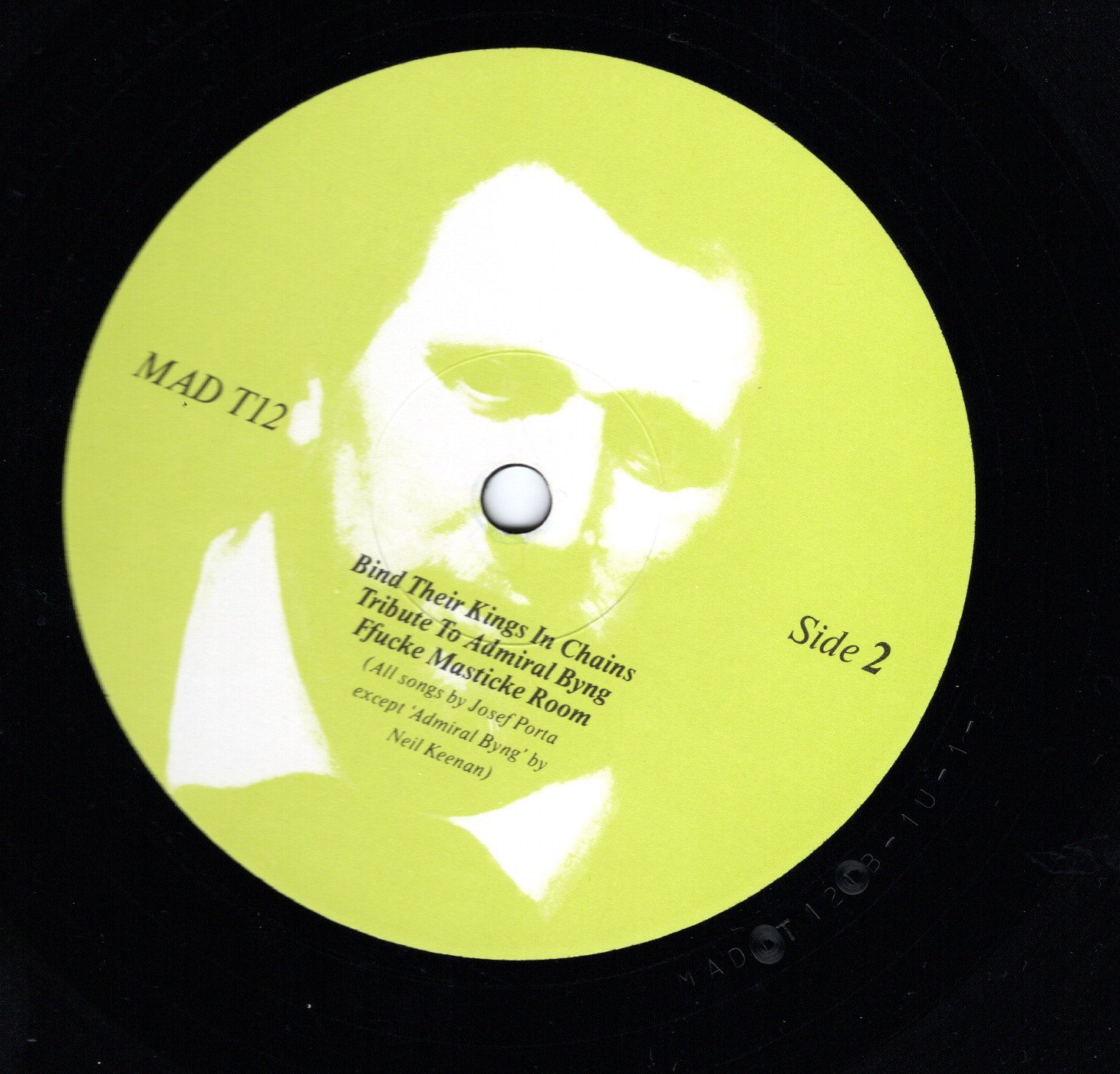
As mentioned Junction Signal was recorded in 1986 and released on All the Madmen and it is a recording that relevantly stand for what BP's early incarnation was about in terms of intents. Three of the four songs were recorded in Cold Storage studio in Brixton, a bigger studio, which, along with the presence of Grant Showbiz as the producer (he worked with bands like The Fall, Alternative TV or Androids of MU) account for the very clean sound of the 12''. I suppose you could argue that Junction Signal is slightly overproduced and you would not be entirely wrong as the songs would have benefited from a more direct, more organic sound (like on the song "Sordid tales" or the fist Ep that were recorded in Street Level Studio), however I don't think the production betrays the songs' nature. BP remain a highly difficult band to describe. Medieval anarcho pop punk? Anarcho folk rock? They certainly built on the catchiness of '77-inspired punk bands like Chron Gen or Naked, the moody poppiness of Zounds (Joseph also drummed for them) or Rubella Ballet, the strangeness of unidentified acts like The Fall or ATV and folk music. I have been told that Joseph's vocals were not unlike marmite, you either loved or hated them and I can see why as he has a very peculiar, dramatic accentuation and tone that makes him sound like a naughty minstrel or a medieval trickster. Whatever you think about his vocal style, it is at the core of BP's identity and completely unique as I cannot name another punk singer sounding even remotely like him. Another key element to BP is their almost excessive use of vocal harmonies and upbeat, infectious melodies that are but impossible not to sing along to. Some find the music too joyful, if not cheesy, and I can see why, as it is very accessible because of the intrinsically pop aspect of the music - even my mum could enjoy the music. Junction Signal is still a punk record though on the whole. The eponymous song is a Homeric mid-paced punk anthem full of harmonies with an epic singalong chorus that goes la-la-la and is just impossible to resist; "Bind their kings in chain" sounds akin to a medieval punky pub-rock tune with another brilliant melodic achievement for the chorus; "A tribute to admiral Byng" is an instrumental song demonstrating that you can be very tuneful without a singer; finally, the faster "Sordid tales from the ffucke masticke room" (it will be wisely renamed "Strawberries" later on) is an even more upbeat, sweet, bouncy and danceable number that makes me want to wear tights and jump around for some reason (but then, do I really need a reason to do that?). The lyrics (that you can read here) are unconventional for a punk band, closer to traditional folk music or even to poetry than snotty punk-rock. References to Thomas Hardy, Cromwell, the trial of Charles the First, adventure novels, mechanisation, pastoral tales, serve metaphors for social justice, liberation, submission, the need and desire to live a free life, the weight of history, but also loss and longing ("Who locked the door who holds the key who speaks the charms / Who gives His orders through the Junction Signal's arms"). I feel the imagerial words enrich the music and change its mood, confering a underlying sense of melancholy to the tunes that somehow balances the overall buoyancy, not unlike a bittersweet effect.

Junction Signal remains quite easy to find for cheap and another version of the Ep - in a 7'' format - also exists but with a blue cover and only two songs.  


Wednesday, 19 September 2018

Summer comps not summer camps (part 4): "Punk Lives! - Let's Slam" compilation Lp, 1986

While I fully agree with the bold statement that "Punk lives!" instead of slamming, let's just talk about it for a minute. Actually, I am not completely sure about the proper meaning of the phrase "Let's slam". Does it refer to slam-dancing, which can be defined as "taking part in a form of dancing to rock music in which people deliberately collide with one another", aka good ole pogo? I suppose, although, to be fair, the deliberate collusions are usually not really consensual. In other terms, you often end up with a hairy, sweaty drunk colliding with the pint you just bought, spilling half of it on the floor (or worse, on that one good pairs of trousers you happened to have washed just the day before, you know what I mean) in the process and trying to hug you to apologize afterwards... You know the feeling. 

Punk lives! - Let's slam was a compilation Lp released in 1986 on Slam Records (I see a recurring theme here), a sublabel of Rot Records which was run by members of Riot Squad. I rarely see Rot Records mentioned in topical punk conversations which seems a bit unfair as the label not only released classic records from English Dogs (the Forward into battle Lp and the To the end of the Earth 12'', which rate as some of the best metal-punk records of all time), Varukers (the Massacred millions 12'') or the oft overlooked Picture Frame Seduction (the Hand the rider Lp) but also put out some excellent compilations with great lineups in the mid-80's that are sadly seldom discussed. Granted, they did not exactly look stunning (they did not include inserts which is such a missed opportunity in retrospect...) and often included materials that had already been released elsewhere, but still, Rot Records should, at least, be acknowledged for its promotion of international hardcore punk in the insular UK. World War Three included tracks from Crude SS, Raw Power, Rovsvett or Zyklome A and What are you going to do about that hole in your head? had Olho Seco, Puke or Inferno. As for the compilations that focused solely on UK punk, they often displayed strong lineups (No Choice, External Menace, The Enemy, Oi Polloi, English Dogs...) combined with wacky titles like A kick up the arse or Have a rotten Christmas. Quality stuff for the most part, I'd say, without mentioning that Rot Records kept going for a few years after the so-called UK82 wave died out. 


Punk lives!, despite its rather ugly look and the absence of any information about the bands, is a fine example of what the label was the best at: solid, diverse and modern punk compilation Lp. Of course, in 1986, I was just a fat three year old who was already spending too much time watching animes on the telly, so you can imagine I did not buy the record at the time. The main reason why I got this compilation a few years ago was because it included one of my favourite anarcho songs ever: Anihilated's "40 dumb animals". Which takes me to the actual content of the record.

The Lp contains twelve songs and eight bands (four bands have two of their songs included, one on each side). I think it is more practical to process one band after another so let's start with... Anihilated, form the Ipswich area. "Inferno" and the aforementioned "40 dumb animals" are on this Lp and if you have never heard these songs, you are in for a treat. Both songs first appeared on the band's second demo tape recorded in 1985 and originally entitled Shadows of fear, though it would subsequently be renamed Speedwell demo (after the name of the studio) and is nowadays largely known as such. While Speedwell marked the band's shift toward metal, their first effort, 1983's How much more, was firmly rooted in the glorious noizy anarchopunk tradition of Dirge or Disorder (the song "Book of death" was lifted from that recording). The Speedwell sessions are my favourite materials from Anihilated (with just the one "n" because it looks punkier, a spelling I totally validate). Of course, you can hear that the band was getting heavily into the then blooming thrash metal scene but the music kept that raw, urgent, angry punk sound. Charged haired punx playing fast metal. Along with early Onslaught and Concrete Sox, this Anihilated demo is my favourite thrashy metal punk recording. "Inferno" opens the Lp and starts with a super epic intro (which reminds me of over-the-top triumphant Japanese hardcore actually) before bursting into galloping, English Dogs-influenced raw metal punk. This is catchy as hell and makes me want to wear a bandana with permed hair and headbang. But for me, "40 dumb animals", Punk lives!'s last song, is the unsurpassable gem. It is a much punkier number than "Inferno" though there is some metallized riffing. The song starts deceptively like a fast thrashy one before slowing down and getting into a heavy and crunchy mid-paced beat, enhanced with a snotty delivery and half-shouted, half-spoken parts, we are in the midst of anarcho brilliance. I particularly enjoy the changes of pace in that one and how passionate the words sound and how the youthful vocal flow fits absolutely perfectly with the music. I never fail to sing into an imaginary mic when playing "40 dumb animals", especially when the singer vociferates "money-making muuurdaaaaarghhhh". It's like '83 Antisect and Icons of Filth with a thrashy metallic Legion of Parasites touch playing at an ALF benefit (the song is about the fur trade). This song is untouchable. Cracking stuff. Of course, Anihilated would go on to become even more thrash-metal afterwards (the Path to destruction 12'' is still punk enough for my liking, not so much what followed) and they have been playing again since 2010.

The second band on Punk lives! - Let's slam is Stone the Crowz, with "Suffer children" and "Friendship", well technically anyway since the songs were mistitled, the correct names being "Suffer little children" and "Friendship through profit" (both of them appearing originally on the Suffer little children 1985 demo tape). I suppose that Stone the Crowz are mostly remembered nowadays - assuming they are at all - as a pre-Axegrinder band. And indeed, they are since Trev (on vocals) and Matt (on the bass) would form Axegrinder a few years later (they also played together in Tyrants of Hate in-between). Actually, Trev's coarse, furious vocals are pretty recognizable and being a fan of his, I suppose I cannot really help but see Stone the Crowz as a punky Axegrinder, quite untrue I know, but it must come from my reptilian brain. Apparently the phrase "stone the crows" is an  old-fashioned exclamation used to express disgust and surprise and I guess that the "z" substituted the "s" because there was a Scottish blues band called Stone the Crows (though I doubt someone could  have confused both bands...). Anyway, beside Trev and Matt, the band also had Steve Beattie on the drums, at the time running Endangered Musik (the two Stone the Crowz were released on his label) and later on founder of Plastic Head Distribution and drummer for Disgust. Musically, Stone the Crowz were, to the core, an anarchopunk band. Heavy, threatening, energetic mid-tempo punk music with a direct, in your face vocal style and some Flux-like feedbacks as texture. I am especially reminded of Exit-Stance quite a bit (though they were not as tribal sounding), Icons of Filth and also of Anti-System and Antisect in their mid-paced moments. The two songs are really good and convey a genuine sense of outrage and disgust. I strongly recommend the two demos of the band (they were reissued on vinyl on Overgound Records a few years ago) if you are into pounding, heavy, almost primitive anarchopunk. Ace.


Following up are Rattus. Yes, Rattus. With the song "Naytelma" (which should have been spelt "Näytelmä" if I'm not mistaken) taken from the Will evil win 1985 demo. I suppose everyone is fairly familiar with Rattus, probably the most famous Finnish hardcore band with Tervet Kadet. The sound is rather raw with a metal influence creeping in (in the drumming for instance), as if the band had listened to Venom a lot before entering the studio while remaining rooted in their old hardcore sound. The riffs are actually really good (but then, Rattus always had great riffs) and I like the rather primal atmosphere of the song, but overall it may lack a little in pure energy and aggression (the vocals are sometimes monotonous) which are really traditional Finnish hardcore's forte. By no means a bad song though and that first riff is pretty much perfect. 

After Rattus, things mellow considerably with one song from the mighty Political Asylum, "Cat's eyes" (mispelt "Cats eyes"...), who have another one, "Flight of fancy", on side two. I am a big time fan of PA (as can be seen here) so, as cheesy as they might objectively sound at times, no nasty comments about the band will be allowed here. If you have never heard of them, they were an anarchopunk band from Dunfermline, Scotland, that was quite prolific, resilient (they survived the 80's after all), versatile and far more adventurous than most (trigger warning: they had progressive rock moments). If you can get past what Ian Glasper called the "fretboard heroics" of the guitar player (the expression makes me giggle but, still, brace yourselves since there are a lot of solos, too many in fact), PA's "Cat's eyes" is a wonderful melancholy song full of atmospheric melodies and emotions. Although there was such a thing as a "PA sound", the band really excelled in expressing different moods and feelings from one song to another, so that on one recording, you could have a really upbeat number, followed with an angry one, then a lengthy autumnal ballad, a gothy postpunk gem and so on. I suppose we are in the slow and mournful department with that dark, poignant song, that sounds like The Mob and New Model Army OD'ing on guitar solos. "Cat's eyes" was originally released on the great Valium for the Masses demo tape from 1984. On the other side, PA contributed one of their most famous songs (I think?) "Flight of fancy". The sound is much thinner than on the previous recording as it was recorded in the practice room with four microphones strategically placed around the room (I'm quoting here). As I mentioned, PA were good at conveying different moods and this is a perfect example. While "Cat's eyes" made you feel miserable, "Flight of fancy" is much more dynamic, energetic and, well, punkier. The trademark tunes and chorus are still there and Ramsey - while not the most gifted punk singer - still had a very recognizable voice that sometimes reminds me of protest folk singer. "Flight of fancy" has an old-school punk-rock feel to it with, again, some great guitar parts and catchy singalong parts. This version of the song was originally included on the band's third demo Walls have Ears, from 1986, but it would be rerecorded for the Someday mini Lp in 1987. A truly unique band that, whatever the style they embrace, never fail to sound fresh and interesting.

The next band is Rabid, from Leicester, one that I already touched upon four years ago here. If you remember (I assume you do not because of the the internet-induced decrease of our attention span and all that), Rabid were a rather typical but enjoyabe UK82 bands that had two records on Fallout in 1982 and that was pretty much it. I haven't been able to find details about the recording sessions of their two songs that ended up on Punk Lives but they were definitely recorded in the mid-80s since Rabid had turned metal. It was of course not unusual at the time (the other possible path being "turning new wave") but it was a tricky endeavour since, well, playing metal of the crossover thrash variety is more difficult than straight up snotty punk-rock. I suppose English Dogs have a lot to answer for considering these two songs, and I do mean A LOT. From the riffs, the vocal tones, the chorus to the song structures, everything is reminiscent of Forward into Battle, although it sounds nowhere as powerful, energetic and mean. It is not terrible, but pretty average especially when you consider that there were far better metal-punk bands at the time, I suppose from some demo recording and the band stopped after that. For some reason, "Bloody road to glory" (which was also the title of their 1982 Ep) and "Black cat" makes me want to drive a car in the desert wearing wayfarers, although I don't have my driving licence and I look like a knobhead with sunglasses.

Poison Justice also have two tracks included on Punk Lives, and really good ones too. However, I have not been able to find much information about them. Prior to this Lp, PJ appeared on a DIY mixtape called Ere Whats This? volume 2 compiled by U.K. Tapes (I suppose an enthusiastic teenager armed with a tape-to-tape machine) in 1983 in Huddersfield. There were three volumes of Ere Whats This? and, interestingly, the second one also had "songs" from Deformed, Devoid and Genocide Association, that fake hardcore band done by Dig from Earache. But anyway, the four PJ songs that appeared on the tape were rather raw but really tuneful and catchy slices of catchy political punk-rock, not unlike a low-fi version of The Instigators or Naked, the potential of which was hindered by the sound. The band returned as a different animal on the compilation Lp however, with a much clearer sound, improved musicianship and a new postpunk sound. "Rebellious city" and "Life to it's end" (the proofreader must have been on vacation) sound adequately dirgy and melancholy, with epic tribal drumming, eerie goth-like guitar parts, tuneful vocals and catchy chorus that will stick in your head for the rest of the day ("Enjoy your freedom, the future is bleak"). I can definitely picture a crowd of scruffy, gothy punks circa 1985 dancing lasciviously to these songs. The sound is lacking in thickness (not enough bass probably) but if you enjoy the postpunk side of anarchopunk like I do, it pretty much ticks all the right boxes. Somewhere between Slaughter of the Innocent, Decadent Few, Vex and Southern Death Cult. It certainly would have made for a good Ep.

The last band I am going to talk about has just the one song on side two and is called Throbs, with a song entitled "Happy but ignorent" (the record should have been called Punk Lives - Let's Misspel!). I think the band was from Surrey and they released two demo tapes in 1985 on their own Homebrew Music, respectively called Make Homebrew not War and Skatebords from Hell. I don't really know what to say about Throbs, judging from just one song. Pretty standard mid-paced UK anarchopunk, with basic tribal drumming, a fuzzy guitar sound, punk-rock bass lines and snotty tunes. Pretty decent and I suppose that they listened a lot to Flux of Pink Indians, DIRT and Anti-Pasti (which they covered live apparently). One of the members also played in the new-wave band NMBD (No More Bloody Destruction) and Throbs appeared on a couple of LOL tapes as well. What else? Oh yeah, they of course had a song called "We make homebrew not war" which is never a bad thing.

A lovely compilation with enough standout songs to keep everyone interested. I'm still not sure about the slam thing though.